

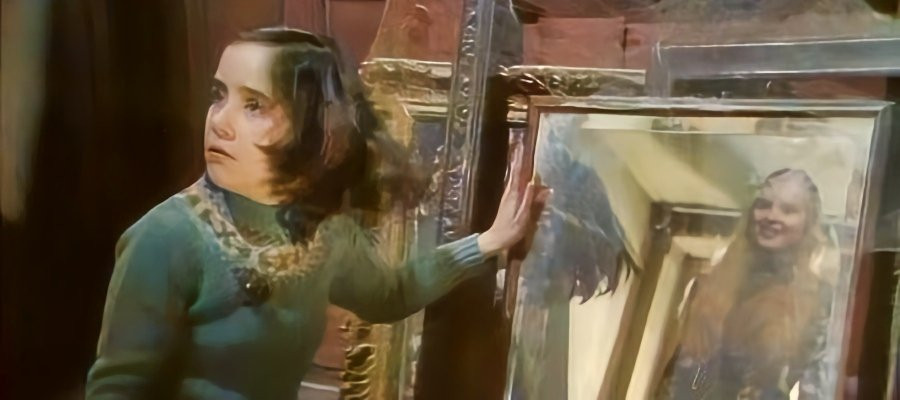
Come Back Lucy
1978 United KingdomCome Back Lucy is a beguiling entry in the canon of British children's television — quietly eerie, emotionally resonant, and far more psychologically complex than its premise might suggest. Adapted from Pamela Sykes’ 1973 novel by Colin Shindler and Gail Renard, the series explores grief, displacement, and the clash of old and new through the lens of a young girl's traumatic coming-of-age.
The story centres on Lucy (Emma Bakhle), a sensitive and somewhat withdrawn teenager whose world collapses following the death of her beloved Aunt Olive, the elderly guardian who has raised her in a cosseted, old-fashioned environment. Forced to leave behind everything she knows, Lucy is taken in by modern relatives, a well-meaning aunt and uncle, and their three lively children, who live in a large Victorian house infused with the clatter and colour of contemporary family life. Though her new family do their best to welcome her, Lucy struggles to adapt. The laughter and chaos of her cousins only serve to alienate her further, as she retreats into her own world.
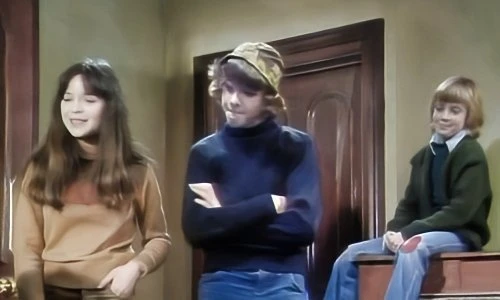
It is in this psychological space, caught between mourning and transition, that the story takes its most chilling turn. While exploring the house, Lucy discovers a neglected attic: a time capsule of antique furniture, a vintage rocking horse, and a scatter of ornate mirrors. Through one of these mirrors, she meets Alice (Bernadette Windsor), a mysterious girl from the past who appears to live in a pristine, idealised version of the house. At first, Alice is playful and eager for companionship, but her manner quickly darkens. The games become controlling, the invitations to “stay forever” increasingly ominous. It becomes clear that Alice isn’t simply a ghost—she is a manifestation of something more insidious: the longing for the past, taken to a dangerous extreme.
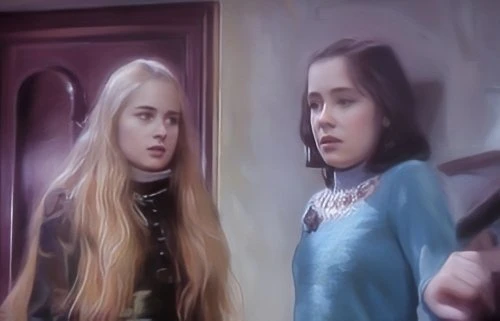
The atmosphere of Come Back Lucy is its greatest strength. Like Sapphire & Steel, which would debut a year later under the guidance of the same producer, Shaun O’Riordan, the series is less concerned with jump scares and more with cultivating a pervasive sense of unease. The interplay between Lucy and Alice is laced with a quiet menace; their interactions escalate until a chilling climax at a frozen lake, where the line between memory, fantasy, and reality is quite literally shattered.
The central theme of the series, whether to retreat into the comfort of the past or face the challenges of the present, is handled with intelligence and restraint. Alice, in all her eerie charm and eventual malevolence, represents a world where Lucy could feel safe, understood, and in control. But it’s a world that no longer exists, and the cost of staying there is ultimately too high.
Performances across the board are strong, particularly from the young leads, who carry the emotional weight of the story with maturity. The production design cleverly contrasts the cluttered modernity of Lucy’s new home with the sepia-toned elegance of the past, reinforcing the psychological divide between the two worlds.
Come Back Lucy may have been made for children, but it doesn’t talk down to its audience. It trusts young viewers to grapple with its themes of grief, identity, and the dangers of nostalgia. Like the best children’s dramas of its era, it remains unsettling not because of what it shows, but because of what it suggests — that sometimes the scariest thing isn’t what lies in the dark, but what lies within ourselves.
Though not as widely remembered as some of its contemporaries, Come Back Lucy deserves recognition as one of the more hauntingly original dramas of 1970s British television — a ghost story where the real ghost might be childhood itself.
Seen this show? How do you rate it?
Seen this show? How do you rate it?
Share on...
Published on May 15th, 2025. Written by Laurence Marcus for Television Heaven.