

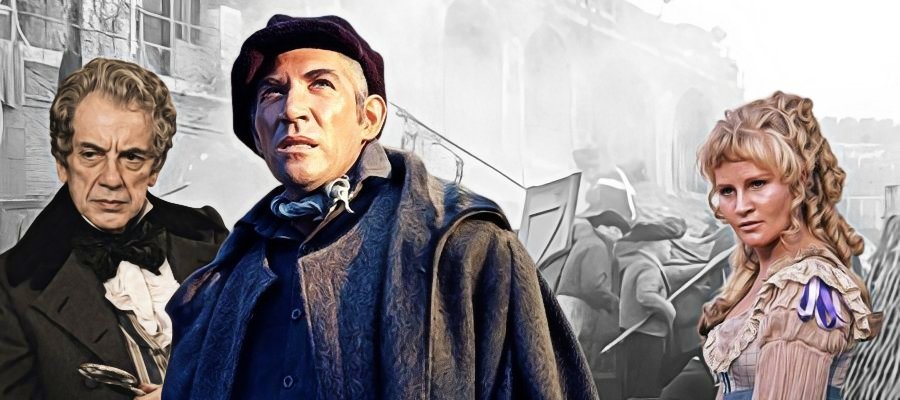
Les Miserables
1967 United KingdomToday, Les Misérables the musical is widely regarded as one of the defining works of modern musical theatre, a production that has moved beyond popularity into the realm of cultural institution. Since its Paris debut in 1980 and especially its long-running English-language staging in London, it has become synonymous with the global success of the so-called “mega-musical,” alongside shows like The Phantom of the Opera and Cats.
The musical’s endurance is also reflected in its continued global presence: long-running productions and international tours, frequent revivals, school and amateur productions, and a successful 2012 film adaptation starring Hugh Jackman and Anne Hathaway have all helped sustain its visibility.
The BBC’s 1967 ten-part teatime serialisation stands as a fascinating example of how television once approached literary adaptation with both ambition and restraint.
Broadcast in an era when Sunday afternoon drama carried a quiet cultural authority, it translated Victor Hugo’s vast 1862 novel into something episodic yet emotionally continuous, a feat made all the more impressive by the production’s modest technical means and its slot in what was ostensibly “family” or “younger viewers’ time.”
At the time, the Radio Times somewhat reductively described the tale as a “detective story,” foregrounding the pursuit of Jean Valjean by Inspector Javert. While the serial certainly embraces the tension of this lifelong chase, it quickly becomes clear that such a label undersells the breadth of Hugo’s intentions. This is not merely a tale of pursuit, but a sustained meditation on justice, morality, and the uneasy relationship between the individual and the State. The adaptation preserves this tension effectively: Valjean’s original crime—stealing bread to feed his family—remains a quiet but powerful indictment of a system that creates criminals and then punishes them for surviving.
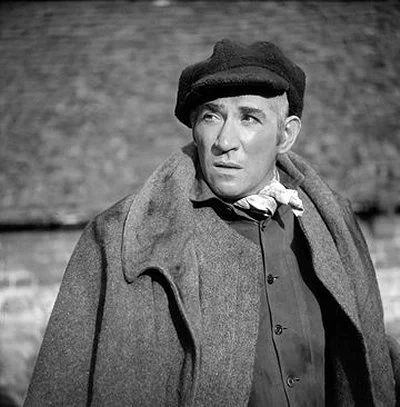
Frank Finlay’s portrayal of Valjean anchors the entire production. It is a demanding role, requiring both physical endurance and emotional subtlety. His Valjean is neither saint nor stereotype, but a man shaped—and misshaped—by circumstance, constantly negotiating the possibility of redemption. Opposite him, Anthony Bate’s Javert is rigid and unwavering, a man whose belief in the absolute authority of the law renders him both formidable and tragically limited. Their dynamic gives the serial its narrative engine, a grim and compelling cat-and-mouse game that unfolds across decades.
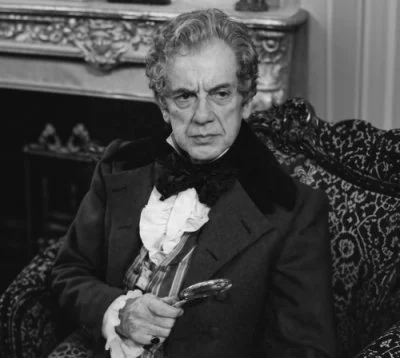
The opening episode, set in 1815, establishes the tone with quiet assurance. Valjean’s release after nineteen years of imprisonment and his subsequent rejection by society are handled with a starkness that underscores the cruelty of his situation without sensationalising it. His encounter with the Bishop of Digne, played by the veteran Finlay Currie, provides one of the adaptation’s most affecting moments. Currie, then in his late eighties, brings warmth and dignity to the role, embodying the moral counterpoint to the harshness of the world around Valjean.
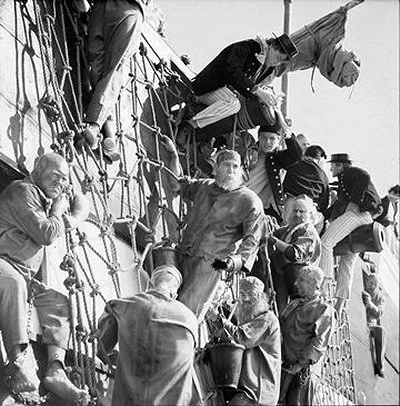
Behind the scenes, the production carries its own story of continuity and care. Originally commissioned from Giles Cooper, the scripts were completed after his death by Harry Green, who managed to maintain a stylistic consistency that betrays no obvious seams. This sense of cohesion extends to Alan Bridges’ direction, which is both disciplined and quietly imaginative. Location work in Portsmouth and the Isle of Wight lends the convict and battle scenes a tangible realism, even within the constraints of a television budget.
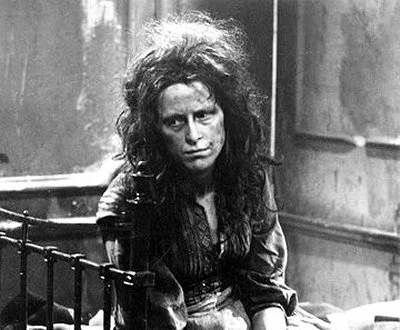
Technically, the series was produced in colour with mono sound, though most viewers at the time would have experienced it in black and white. That limitation, however, arguably enhances its atmosphere today, lending the surviving 35mm film recordings a certain period authenticity. The survival of these film copies—despite the wiping of the original videotapes—allows modern audiences to revisit a production that might otherwise have been lost, and its eventual DVD release decades later is a reminder of the BBC’s complicated archival history.
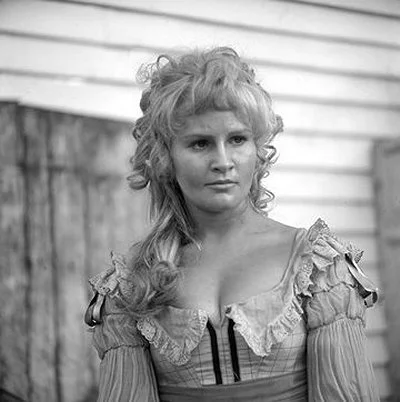
Contemporary reception reflects both admiration and a hint of bemusement at its scheduling. Critics noted the high standard of drama, remarking that it seemed almost wasted on a teatime slot traditionally associated with younger viewers. Yet this placement may have been part of its quiet success, bringing a complex and demanding narrative into ordinary homes, where tea might grow cold as audiences became warmly absorbed in Hugo’s world.
Ultimately, the 1967 serial succeeds because it resists reducing Les Misérables to its plot. While the pursuit of Valjean provides structure, the adaptation remains attentive to Hugo’s broader concerns: the nature of justice, the possibility of grace, and the many faces of humanity. It is not brutality that defines the story, but the way individuals respond to it. In capturing that, the BBC created a version that, while necessarily condensed, retains the moral and emotional weight of its source.
Seen this show? How do you rate it?
Seen this show? How do you rate it?
Share on...
Published on March 31st, 2026. Written by Laurence Marcus for Television Heaven.