

The Big Pull
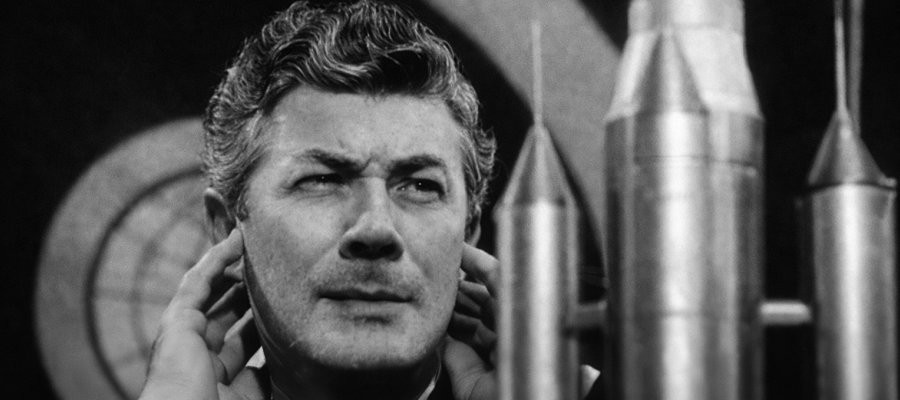
1962 United KingdomFirst broadcast by the BBC in 1962, The Big Pull stands as a superb example of the boundless imagination that characterised science-fiction drama before humanity had set foot on the moon. Produced and directed by Terence Dudley (Doomwatch) and written by Robert Gould (Crossroads), this six-part serial tapped directly into contemporary anxieties at a time when Russian and American astronauts were only just beginning to venture beyond Earth’s atmosphere. Sadly, the became one of the many lost BBC productions of the era and although it was shown in Australia in 1964, as of 2026, no episodes survive in the archives.
Gould’s premise was rooted in genuine scientific concern. Before man could reach the moon, he noted, he would have to penetrate the Van Allen radiation belts—vast regions of radioactive particles thousands of miles above the Earth. What lay beyond them was unknown: other galaxies, other civilisations, perhaps even hostile forces waiting for an opportunity. From this plausible uncertainty, Gould fashioned a chilling narrative in which the first man to orbit above the belts returns not as a hero of the space race, but as the unwitting carrier of something incomprehensible.
The drama opens with Head of Space Research Sir Robert Nailer (William Dexter – Z Cars), overseeing the return of American astronaut Mike Sklorski (Frank Fenter – A for Andromeda). Sklorski has travelled in a specially shielded rocket through the deadly radiation belts, orbiting some fourteen thousand five hundred miles above Earth. The mission appears triumphant: both capsule and astronaut are free of detectable cosmic radiation. Yet a disquieting anomaly soon emerges. For nineteen seconds prior to re-entry, the capsule’s cameras and recording equipment inexplicably ceased functioning. Within an hour of the capsule being opened, Sklorski is dead—without any identifiable medical cause.
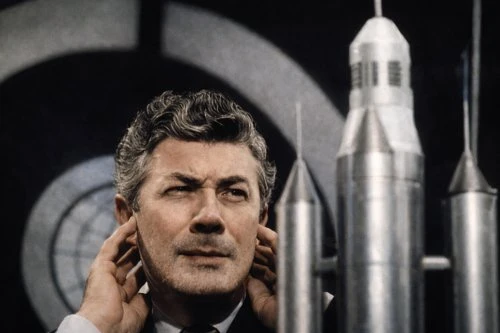
Matters grow stranger still when Doctor Weatherfield (Felix Deebank – The Avengers), the scientist who designed the rocket and the first man to enter the capsule after its return, begins to suffer nightmares in which he believes he has “absorbed” the dead astronaut’s mind. In England for the inauguration of a powerful new radio telescope facility, Weatherfield subsequently disappears from his hotel. His vanishing becomes a matter of top-secret urgency, particularly as the radio telescope begins receiving an unintelligible signal from an unknown source.
What follows is a steadily intensifying mystery in which the threat is at first ambiguous. Is this a radiation plague, a form of cosmic infection, or something far more deliberate? The series masterfully sustains this uncertainty, stripping away revelations layer by layer. Nailer’s investigation uncovers a terrifying pattern: an invisible force is attacking humans in pairs. In each instance, one person dies while the other disappears, only to re-emerge under alien control, bearing the face of the one who perished. The horror is clinical and impersonal—there are no monsters in rubber suits, only the quiet subversion of identity itself.
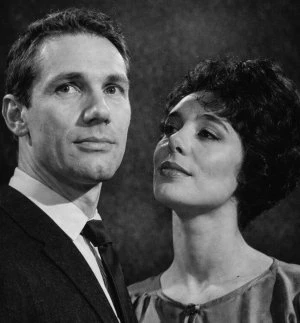
The scale of the menace becomes clear when Nailer recognises a mathematical progression in the attacks. The time between incidents halves while the number of victims doubles, an exponential growth he grimly observes after noticing a van advertisement proclaiming, “Twice the output in half the time.” It is an inspired touch, grounding cosmic terror in a mundane slogan and underscoring the drama’s warning about human complacency. The invasion, it is deduced, is being channelled through the radio telescope facility, the focal point of the deaths. The only apparent solution is to destroy the base before the next wave of attacks, when the number of those affected will exceed the remaining staff. Even this desperate measure fails when the bombing aircraft arrives too late.
Unusually for television science fiction of the period, The Big Pull refuses a comforting resolution. The scientists are dead, panic spreads, and it is realised that within hours the entire population of Earth will be gone. Every effort has failed; there is nothing that can be done. Gould’s stated intention was to explore not simply an alien assault, but human vulnerability—our inability to accept the impossible and our tendency to underestimate unseen dangers. In this, the serial becomes less about creatures from beyond the stars and more about the frailty of human perception and decision-making.
The production boasted notable performances from Frederick Treves, June Tobin, Gertan Klauber and Keith Pyott, contributing to what remains one of the more high-calibre science-fiction dramas developed by the BBC during the early 1960s. Potent, compellingly addictive, and bleakly ahead of its time, The Big Pull captured the excitement and dread of the early space age with remarkable assurance. Though now lost, its reputation endures as a chilling reminder of an era when the greatest horrors lay not in what we could see, but in what might be waiting just beyond the radiation belts.
Seen this show? How do you rate it?
Seen this show? How do you rate it?
Share on...
Published on February 20th, 2026. Written by Laurence Marcus for Television Heaven.