

Melissa
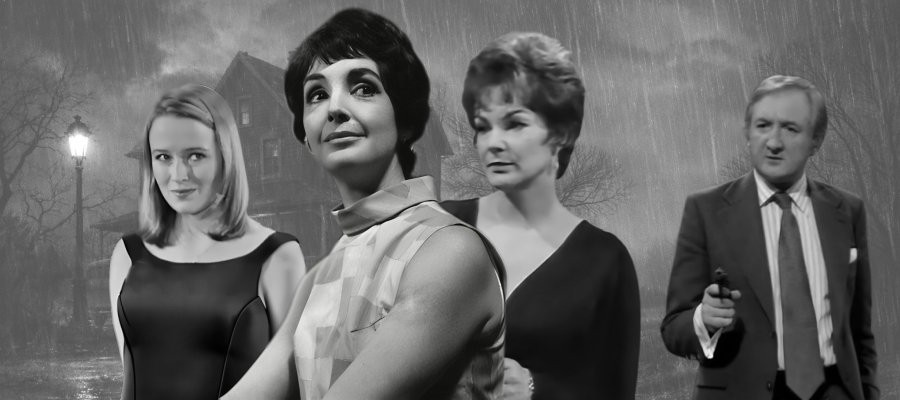
1964 United KingdomFew television thrillers can legitimately claim classic status across multiple generations, but Melissa occupies precisely that territory. First broadcast in April 1964, Francis Durbridge’s adaptation of his novel My Wife Melissa became not only his most celebrated television success, but one of the BBC’s most closely guarded and talked-about serials of the era. Its intoxicating blend of blackmail, murder, secrets and moral corruption proved so compelling that the story would be revisited twice more, in 1974 and again in 1997—each version reflecting both the strengths of Durbridge’s original conception and the changing sensibilities of television drama.
The 1964 serial remains the definitive expression of Melissa. Tony Britton’s Guy Foster, a journalist returning home to begin a quieter life of novel-writing, finds that ambition annihilated when he discovers his young wife brutally murdered. What initially appears to be a random burglary—centred on the theft of a hat-box and gloves—quickly unravels into something far darker. Durbridge’s genius lies in how this innocuous detail becomes the key to a labyrinthine narrative, drawing Guy into the unsettling realisation that the woman he loved was, in many ways, a stranger.
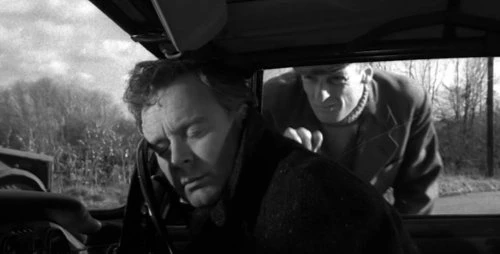
Petra Davies’ Melissa is deliberately opaque, more symbol than flesh, and Durbridge uses this to devastating effect. As Guy retraces her steps, uncovering links to Don Page and the Hepburns, the serial steadily peels back layers of deception to reveal a world of criminality and moral compromise. Alan Bromly’s production and direction give the six-part serial a measured, inexorable pace, while Durbridge’s famously engineered cliffhangers—protected by extraordinary secrecy measures at the BBC—kept audiences gripped. Performances from Britton, Kerry Jordan and Helen Christie elevate the material further, ensuring that Melissa became not merely popular, but iconic.
A decade later, the 1974 remake took a radically different structural approach. Condensed into two fifty-minute colour episodes, it reimagined the story as a concentrated “night-before-and-morning-after” thriller. The opening sequence—Guy Foster waking to a terrified phone call from his wife, only to arrive at a vacant house and her murdered body—remains one of Durbridge’s most powerful set-pieces. Peter Barkworth brings a quieter, more world-weary sensibility to Guy, though he lacks some of Britton’s elegance and authority. Conversely, Moira Redmond’s Melissa is a marked improvement, restoring the character’s allure and mystery in a way the original version only hinted at.
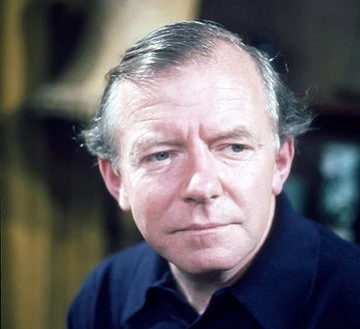
The tighter running time sharpens the suspense, excising peripheral material to focus relentlessly on dramatic peaks. However, something vital is lost in the process: the absence of twenty-five-minute episodes diminishes the ritualistic power of Durbridge’s cliffhangers, and with them some of the serial’s unique identity. Nonetheless, strong supporting performances from Ronald Fraser, Ray Lonnen and Joan Denham, alongside assured production from Morris Barry and direction by Peter Moffatt, ensure that the 1974 Melissa stands as a highly effective reinterpretation. Exported globally as a feature-length presentation, it proved that the story could survive—and thrive—outside its original episodic form.
The most ambitious and divisive version arrived in 1997, produced for Channel Four by Alan Bleasdale. Rather than simply retell the story, Bleasdale chose to expand it, framing Durbridge’s original narrative as the conclusion to a five-part serial preceded by an extensive prequel. This bold decision split opinion sharply. The prequel charts Guy Foster’s life as a war correspondent, his meeting with the enigmatic Melissa McKenzie, and their immersion in a morally bankrupt circle plagued by blackmail, corruption and murder. The tone is darker, more luxuriant and more explicit than earlier versions, with Bleasdale layering in themes of guilt, exploitation and social decay.
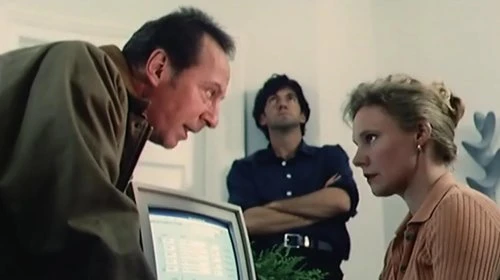
At times, the prequel feels crowded and indulgent, its gallery of damaged characters and sordid revelations threatening to overwhelm the core mystery. Durbridge himself was reportedly baffled by much of it. Yet the version has undeniable strengths. Jennifer Ehle’s Melissa is a revelation, fully embodying the allure, vulnerability and danger that Durbridge always implied but never fully articulated. Tim Dutton’s Guy is a broken, disillusioned figure, far removed from his predecessors, while Bleasdale regulars Julie Walters, Adrian Dunbar and Christopher Ryan bring colour and menace to the expanded ensemble. The darkly comic investigating officers, played by Bill Patterson and Michael Angelis, strike an inspired tonal balance between horror and humanity.
Though the climax borrows more from The Desperate People than Melissa itself, Bleasdale’s version ultimately succeeds as both homage and reinterpretation—a morality tale disguised as a detective story, just as he intended. It is the longest, richest and most discursive telling of the tale, and perhaps the most emotionally resonant for modern audiences.
Taken together, the three versions of Melissa form a remarkable testament to Francis Durbridge’s enduring power as a thriller writer. Whether in the pristine, tightly-wound suspense of 1964, the streamlined intensity of 1974, or the expansive, morally complex reimagining of 1997, Melissa remains a story of secrets and consequences that refuses to fade. Few dramas have proven so adaptable, and fewer still so consistently compelling.
Seen this show? How do you rate it?
Seen this show? How do you rate it?
Share on...
Published on February 4th, 2026. Written by Laurence Marcus for Television Heaven.