


Quincy, M.E.
1976 United StatesFew television dramas of the 1970s managed to balance entertainment and social conscience as effectively as Quincy, M.E.. Debuting in 1976 as part of the prestigious NBC Mystery Movie anthology strand, the series quickly distinguished itself from its contemporaries through its intelligent storytelling, compelling performances and willingness to tackle uncomfortable real-world issues. Known simply as Quincy in Britain, the programme enjoyed a remarkably successful run that lasted nearly a decade and helped redefine what a procedural drama could achieve.
At the centre of the show was the superb Jack Klugman as a dedicated Los Angeles medical examiner whose determination to uncover the truth frequently placed him at odds with authority. Klugman’s casting proved inspired. Best known at the time for his comedic role as Oscar Madison in the television version of The Odd Couple, he brought warmth, humanity and tireless energy to Quincy, creating a character who was both fiercely principled and deeply likeable. Quincy was not content to remain behind a desk or microscope; he would routinely defy orders to pursue investigations personally, question witnesses and relentlessly challenge official conclusions whenever he sensed injustice.
The series appears partly inspired by Marshall Houts’ book Where Death Delights and bore similarities to the Canadian drama Wojeck, itself centred on a coroner investigating suspicious deaths. Quincy’s character was also loosely based on famed Los Angeles coroner Thomas Noguchi, often referred to as the “Coroner to the Stars”.
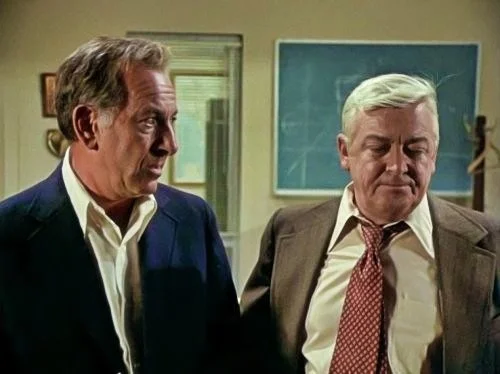
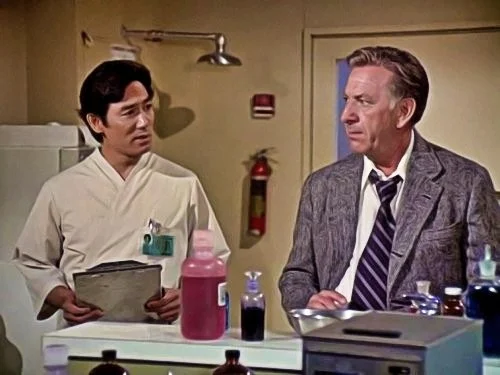
The supporting cast added greatly to the show’s appeal. John S. Ragin was excellent as Dr Robert Asten, Quincy’s exasperated superior, while Garry Walberg provided steady opposition as sceptical police lieutenant Frank Monahan. Meanwhile, Robert Ito brought understated charm and loyalty to the role of Sam Fujiyama, Quincy’s trusted laboratory assistant. These relationships gave the series both humour and dramatic tension, grounding the more crusading elements of the stories.
Created by Glen A. Larson, the programme gradually evolved beyond a straightforward crime procedural into something far more ambitious. Particularly in its later seasons, Quincy, M.E. confronted social issues that were rarely explored in mainstream American television at the time, including environmental pollution, medical malpractice, elder neglect and drug abuse among young athletes. The series often positioned Quincy as a moral campaigner as much as a forensic investigator, giving the drama a seriousness and relevance that elevated it above many of its peers.
The show also benefited from strong world-building and memorable recurring elements. Quincy’s downtime at Danny’s Place, run by the genial Danny played by Val Bisoglio, added warmth and familiarity, while the introduction of romantic relationships with Lee Potter and later psychiatrist Emily Hanover gave the character greater emotional depth. One charming mystery persisted throughout the series: Quincy’s first name was never officially revealed, though observant viewers once caught the initial “R” on his business card.
What remains most impressive about Quincy, M.E. today is how modern it still feels. Long before forensic dramas became a television staple, the series demonstrated that medical investigation could provide the foundation for gripping, socially aware storytelling. Intelligent, compassionate and consistently engaging, it remains a landmark television drama and one of the defining roles of Jack Klugman’s distinguished career.
Seen this show? How do you rate it?
Seen this show? How do you rate it?
Share on...
Published on May 20th, 2026. Written by Laurence Marcus for Television Heaven.