
Inferno
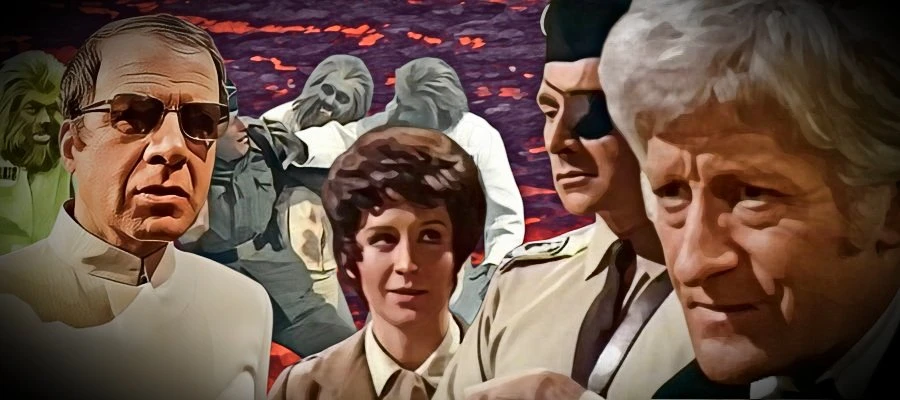
Inferno stands as one of the boldest and most uncompromising stories ever produced for Doctor Who. First broadcast in seven weekly instalments between May and June 1970, it is not only the final seven-part serial in the programme’s history but also the last regular appearance of Caroline John as Liz Shaw. Even before considering its reputation, the ambition on display is immediately apparent.
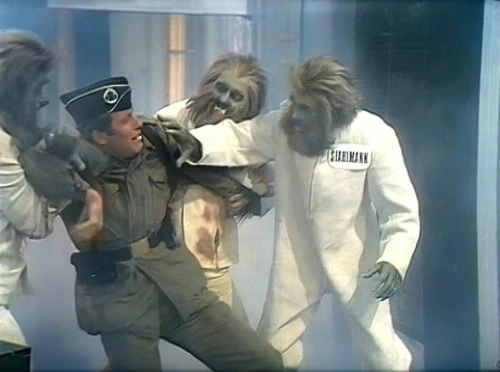
The premise alone is striking. The Third Doctor and UNIT are summoned to Project Inferno, a drilling operation intended to pierce the Earth’s crust and unlock vast new energy resources. Almost at once, things begin to go wrong: a strange green substance emerges, transforming anyone who touches it into violent, dehumanised creatures known as Primords, vulnerable only to extreme cold. The project’s leader, Professor Stahlman, has already been infected, though his transformation is not yet complete, lending an ominous undertone to his every scene.
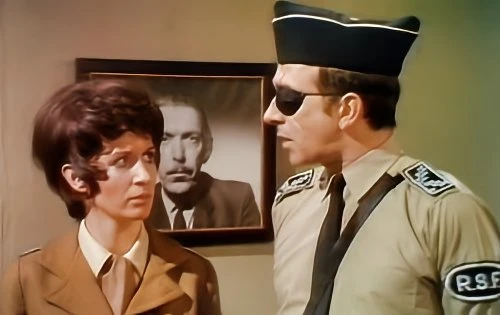
A freak accident with the Doctor’s detached TARDIS console escalates matters dramatically, transporting him into a parallel universe. Here, Britain has become a fascist state, and familiar faces are twisted reflections of their counterparts: Nicholas Courtney’s Brigadier becomes a sadistic eyepatch-wearing Brigade Leader, while Liz Shaw is reimagined as a hardened military officer rather than a scientist. This alternate world is chillingly convincing, not because it is original, but because it feels entirely plausible within the story’s internal logic.
As the drilling continues in this doomed reality, the consequences are catastrophic. Seismic upheaval, poisonous gases and further outbreaks of the green ooze accompany the penetration of the crust, while Stahlman’s alternate self completes his transformation and uses the chaos to spread the Primord infection. The Doctor’s grim realisation that the planet itself will be destroyed gives the serial an extraordinary sense of fatalism. Unlike most Doctor Who stories, this is a world that genuinely cannot be saved, and watching Britain consumed by volcanic destruction remains one of the programme’s most daring narrative choices.
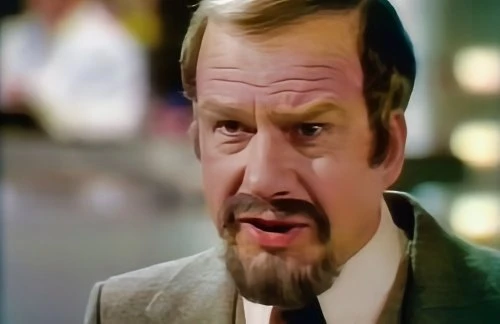
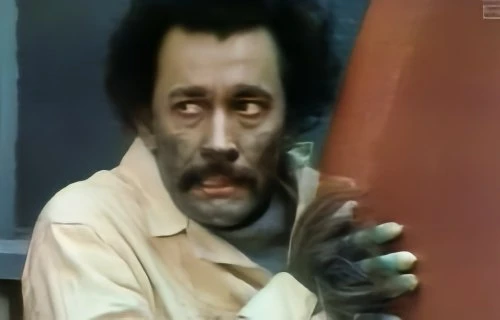
Performances across the board are superb. Olaf Pooley’s Stahlman is particularly effective: driven, authoritarian, yet never portrayed as a simple villain, his belief in the project’s benefits feels sincere even as it leads to disaster. Christopher Benjamin provides an effective counterpoint as Sir Keith, and the partially transformed Primords are deeply unsettling, especially in scenes where the mania in their eyes does much of the work. Violence is handled with surprising bluntness for its era, notably during moments of strangulation and discovery that retain their power even decades later.
Nicholas Courtney shows just how much depth he could bring when freed from the Brigadier’s affability. The Brigade Leader is genuinely intimidating, and Courtney never overplays him. He’s not a moustache‑twirling villain—he’s a believable product of a totalitarian world. Caroline John plays the Section Leader with a clipped, almost brittle intensity. She’s not simply “evil Liz”—she’s a woman shaped by fear, hierarchy, and violence. Watching her gradually soften as she realises the Doctor is telling the truth is one of the story’s most compelling emotional arcs.
Back in the Doctor’s own universe, events echo those of the parallel world, but crucial differences in timing allow disaster to be averted. Stahlman completes his transformation before the crust is breached, giving the Doctor just enough leverage to stop the drilling and save humanity. The resolution is tense and satisfying, even if the final gag—materialising the TARDIS in a rubbish dump—sits uneasily against the bleakness that precedes it. The tonal shift is jarring, but not enough to undermine what has come before.
Behind the scenes, Inferno is just as fascinating. Writer Don Houghton developed the story from discussions with script editor Terrance Dicks, inspired by the real-life Project Mohole. Budget constraints led to the inspired decision to set much of the action in a parallel world, allowing extensive reuse of sets and cast while actually enriching the narrative. Production was not without difficulty: director Douglas Camfield suffered a heart attack partway through, with producer Barry Letts quietly taking over studio direction for the final episodes while preserving Camfield’s credit.
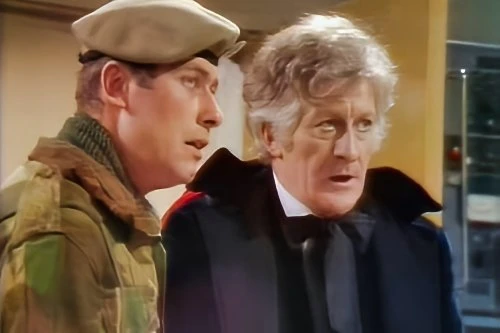
The serial’s reputation has only grown over time. Fan polls have consistently ranked it among the finest Doctor Who stories ever made, and it is frequently cited as the pinnacle of the Third Doctor’s era. Despite its considerable length, there is remarkably little sense of padding or drift; each episode feels purposeful, building inexorably towards its devastating conclusion.
Although the original colour videotapes were wiped, surviving black-and-white recordings and later NTSC returns ensured Inferno was not lost entirely, even if early home releases suffered from visual degradation. None of this diminishes the serial’s impact. Grim, intelligent and uncompromising, Inferno is ambitious television that largely achieves what it sets out to do. Few Doctor Who stories stare so directly into catastrophe—and fewer still have the courage to let it happen.
Share on...
Published on December 19th, 2025. Written by Laurence Marcus for Television Heaven.