

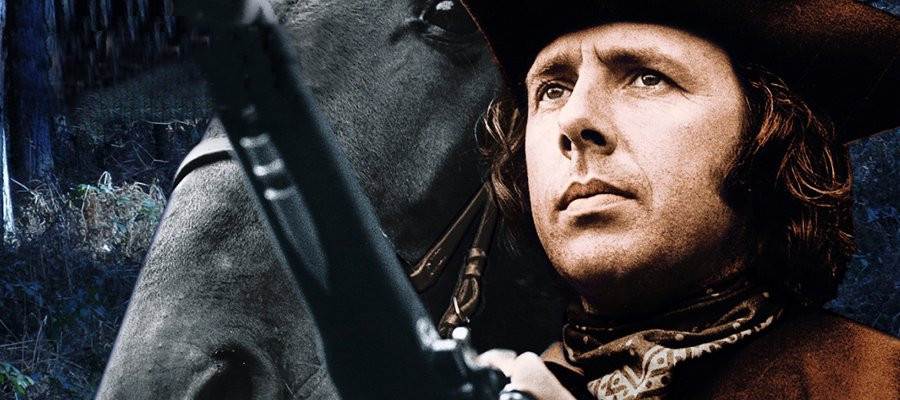
Dick Turpin
1979 United KingdomA Swashbuckling Romp with a Dash of Rebellion
In 1979, ITV delivered a thoroughly entertaining slice of historical adventure with Dick Turpin, a series that reimagined England’s most infamous 18th-century highwayman as a charming anti-hero in the mould of Robin Hood. Starring Richard O’Sullivan—then best known for his role in the sitcom Man About the House—the series brought together period drama, action, and a healthy dose of humour, all wrapped up in the romantic myth of Turpin and his legendary steed, Black Bess.
The real Dick Turpin, of course, was a far more unsavoury character: a violent criminal who operated chiefly around London and was ultimately hanged in York in 1739. But history was never the point. Thanks to the Penny Dreadfuls of the 19th century—cheap, sensationalist publications that churned out lurid tales of highwaymen, murderers, and monsters—Turpin’s story was transformed into legend. It was these romantic embellishments that shaped the version of Turpin we see here: a noble rogue, galloping through the English countryside with the law in hot and corrupt pursuit.
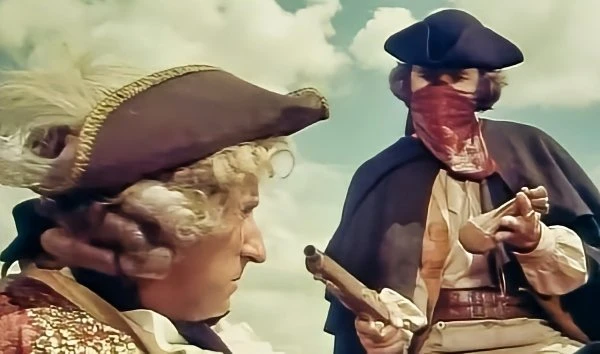
Though an earlier attempt to commit Turpin’s exploits to film came in 1933 with Dick Turpin, starring Victor McLaglen, that effort was largely forgettable—its chief point of interest today being a rare straight performance by James Finlayson, best known as the comic foil in numerous Laurel and Hardy films.
By contrast, the 1979 series was a far more successful and engaging effort. The premise saw Turpin, cheated out of his rightful earnings while serving in Flanders, turning to a life of highway robbery in order to reclaim his fortune and right the wrongs done to him. Far from being a cut-throat bandit, this version of Turpin is portrayed as a principled outlaw with a disdain for injustice—particularly when it comes from the ruling classes.
Enter Sir John Glutton, played with blustering pomposity by Christopher Benjamin, and his sneering henchman Captain Nathan Spiker, delightfully brought to life by David Daker. These two serve as the embodiment of corrupt authority—greedy, foolish, and endlessly outwitted by Turpin and his allies. Chief among those allies is Swiftnick (Michael Deeks), a scrappy and loyal youngster whose wide-eyed admiration for Turpin adds heart and levity to the series.
What made Dick Turpin stand out from other costume dramas of the period was its tone. While clearly made for family viewing, it didn’t shy away from grit or peril. The locations—shot in picturesque parts of England—added an earthy authenticity, and the costumes and staging gave the show a surprisingly convincing feel, despite its modest budget.
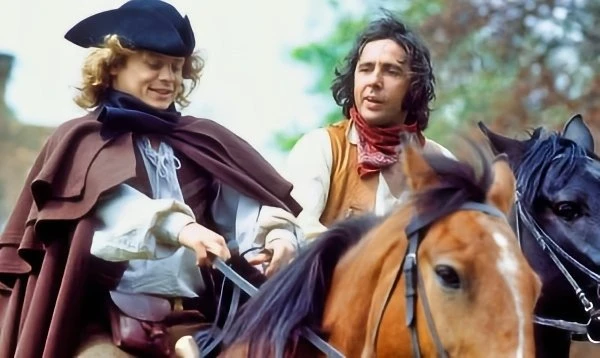
Richard O’Sullivan made for a perfect Turpin: witty, dashing, and full of charisma. It was a role that played to his strengths as a performer, while also allowing him to stretch into more dramatic territory. The on-screen chemistry between Turpin and Swiftnick lent the series a buddy-film quality, and their escapades struck just the right balance between thrilling and tongue-in-cheek.
So popular was the series that it spawned a spin-off in 1981, Dick Turpin’s Greatest Adventures, a mini-series which included an appearance from Dallas actress Mary Crosby—then riding high from her infamous turn as the woman who shot J.R. Ewing. Though lighter in tone, it showed the continuing appeal of the character and the world the show had built.
Ultimately, Dick Turpin succeeded not by trying to deliver a history lesson, but by embracing the folklore. It took the romanticised version of the highwayman—born not in court records but in the pulpy pages of the Penny Dreadfuls—and turned it into rollicking television. Devoid of historical accuracy, perhaps, but full of spirit, charm, and galloping adventure.
For audiences in the late '70s and early '80s, Dick Turpin offered a bit of escapist joy, and for fans of classic British telly today, it remains a fondly remembered gem from a time when Saturday teatime still meant sword fights, daring escapes, and cries of “Stand and deliver!”
Seen this show? How do you rate it?
Seen this show? How do you rate it?
Share on...
Published on December 7th, 2018. Written by Marc Saul for Television Heaven.