

The Sea Devils
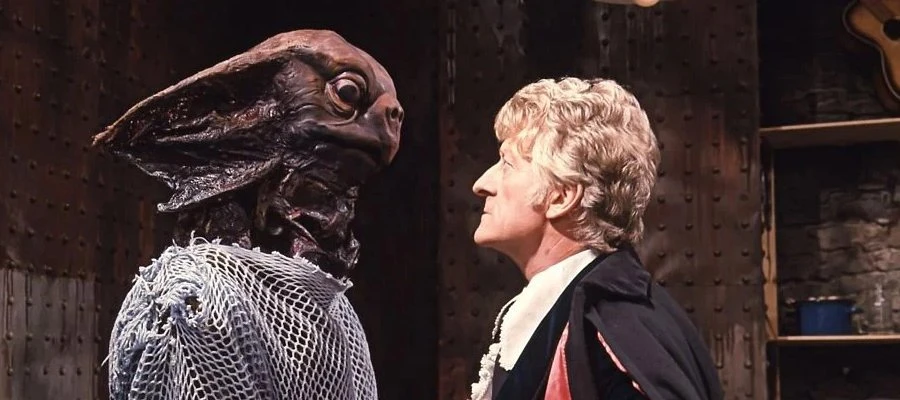
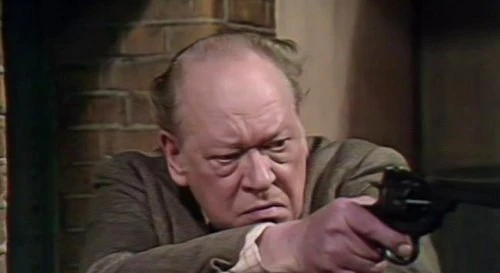
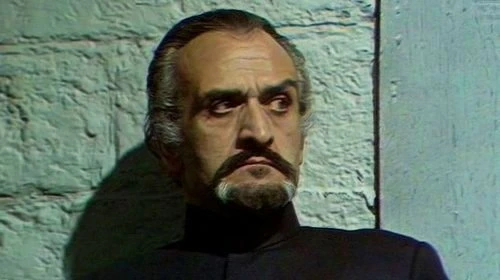
The Sea Devils, the third broadcast serial of Doctor Who’s ninth season, stands as one of the Pertwee era’s most atmospheric and ambitious adventures—part naval thriller, part moral parable, and part monster romp. It begins with the Doctor (Jon Pertwee) and Jo Grant (Katy Manning) visiting the incarcerated Master (Roger Delgado), locked away in a converted castle on an offshore island after the events of The Daemons. Although the Master appears docile, the Doctor is unconvinced, and rightly so: Colonel Trenchard (Clive Morton), the prison governor, is secretly aiding the villain in an obscure scheme. This early tension sets the tone for a story in which trust is repeatedly undermined and alliances shift like tides.
As ships vanish under mysterious circumstances, the Doctor’s investigations take him to HMS Seaspite, where charred remnants of a lifeboat hint at something lurking in the deeps. Meanwhile, the Master’s own research—assisted by charts supplied by the ever-pliable Trenchard—leads him to the same conclusion as the Doctor: an abandoned sea fort may hold the key. Their mutual deduction heralds a superbly eerie sequence in which the Doctor and Jo explore the isolated fort, encountering a dead caretaker, another driven mad by talk of “sea monsters”, and ultimately the first appearance of a lizard-like, aquatic humanoid. The creature’s destruction of their boat leaves our heroes stranded, and the Doctor’s improvised radio call for rescue encapsulates the serial’s blend of ingenuity and peril.
These aquatic beings are revealed to be relatives of the Silurians previously encountered under Wenley Moor—though the Doctor finally admits the term “Silurian” is scientifically inaccurate, preferring “Eocenes”. Malcolm Hulke’s decision to introduce an aquatic branch of the species, rather than simply reuse the originals, proves inspired. Maggie Fletcher’s costume designs lend the Sea Devils a distinctive identity, clothing them and heightening their sense of being an organised, cohesive civilisation rather than mere monsters.
The plot escalates quickly. Jo glimpses the Master masquerading as a naval officer in order to obtain electronic equipment; the Doctor’s attempt to confront him results in a wonderfully swashbuckling sword fight. Locked up once more through Trenchard’s misplaced loyalty, the Doctor realises the Master intends to help the Sea Devils reclaim the Earth. After escaping via a minefield—Pertwee wielding the sonic screwdriver to detonate mines is a quintessentially Third Doctor flourish—the pair join forces with Captain John Hart (Edwin Richfield) at the naval base to search for a missing submarine. The Doctor’s subsequent capture in the Sea Devils’ underwater base provides the story’s moral core, as he tries to negotiate peace while the Master stokes distrust and the humans launch depth-charge attacks.
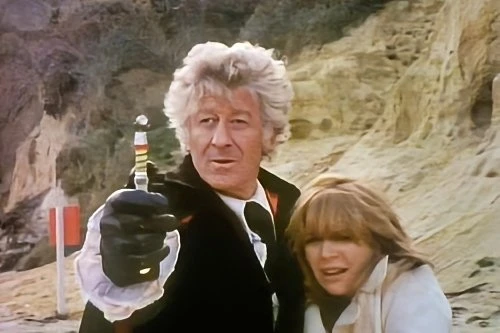
The climax, in which the Doctor and the Master must work together to build a sonic device, is classic Who. It also features the only full Pertwee-era utterance of the now-legendary phrase “reverse the polarity of the neutron flow”. In true Doctorly fashion, this “reversed polarity” sabotages the machine, destroying the Sea Devil base before military action can wipe them out. The Master’s escape—faking a heart attack before stealing a hovercraft—is a fittingly flamboyant exit. Yet the serial ends on a sombre note: the Sea Devils, like the Silurians before them, are betrayed by every side, illustrating Hulke’s belief that humans are often their own worst enemies.

Behind the scenes, The Sea Devils is equally fascinating. Barry Letts and Terrance Dicks had decided they wanted a sea-based story and asked Malcolm Hulke—who had served in the Royal Navy during the Second World War—to write an aquatic sequel to Doctor Who and the Silurians. Working titles for the serial included The Sea Silurians. Because the story required extensive location filming, it was allocated the second slot in the production run for Doctor Who’s ninth season, allowing shooting to take place in October.
It was also the first Doctor Who serial broadcast out of its production order, appearing after The Curse of Peladon despite being filmed earlier, in order to maintain the season’s Earth/alien-world alternation. Extensive location work around Portsmouth, the Isle of Wight, HM Naval Base Portsmouth, and No Man’s Land Fort gives the story an authenticity rare for early 1970s television. The Royal Navy enthusiastically participated, even providing serving sailors as extras. A delightfully bizarre footnote saw Naval Intelligence officials visit director Michael Briant after the effects team’s modified submarine model accidentally resembled an actual prototype.
Budget constraints resulted in the BBC Radiophonic Workshop producing Malcolm Clarke’s strikingly electronic score instead of the usual Dudley Simpson music. Clarke’s experimental soundscape became one of the serial’s defining features and was later celebrated at 2013’s Doctor Who at the Proms.
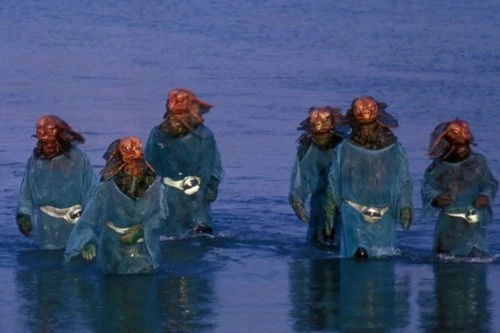
For all its virtues, The Sea Devils also occupies a curious place in the broader mythos of the Silurian/Sea Devil species. Despite forging a clear link between the land and sea variants, the show would not meaningfully revisit their shared history for decades. The brief return in 1984’s Warriors of the Deep was more a product of anniversary-year nostalgia than narrative necessity, and even the 2010 revival in The Hungry Earth/Cold Blood focused solely on the Silurians, reframing them as a separate evolutionary branch.
The Sea Devils finally made their long-awaited return to television in The Legend of the Sea Devils (2022). The episode reintroduced them with an updated yet recognisably faithful design, retaining the iconic armour and distinctive reptilian features while allowing for more expressive movement. Although the story offered only a brief glimpse into their culture and motivations, it provided a nostalgic thrill for long-time fans and marked a welcome resurgence of one of Doctor Who’s most memorable classic-era creatures.
Only in 2024, with the announcement of the Disney-era spin-off The War Between the Land and the Sea, did the Sea Devils finally receive the promise of fuller exploration.
The Sea Devils remains an enduring Pertwee classic: atmospheric, ambitious, socially conscious, and technically innovative. Its blend of naval action, moral ambiguity, and monster mythology makes it not merely a highlight of season nine, but one of the most distinctive stories of the Third Doctor’s tenure—a tale in which the real monsters might not be the scaly ones rising from the waves, but the humans who fear them.
Share on...
Published on December 5th, 2025. Written by Laurence Marcus for Television Heaven.