

Dead Like Me
2003 United StatesFew television series manage to balance existential melancholy with absurd humour quite as elegantly as Dead Like Me. Created by Bryan Fuller for the Showtime network, the series takes an outlandish premise — grim reapers living among ordinary people in Seattle — and transforms it into something unexpectedly human, poignant, and frequently hilarious. Though it lasted for only two seasons between 2003 and 2004, its reputation has endured because it feels unlike almost anything else on television.
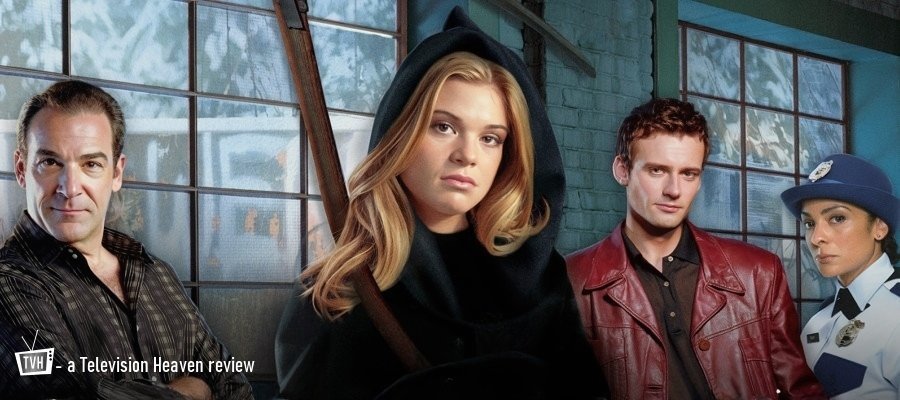
The series opens with one of the most bizarre deaths in television history: eighteen-year-old Georgia “George” Lass is struck and killed by a toilet seat falling from the deorbiting Mir space station during her lunch break on the first day of a dead-end temp job. The moment perfectly establishes the show’s peculiar tone. Death in this world is arbitrary, darkly comic, and often absurd, yet the emotional consequences remain painfully real. George, played brilliantly by Ellen Muth, becomes one of the undead — a grim reaper tasked with collecting souls moments before death and guiding them onwards to the afterlife.
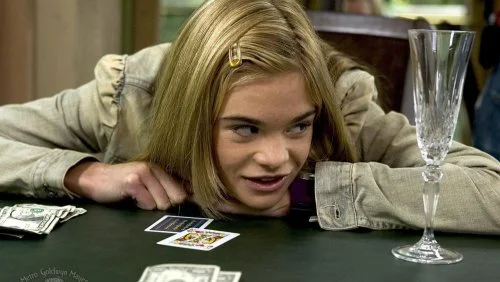
What makes the series exceptional is that it never allows its supernatural premise to overshadow its emotional core. George begins as detached, cynical, and emotionally withdrawn from both her family and her own future. Ironically, it is only after death that she begins to mature. Her afterlife forces her into responsibility: balancing soul collection assignments with a dreary day job, learning empathy from the people she reaps, and gradually forming connections with her fellow reapers. George’s narration carries much of the series, and Muth delivers it with the perfect mixture of dry sarcasm, weariness, and buried vulnerability.
The reapers themselves are one of the show’s greatest strengths because each reflects a different method of coping with death and unresolved pain. Mandy Patinkin is magnificent as Rube Sofer, the leader of the group and distributor of soul assignments via yellow Post-it notes. Rube could easily have become merely gruff or eccentric, but Patinkin imbues him with tremendous warmth beneath the stern exterior. His relationship with George evolves into one of the series’ emotional anchors, particularly because he quietly projects memories of his own daughter onto her, affectionately calling her “Peanut”.
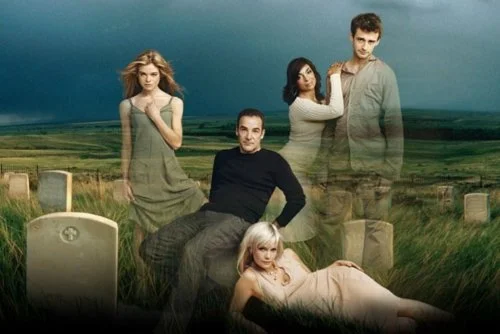
The supporting cast is equally strong. Callum Blue makes Mason irresistibly entertaining — reckless, drunken, irresponsible, yet oddly lovable. His antics often provide some of the broadest comedy, but there is always sadness beneath the humour, a reminder that he was someone who destroyed himself long before death claimed him. Jasmine Guy gives Roxy a commanding presence, balancing aggression with loyalty and reliability, while Laura Harris turns Daisy into far more than comic relief. Daisy’s theatrical vanity and endless stories about classic Hollywood stars initially seem superficial, yet Harris subtly reveals the insecurity and loneliness beneath the glamorous façade.
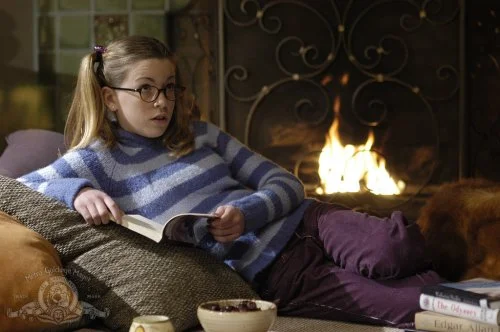
One of the series’ smartest structural decisions is its dual narrative focus. While George adapts to the bizarre mechanics of the afterlife, her family struggles to survive her absence. The show never forgets that a sudden death devastates the living left behind. Her mother Joy, played with remarkable complexity by Cynthia Stevenson, gradually unravels under the strain of grief and marital collapse, while George’s younger sister Reggie (Britt McKillip) develops increasingly strange behaviour in an attempt to process her loss. The image of Reggie stealing toilet seats and hanging them from a tree is simultaneously tragic, unsettling, and oddly touching — exactly the kind of tonal contradiction the series handles so well.
The mythology of the show is inventive without becoming overcomplicated. Reapers receive cryptic assignments with only initials, locations, and estimated times of death, forcing them to scramble through chaotic situations to find the correct soul before disaster strikes. The rules governing death are strange enough to feel mythical yet grounded enough to maintain dramatic tension. Details such as reapers appearing differently to the living, healing from catastrophic injuries, or only being seen in their true forms on Halloween add texture to the world without overwhelming the characters at its centre.
What truly distinguishes Dead Like Me, however, is its tonal confidence. The humour is morbidly dry and occasionally veers into outright screwball absurdity, yet the show can pivot suddenly into moments of startling sincerity. One episode may feature chaotic soul collections and bizarre accidents, while the next quietly meditates on loneliness, regret, or the fear of being forgotten. Rather than undermining one another, the comedy and melancholy strengthen each other. The series understands that laughter is often inseparable from grief.
There is also an unmistakable warmth running beneath the cynicism. George may begin the story convinced that life is meaningless, but death gradually teaches her otherwise. Through witnessing countless final moments — some tragic, some peaceful, some ridiculous — she begins to appreciate the fragile value of ordinary existence. That emotional growth gives the series surprising depth and prevents it from becoming merely quirky for its own sake.
It remains frustrating that the programme ended prematurely, particularly after Bryan Fuller departed early in the first season because of creative differences. Even so, the two seasons that exist feel remarkably complete in spirit, if not entirely in narrative closure. Many cult series lose their impact with time, but this one has aged extraordinarily well because its themes are timeless. Questions about mortality, identity, regret, and human connection never become irrelevant.
More than twenty years after its original broadcast, Dead Like Me still feels fresh, distinctive, and emotionally resonant. It is dark without becoming bleak, funny without sacrificing sincerity, and philosophical without pretension. Few series have explored death with such compassion, wit, and imagination. It remains one of television’s most unusual and rewarding hidden gems.
Seen this show? How do you rate it?
Seen this show? How do you rate it?
Share on...
Published on May 23rd, 2026. Written by Laurence Marcus for Television Heaven.