

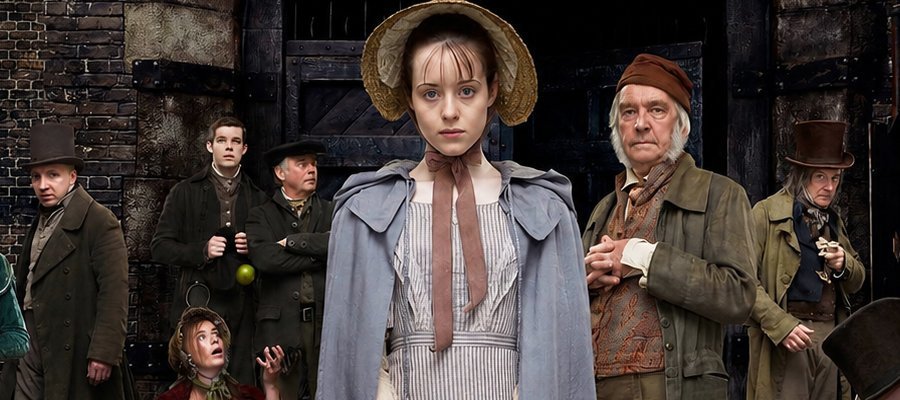
Little Dorrit
2008 United Kingdom, United StatesWhen people talk about Charles Dickens on television, Bleak House (2005) is often the first title that comes to mind. Yet the BBC's 2008 adaptation of Little Dorrit deserves to stand alongside it as one of the finest Dickens adaptations ever made. Ambitious in scale, emotionally rich and visually stunning, it transforms one of Dickens' longest and most intimidating novels into eight hours of engrossing television without sacrificing the novel's complexity or heart.
It's perhaps unsurprising that Little Dorrit isn't as widely recognised today as Great Expectations, Oliver Twist or A Christmas Carol. Dickens' novel stretches across some 900 pages and weaves together an enormous cast of characters, intricate mysteries and biting social satire. Many modern readers find it daunting. Yet in Dickens' own lifetime it was hugely successful, even outselling Bleak House. The BBC's greatest achievement was making this sprawling masterpiece accessible, serialising it into twice-weekly half-hour episodes, framed by feature-length opening and concluding instalments, that invited audiences to become immersed in Dickens' world.
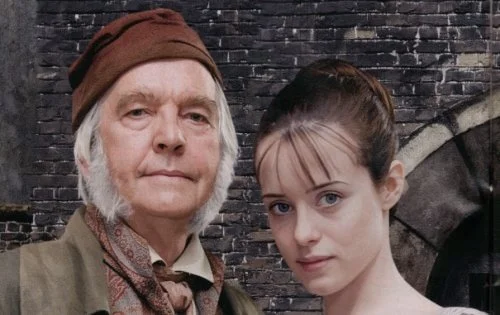
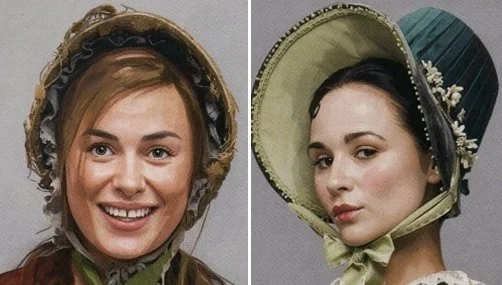
At its centre is Amy Dorrit, known affectionately as Little Dorrit, who has spent her entire life inside the Marshalsea Prison for Debt. Born there in 1805, Amy has never known life beyond its walls, devoting herself to caring for her father, William Dorrit, who has become the prison's self-important yet deeply vulnerable "Father of the Marshalsea." Despite the bleakness surrounding her, Amy earns a modest living as a seamstress for the forbidding Mrs Clennam, a stern, wheelchair-bound woman who rules her crumbling house with icy religious conviction, assisted by the sinister Jeremiah Flintwinch and his nervous wife, Affery.
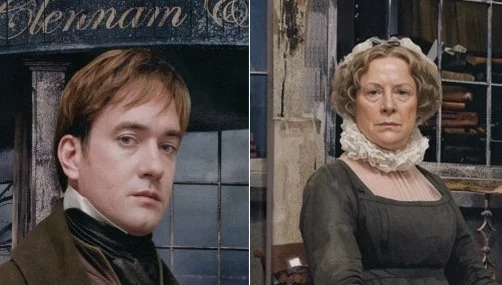
Meanwhile Arthur Clennam returns to England after fifteen years in China following his father's death. His father's final request—to "put it right" with Arthur's mother—and the mysterious pocket watch containing the embroidered message "Do not forget" immediately establish one of the drama's central mysteries. Arthur begins to suspect that his own family may somehow be responsible for the Dorrits' lifelong suffering, particularly after noticing his mother's unexpectedly charitable treatment of Amy.
From there the series expands naturally rather than feeling convoluted. Arthur's unrequited affection for the beautiful Pet Meagles, who loves the struggling artist Henry Gowan instead, sits alongside Amy's quiet love for Arthur and the heartbreak of prison turnkey John Chivery, who loves Amy himself. Arthur anonymously rescues Amy's feckless brother Tip from debt, partners with brilliant inventor Daniel Doyce, and commissions the wonderfully obsessive rent collector Mr Pancks to investigate why William Dorrit was imprisoned in the first place.
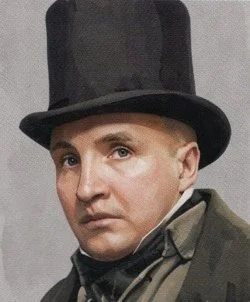
Andrew Davies' screenplay performs something close to a miracle. Rather than simply condensing Dickens, he finds the emotional spine running through the novel. Every subplot eventually feeds into the larger themes of responsibility, family, guilt and redemption. Even apparently secondary figures become essential pieces of an intricate design.
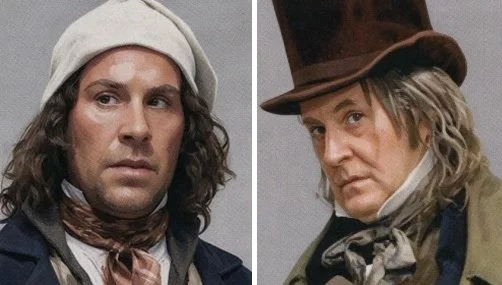
One of Dickens' greatest strengths was his ability to create unforgettable supporting characters, and this adaptation honours that gift. Mrs Clennam is a terrifying presence, imprisoned as much by bitterness as by her physical disability. Jeremiah Flintwinch seems permanently coiled with menace, while the gleefully malevolent murderer Rigaud injects genuine danger into proceedings. At first he appears almost detached from the central narrative, yet he gradually becomes the catalyst that forces long-hidden family secrets into the open.
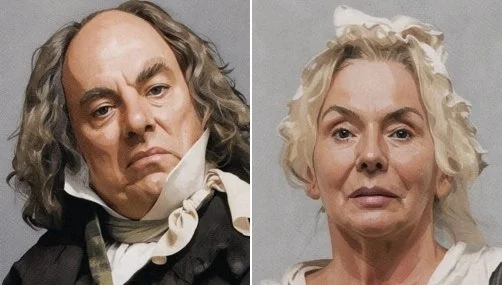
The mystery surrounding the Clennam family unfolds beautifully. Flintwinch's decision to hide rather than destroy Mrs Clennam's secret papers eventually places them in Rigaud's hands after a shocking murder, revealing a devastating truth about Arthur's parentage and Amy's forgotten inheritance. When these revelations finally arrive late in the story, they feel completely earned rather than melodramatic.
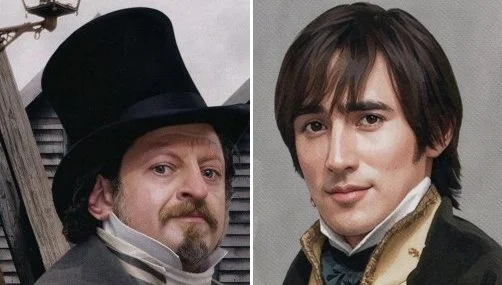
But Little Dorrit is never simply a mystery. Dickens famously wrote that he had been "blowing off a little indignant steam," and his anger is directed squarely at Victorian society. The London presented here is one obsessed with money, status and appearances. Bureaucracy suffocates common sense through institutions like the Circumlocution Office, landlords exploit the poor, and everyone worships wealth regardless of its source.
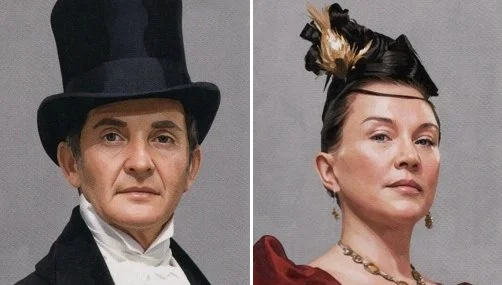
Nothing illustrates this better than the rise and fall of Mr Merdle, the supposedly infallible financial genius known as "the man of the age." Arthur entrusts Doyce & Clennam's money to him, William Dorrit invests his newly acquired fortune with him, and fashionable society treats him as beyond criticism. When Merdle's empire collapses after his suicide, exposing his bank as little more than a giant Ponzi scheme, Dickens' nineteenth-century satire feels startlingly modern. Written more than 150 years before the global financial crises of the twenty-first century, it remains remarkably prophetic in its portrayal of speculation, greed and blind faith in financial institutions.
Money, however, is never presented as the route to happiness. William Dorrit's sudden transformation from debtor to wealthy gentleman proves almost tragic. Having inherited a fortune, he desperately attempts to erase every trace of the Marshalsea from his family's lives. He dismisses old friends, hires the absurdly pompous Mrs General to teach refinement to his daughters and embarks on an extravagant Grand Tour across Europe.
Yet no amount of wealth can erase decades of psychological imprisonment. Amy remains uncomfortable among the aristocracy, while William slowly loses his grip on reality. His heartbreaking collapse at a grand Venetian ball, where he publicly reverts to believing himself the Father of the Marshalsea before dying shortly afterwards, is among the adaptation's most devastating sequences. His brother Frederick dying quietly beside him the following morning only deepens the tragedy.
The story then comes full circle. Arthur himself is ruined by Merdle's collapse and voluntarily enters the Marshalsea rather than evade his debts, occupying the very room once lived in by Amy. It is here that John Chivery finally reveals Amy's love, while Arthur battles a dangerous fever under Amy's devoted care. The emotional symmetry is beautifully handled.
The final episodes bring together every major storyline with remarkable elegance. Rigaud attempts to blackmail Mrs Clennam, forcing her to confront decades of cruelty. She finally reveals that Arthur was not her biological son but the child of her husband's affair, and that Amy had unknowingly been left money years before. Her desperate journey to seek forgiveness culminates in one of the adaptation's most unforgettable moments as the decaying Clennam house collapses, crushing Rigaud while Mrs Clennam herself dies after finally confessing the truth.
Even after all these revelations, Dickens refuses an easy ending. The Dorrit fortune has vanished with Merdle's fraud, reducing Amy to poverty once again. Only then are Arthur and Amy finally free to admit their love without wealth or obligation standing between them. Daniel Doyce's triumphant return from Russia, where he has made a fortune through honest innovation, provides the hopeful counterpoint to Merdle's corruption, allowing Arthur to rebuild his life before marrying Amy in a deeply satisfying conclusion.
Running beneath every plotline is the adaptation's central idea: imprisonment. Sometimes it is literal, as with the Marshalsea. Sometimes it is bureaucratic, embodied by endless red tape. Sometimes it is emotional, spiritual or psychological. Mrs Clennam is trapped by bitterness, William Dorrit by shame, Arthur by inherited guilt, and Amy by duty. Even Rigaud represents imprisonment in another form, forever insisting upon his own gentility despite his criminal nature. Dickens suggests that the past itself can become a prison from which few people ever truly escape.
Visually, the production is extraordinary. Filmed over twenty-two weeks by three directors across multiple British locations, it convincingly recreates Victorian London while also transporting viewers to Marseille and Venice. Victorian streets were painstakingly constructed at Pinewood Studios, while Barbara Kidd's sumptuous costume design and James Merifield's richly detailed production design earned widespread awards recognition. Few television period dramas have looked this expensive or this authentic.
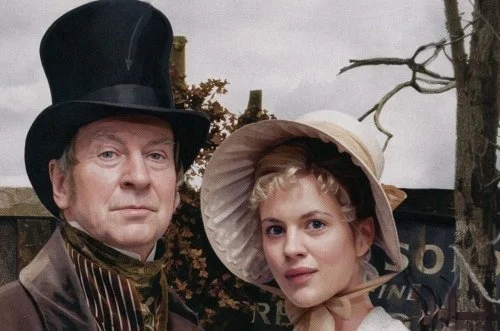
The performances are uniformly exceptional across an enormous cast of more than two hundred speaking roles.
Matthew Macfadyen gives Arthur Clennam tremendous quiet dignity, making him an unusually restrained Dickens hero whose decency never feels sentimental. Judy Parfitt is unforgettable as Mrs Clennam, balancing terrifying moral certainty with heartbreaking vulnerability once the truth emerges. Andy Serkis clearly relishes every scene as the flamboyantly wicked Rigaud, while Eddie Marsan brings surprising warmth and humour to the indefatigable Mr Pancks.
The true emotional heart of the production, however, lies with Tom Courtenay and Claire Foy.
Courtenay delivers one of the finest performances of his distinguished career as William Dorrit. He captures both the ridiculous vanity of a man clinging desperately to borrowed dignity and the profound sadness of someone psychologically unable to escape decades of humiliation. His gradual mental collapse is painful precisely because the audience understands how completely prison has shaped him.
Then there is Claire Foy. Remarkably, this was her breakthrough role after graduating from drama school. Casting director Gail Stevens deliberately searched for an unknown actress, visiting drama schools across Britain before discovering Foy at the Oxford School of Drama. Andrew Davies later admitted that a larger budget would probably have forced them towards a more established international star, but instead they found exactly what the story required. As Davies observed, audiences wouldn't see an actress playing Amy Dorrit—they would simply see Amy herself.
He was absolutely right.
Foy's performance is astonishingly mature, conveying immense kindness, quiet resilience and emotional intelligence without ever becoming overly saintly. Amy rarely commands attention through dramatic speeches or grand gestures. Instead, Foy communicates volumes through the smallest expressions, making Amy's unwavering compassion feel entirely genuine. It is impossible to imagine anyone better suited to the role.
Ultimately, Little Dorrit succeeds because it understands that Dickens' greatest strength wasn't merely his intricate plotting or colourful characters, but his humanity. Behind the satire of bureaucracy, the exposure of financial corruption and the elaborate family secrets lies an enduring belief that kindness matters more than wealth, status or social position.
This adaptation captures all of that. It is lavish without becoming superficial, faithful without feeling constrained, and emotionally affecting without descending into melodrama. Andrew Davies distils Dickens' sprawling narrative into something coherent and compelling while preserving its intelligence, humour and compassion.
More than fifteen years after its original broadcast, the BBC's Little Dorrit remains one of television's greatest literary adaptations. It transforms a famously difficult novel into an utterly absorbing drama while remaining true to Dickens' vision. Richly acted, beautifully produced and profoundly moving, it doesn't simply adapt Little Dorrit—it fully realises its genius.
-----------------------------------
a* Matthew Macfadyen - Arthur Clennam who knows that there is something that needs to be put right in his family. Judy Parfitt - Mrs Clennam, a sad character who hasn't left her house in 15 years and who has never known love.
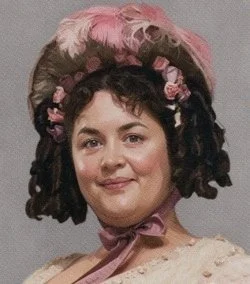
b* Ruth Jones as Flora Finching - life didn't turn out the way she expected after her first love, Arthur Clennam, left to work in China.
c* Eddie Marsan - Mr Panks; a man who looks like a harassed clerk but turns out to have far more spirit and decency than anyone expects
d* Alun Armstrong - twins Jeremiah and Ephrain Flintwinch - Jeremiah is Mrs Clennam's old retainer. Sue Johnston - Affery Flintwinch, a nevous wreck who has been constantly bullied by Jeremiah and Mrs Clennam.
e* Andy Serkis - The villain Rigaud uncovers the true identities of Arthur Clennam and Amy Dorrit. Alex Wyndham - Henry Gowan is one of Dickens’ most quietly poisonous creations — charming on the surface, but hollow underneath.
f* Anton Lesser as Mr Merdle - a banker with friends in high places who, despite his influences, leads a hollow life. Amanda Redman as Mrs Merdle - the self-appointed queen of society who is bored by her husband - but not by his money.
g* Jason Thorpe - Cavalletto is a cheeky loveable rogue with a glint in his eye. James Fleet as Frederick Dorrit - William's brother, who visits him each week in prison.
h* Eve Myles as Maggie, Amy's best friend, who, as the result of a childhood fever has left her as a child in an adult body. Emma Pierson as Amy's sister, Fanny.
i* Bill Patterson - Mr Meagles, a retired banker; warm‑hearted, decent, and rather anxious. Georgia King - Pet Meagles; incredibly spoilt and naïve even though she has the best of intentions.
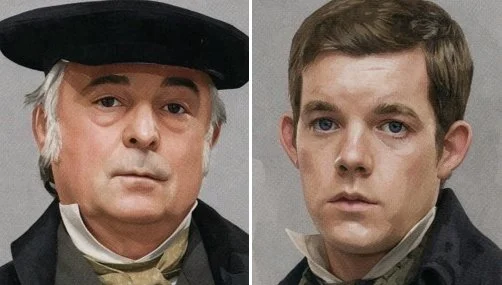
j* Ron Cook as Mr Chivery - the Turnkey (jailer) of Marshalsea Prison. Russell Tovey as John Chivery - kind, honest, sensitive and incapable of hiding anything.
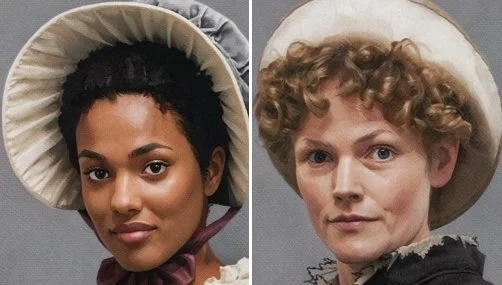
k* Freema Agyeman - Tattycoram, one of Dickens’s most vivid “lost girls” — passionate, wounded, and constantly at war with her own sense of abandonment. Maxine Peake - Miss Wade; a woman spurned and out for vengeance.
Seen this show? How do you rate it?
Seen this show? How do you rate it?
Share on...
Published on June 30th, 2026. Written by Laurence Marcus for Television Heaven.