

The Tenth Planet
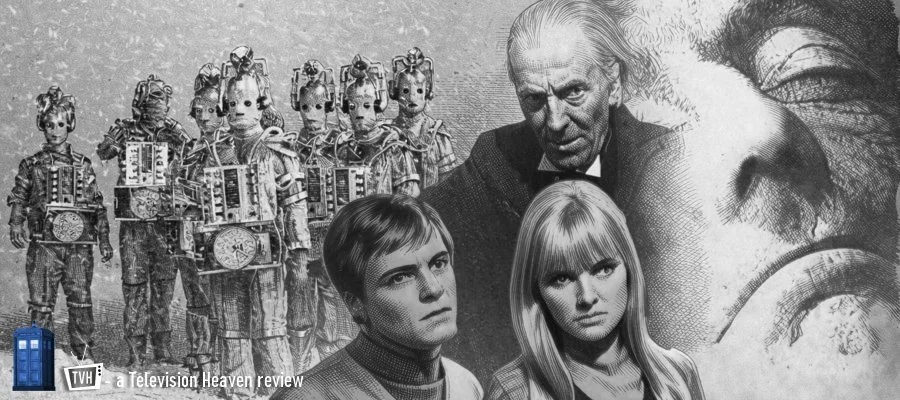
The Tenth Planet, produced and broadcast in 1966, occupies a unique and immensely important place in Doctor Who history. Few stories can claim to have altered the direction of the series quite so profoundly. Within its four episodes it introduces the Cybermen, bids farewell to William Hartnell's First Doctor, and lays the foundations for the concept of regeneration, ensuring the programme's survival for decades to come. Even if its narrative occasionally struggles under the weight of its ambitions, its historical significance and dramatic strengths make it one of the defining stories of the Hartnell era.
The serial itself emerged from an intriguing creative process. Academic Kit Pedler, having acted as a scientific adviser on The War Machines, was invited to submit story ideas of his own. While his earliest concepts involved mysterious visitors from Earth's "twin planet", discussions with script editor Gerry Davis steered the story in a far more unsettling direction. Drawing on his own concerns about advances in prosthetics and "spare part" surgery, Pedler imagined a race of cybernetically enhanced humans who had sacrificed emotion and individuality in pursuit of survival. Together, Pedler and Davis created the Cybermen as soulless beings whose mechanical augmentation had stripped away everything that made them human, a concept that proved one of the most enduring creations in science fiction. Davis would ultimately undertake substantial rewrites after Pedler became ill during production, and both men regarded The Tenth Planet as the first truly original serial of their stewardship, establishing what would become the programme's famous "base-under-siege" format.
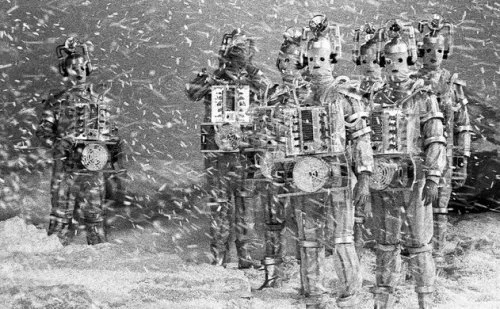
That format is evident throughout. By confining most of the action to the isolated, claustrophobic environment of the South Pole tracking station, the story creates an atmosphere of mounting tension that would become a blueprint for countless future adventures. The enclosed setting allows the Cybermen's slow, relentless advance to feel genuinely oppressive, while simultaneously foreshadowing the style of storytelling that would flourish under Patrick Troughton's tenure. It was also the programme's first story to venture into the near future, grounding its science fiction in the contemporary anxieties of the Space Race and humanity's increasing dependence upon technology.
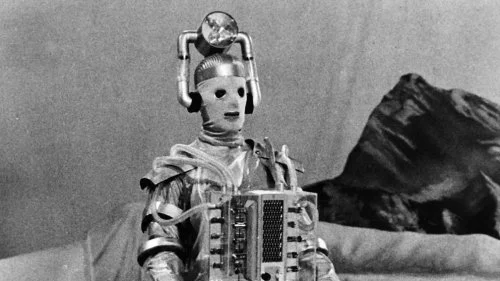
The Cybermen themselves remain one of the story's greatest triumphs. Never again would they appear quite as eerie as they do in this debut outing. The primitive cloth faces, exposed human features and unsettling electronic voices make these Mark I Cybermen far more disturbing than many of their sleeker successors. Their design constantly reminds us that human beings still exist beneath the mechanical shell, making their loss of emotion all the more horrifying. Rather than presenting monsters motivated by conquest alone, Pedler and Davis give them a chillingly logical objective: survival through conversion. Their cold rationality forms the perfect counterpoint to humanity's emotional responses, making them compelling adversaries whose influence on the series would prove immeasurable.
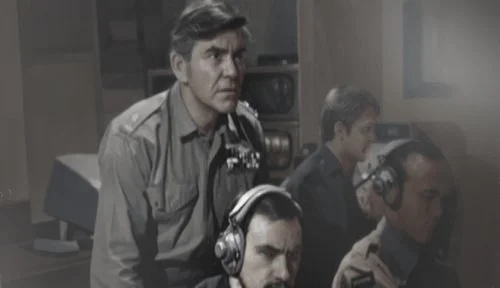
Standing against them is Robert Beatty's magnificent General Cutler. Beatty dominates virtually every scene he appears in, portraying Cutler as a man of uncompromising authority whose instinct is always to confront rather than negotiate. His clipped, forceful delivery turns even routine dialogue into commanding pronouncements, and while Cutler's stubbornness repeatedly places humanity in greater danger, Beatty ensures he never descends into caricature. Fleeting moments of vulnerability reveal a man whose pride and fear are locked in constant conflict, making him unexpectedly sympathetic despite his disastrous decisions.
William Hartnell's final performance as the Doctor is equally memorable. Although illness sadly prevented him from appearing in the third episode, necessitating Gerry Davis to redistribute much of his dialogue among the supporting cast, Hartnell nevertheless leaves an indelible impression. The production had already been structured to reduce his workload because of his declining health, but his absence inevitably creates the poignant irony that the final surviving live-action episode of his era contains no performance from him at all.
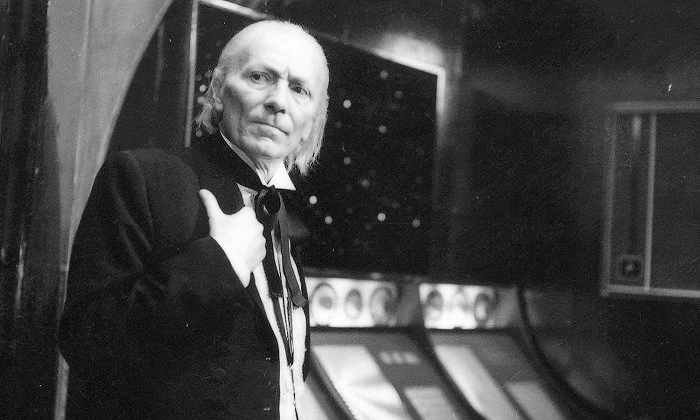
When Hartnell is on screen, however, he is magnificent. His Doctor remains every bit the commanding, sharp-witted figure audiences had come to love, trading wonderfully barbed exchanges with General Cutler while steadfastly defending morality against the Cybermen's ruthless logic. At the same time, Hartnell conveys the Doctor's increasing physical frailty with remarkable conviction, presenting a hero whose body is finally wearing out but whose spirit remains unbroken. There is an undeniable dignity to his performance, and he exits the role with all the gravitas of a monarch taking a final bow.
Behind the scenes, Hartnell's departure represented one of the greatest risks the programme had ever taken. Increasingly unhappy with the darker direction of the series and suffering from deteriorating health, Hartnell had reached a point where continuing in the role had become impossible. Producer Innes Lloyd and Gerry Davis devised an inspired solution: rather than replacing the actor without explanation, the Doctor himself would undergo a physical renewal into a younger man. Influenced in part by The Strange Case of Dr Jekyll and Mr Hyde, this revolutionary concept would eventually become known as regeneration and remains the cornerstone upon which Doctor Who has continued to reinvent itself for generations.
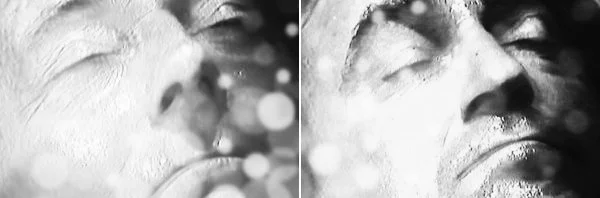
Sadly, the full impact of that historic moment cannot be experienced exactly as audiences saw it in 1966. The BBC's tape-wiping policy resulted in the loss of the fourth episode, with only around thirty seconds of surviving footage—including the regeneration itself—and John Cura's telesnaps preserving visual records of the remainder. Fortunately, the DVD and subsequent releases feature a full-length animated reconstruction that successfully recreates much of the atmosphere and wonder surrounding television's first regeneration. While nothing can truly replace the original studio recording, the animation allows modern viewers to appreciate the sheer audacity of what the production team accomplished.
If the story possesses a significant weakness, it lies in its plotting. Logical inconsistencies and occasional lapses in credibility are difficult to ignore upon reflection, and certain supporting characters remain frustratingly underdeveloped. Yet these shortcomings rarely undermine the viewing experience because the production moves with such confidence and urgency. Strong performances, tense direction and the overwhelming significance of the events unfolding ensure that the narrative's flaws become secondary concerns until long after the closing credits.
Ultimately, The Tenth Planet succeeds not because it is flawless, but because it achieves so much that transcends its imperfections. It introduced one of Doctor Who's greatest monsters, established the template for countless future adventures, and solved what seemed an impossible production crisis with astonishing imagination. Most importantly, it gave William Hartnell a fitting farewell. His contribution to Doctor Who cannot be overstated, and his final story serves as a powerful reminder that without his commanding presence during those formative years, the legend would never have endured. If Hartnell had to leave, there could scarcely have been a more significant or more poignant departure than The Tenth Planet.
Share on...
Published on July 10th, 2026. Written by Laurence Marcus for Television Heaven.