

The Cruel Necessity
1962 United KingdomThere is something uniquely compelling about historical dramas that refuse to simplify the past into heroes and villains, and The Cruel Necessity is an example of that approach. First broadcast by the BBC on 3 August 1962, David Lytton's only television play tackles one of the defining moments in English history: the trial and execution of King Charles I. Rather than presenting the events as a straightforward political drama, the play immerses viewers in the legal, moral, and religious arguments that culminated in the unprecedented execution of a reigning monarch.
The play opens with words of the Solicitor-General that immediately establish the gravity of the occasion: "My Lord President, I do bring into this court a charge of high treason and of other crimes against Charles Stuart King of England here present." From that moment, The Cruel Necessity makes it clear that it is less interested in spectacle than in the extraordinary power of language. Much of the script consists of the actual words spoken during the proceedings in Westminster Hall in January 1649, lending the production an impressive degree of authenticity. Instead of modernising the dialogue, David Lytton trusts the historical record, allowing the audience to experience the legal confrontation almost as those present might have done.
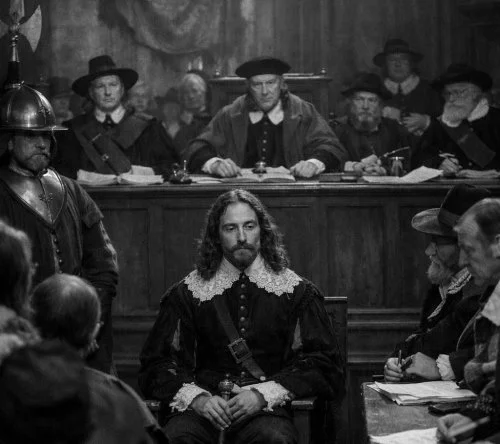
One of the play's strengths is that it never loses sight of the wider issues beneath the courtroom exchanges. Charles I's declaration, "If power without law may yet fabricate law and alter the fundamental justice of the kingdom, then I do not know what person in England can be assured of his life or anything he calls his own," remains astonishingly relevant. Whether or not viewers sympathise with the King, his argument forces uncomfortable questions about constitutional authority, justice, and the dangers of governments reshaping the law to suit political necessity.
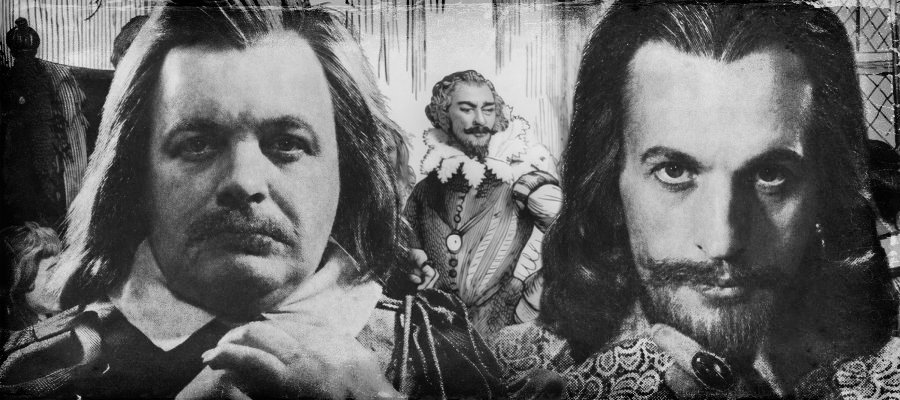
Patrick Wymark (The Power Game) stars as Oliver Cromwell. Rather than portraying him as a one-dimensional revolutionary or outright tyrant, Wymark presents a man burdened by the enormity of his actions but utterly convinced that Providence has chosen his path. Cromwell's justification of the King's execution through Scripture, particularly the Book of Numbers, Chapter 35, Verse 33—"The land cannot be cleansed of the blood that is shed therein, but by the blood of him that shed it"—illustrates how deeply intertwined politics and religious conviction had become during the English Civil War. The title itself stems from Cromwell's own description of the trial as "A necessity. Cruel, but a necessity."
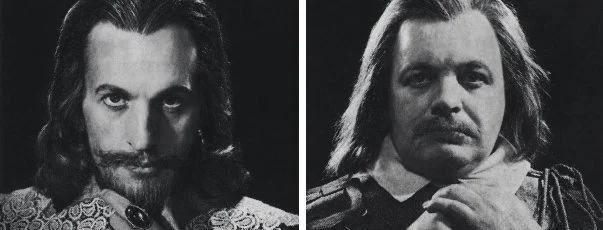
David William (The Spread of the Eagle) stars as Charles I. His performance avoids sentimentalising the monarch while presenting him as a man who recognises that defeat in life may become victory in death. William portrays Charles as increasingly aware that the trial offers him the opportunity to strengthen the institution of monarchy through martyrdom. His dignity in the face of an apparently predetermined verdict provides the emotional heart of the production.
Also, appearing in the play was Julian Glover (By the Sword Divided) as Col. Tomlinson, John Ringham (Just Good Friends) as Richard Ingoldsby-who was one of the few regicides to be pardoned, Jerome Willis (The Sandbaggers) as Lord General Fairfax-who commanded the New Model Army from 1645 to 1650, Noel Johnson (An Age of Kings) as Sir Thomas Herbert- a gentleman of the bedchamber of King Charles I while Charles was in the custody of Parliament, and Maurice Colbourne (Victoria Regina) as William Juxon-Archbishop of Canterbury from 1660 until his death in 1663. Janet Aust appeared in her one and only television production as 13-year-old Princess Elizabeth, the second daughter of Charles who wrote an account of their last meeting. Elizabeth died in exile the following year on the Isle of Wight and was buried at St. Thomas's Church, Newport. Two hundred years later, Queen Victoria, who had settled at Osborne House nearby, commissioned a white marble sculpture of Elizabeth.
David Lytton proved an ideal writer for this material. Having left South Africa following the fall of Jan Smuts' government in 1948, he spent much of his literary career examining political and social injustice, he clearly understood the moral ambiguities of power. Rather than depicting history as a sequence of inevitable events, he focused on the bargaining, compromises, cowardice, private conversations, and moral evasions that public history often overlooks. The trial as seen by ordinary Londoners in 1649 becomes only part of a much larger story unfolding behind closed doors.
Peggie Phillips, the television critic for The Scotsman newspaper, was not overly impressed and claimed that the production failed to be 'good entertainment'. The fault for this was, she claimed, not with the writer but in the production of Peter Dews, 'who came through as a Royalist in the old game of Cavaliers and Roundheads. The monarch—in reality stiff, superior and stupid—was a charming family man, which made it all the more disappointing that the heart-breaking pathos of his last interview with his children was scarcely conveyed. Nor did the superstitious awe and fear afflicting those who watched his taking off receive due weight.’ Her opinion of Patrick Wymark’s Cromwell was even more scathing. ‘Wymark's Cromwell lacked the steely, contained power which was due the Lord Protector, and made him a blustering, brawling fellow, having trouble with his impossible gang. The real drama between Charles and Cromwell lies in the clash of two immovable convictions, but Cromwell’s had to be the greater because it had the greater hurdle to clear. Wymark's Protector would never have stayed the course.'
Where the play did succeed was in illustrating the extraordinary irony surrounding Charles's execution. Even those committed to the King's death recognised the unprecedented nature of what they were doing. The signatures on the death warrant carried enormous symbolic weight, transforming political conviction into irreversible action.
Although viewers expecting fast-paced historical action may have found The Cruel Necessity deliberately measured, its emphasis on debate, legal argument, and character, ultimately proves to be its more absorbing factor. The production treats its audience as intelligent participants, inviting them to wrestle with competing visions of justice rather than offering easy answers. The historical language demands concentration, but it rewards that effort with remarkable intellectual and dramatic richness.
More than sixty years after its original broadcast, The Cruel Necessity remains a dramatic exploration of power, conscience, and constitutional principle. It is a courtroom drama, a political thriller, and a profound meditation on whether noble ends can ever justify extraordinary means. By refusing to portray either Cromwell or Charles I as entirely right or entirely wrong, David Lytton crafted a drama that transcends its historical setting. It is not simply about the trial of a king—it is about the perilous moment when law becomes subordinate to power, and how societies attempt to justify acts they know history will judge.
Seen this show? How do you rate it?
Seen this show? How do you rate it?
Share on...
Published on June 28th, 2026. Written by Laurence Marcus for Television Heaven.