

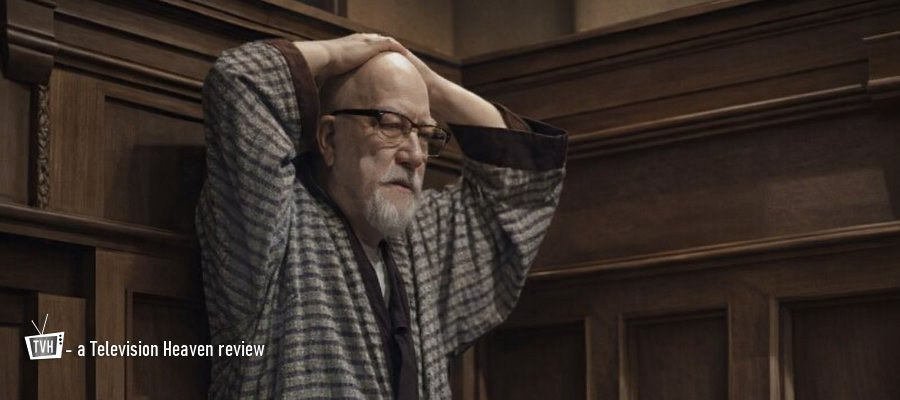
It’s Murder. But Is It Art?
1972 United KingdomBearing the irresistibly eye-catching title It’s Murder. But Is It Art?, this delightful and now-lost BBC comedy-drama stands as a fascinating footnote in the Corporation’s long, occasionally tentative flirtation with the comedy-thriller. The serial was penned by David Pursall and Jack Seddon and, crucially, provided Arthur Lowe with a welcome vehicle away from his then-dominant Dad's Army persona. In doing so, it also proved paved the way for later productions such as Murder Most English, gently blending intrigue with light entertainment and/or dark humour at a time when such hybrids were falling out of institutional favour.
On the surface, the plot was reassuringly straightforward. The story centres on the murder of the beautiful blonde Tina Kent, discovered dead in the drawing room of Brigadier Austin Binghop (Richard Hurndall). The police waste little time in forming their conclusions, with Inspector Hook (Dudley Foster), the officer leading the investigation, appearing firmly convinced of the Brigadier’s guilt. Only one man harbours serious doubts: the somewhat eccentric amateur detective Phineas Drake, played with relish by Arthur Lowe, who is determined to prove Binghop’s innocence before the wheels of justice grind inexorably forward.
With Binghop held in police custody, Drake embarks on his own investigation, a course of action that places him in considerable personal danger. Yet Drake proves himself a wily and resourceful figure, more than capable of meeting the challenge. As Inspector Hook continues his parallel pursuit of evidence to secure a conviction, the narrative becomes a race against time to prevent Binghop from standing trial for murder. Drake’s enquiries bring him into contact with Mrs MacPherson (Sheila Keith), a Chelsea socialite with more than a passing interest in the case. Drake becomes convinced that the real killer of Tina Kent may be residing in her home, but his determination to uncover the truth has deadly consequences. A second, untimely murder occurs, and events take a darker turn when the killer targets Drake himself, hoping to ensure that Binghop is ultimately found guilty of the original crime.
What makes It’s Murder. But Is It Art? especially noteworthy is its place in television history. The comedy-thriller was once a staple of BBC Television, particularly during the 1950s, but the near-total loss of those productions makes their quality difficult to judge. By 1972, this approach was viewed with suspicion by the BBC, which considered such material too light-weight and middle-brow for its desired audience share. Today, shows that mix darker overtones with comedy such as Only Murders in the Building, Inside No.9 and Russian Doll demonstrate that audiences relish a strong narrative enlivened by intelligent humour. Ironically, It’s Murder. But Is It Art? itself suffered the same archival fate as its 1950s predecessors, and today not a single complete episode survives, only a handful of tantalisingly brief clips.
Produced and directed by Graeme Muir, the series also boasted a strong supporting cast, with notable performances from Jill Allen, Petronella Barker, Anthony Sagar and Ambrosine Phillpotts, all contributing to the programme’s distinctive tone and atmosphere.
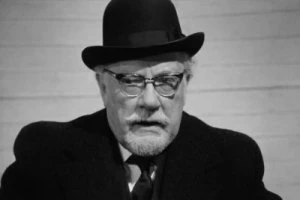
The BBC clearly recognised the appeal of Arthur Lowe stepping out of uniform, as evidenced by the promotional material published in the Radio Times for the first episode. In an interview with Deirdre MacDonald, Lowe, described by the reporter as short and stocky, wearing a belted tweed jacket, clutching a dog-tooth-checked deerstalker and sporting a white beard—cut a figure far removed from Captain Mainwaring of Warmington-on-Sea. Phineas Drake, Lowe explained, was “an eccentric amateur detective, equally as happy in his pony-trap as in his 160 mph Mercedes.” His peculiar interests ranged from campanology to practising yoga on top of a chest of drawers. “He’s irascible, yes. And a bit of a poseur. But he’s very brave too,” Lowe added, neatly encapsulating the character’s appeal.
Seen from the distance of several decades, It’s Murder. But Is It Art? feels like a missed opportunity—both for viewers who never got the chance to rediscover it and for an institution that briefly underestimated the enduring charm of wit threaded through suspense. As a lost series, it survives largely in reputation, but what remains suggests a clever, confident production that deserved a far longer life than television history ultimately allowed it.
Seen this show? How do you rate it?
Seen this show? How do you rate it?
Share on...
Published on January 13th, 2026. Written by Laurence Marcus for Television Heaven.