

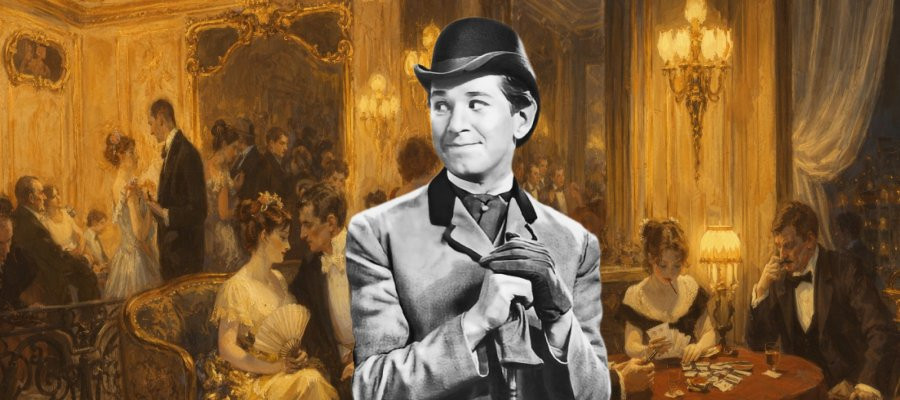
Kipps
1960 United KingdomWhen ITV brought Kipps to the screen in 1960 as an eight-part serial, the production had already been under consideration for over a year. The chief obstacle, as reported in TV Times in October 1960, was casting the right actor for the title role. The breakthrough came with the appointment of 22-year-old South African-born Brian Murray.
The serial adapts H. G. Wells’ novel, first published in 1905 after several years of drafting and re-planning. Originally begun under the title The Wealth of Mr. Waddy, the earliest lost version did not involve Kipps, who was to have come into the novel later. In its final form, the story follows a drapery assistant who unexpectedly inherits a fortune and attempts to enter upper-class society—only to discover that sophistication and status do not guarantee belonging. After various humiliations and misfortunes, he ultimately returns to the comfort of his former life and friends.
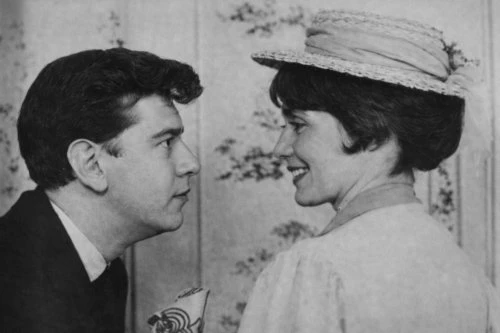
Kipps – The Story of a Simple Soul was reportedly Wells’ own favourite among his works. Its semi-autobiographical roots run deep: set largely in Kent, it draws heavily on Wells’ early experiences in drapery shops. As a boy of 13, he endured punishing 13-hour days behind a counter, struggling against his mother’s insistence that he pursue shopkeeping. After dismissal from one position and frustration in another apprenticeship, he escaped retail life for teaching and eventually full-time writing in 1893. The novel channels his resentment of tyranny and exhausting labour. In one cutting line delivered by Buggins (played in the serial by Kenneth Cope), Wells crystallises the draper’s grim prospects: “We’re in a blessed drainpipe and we got to crawl along it till we die!”
Playwright Clive Exton spent three months shaping the novel into half-hour episodes. Though some incidents were omitted for time, Exton maintained remarkable fidelity to Wells’ text—at times incorporating large passages verbatim and even closing the final episode with the novel’s original words.
Behind the scenes, authenticity was pursued with near-obsessive care. Researchers examined everything from the look of 1901 newspaper front pages to sourcing a 1904 car for studio use. Period-accurate wigs, Victorian shop trimmings, and bicycles typical of turn-of-the-century streets were meticulously assembled. Budget constraints demanded ingenuity: to represent a river, the team constructed a 20-by-8-foot wooden tank filled with two feet of water.
Direction by Stuart Latham provided balance and restraint.
Brian Murray’s casting proved inspired. Born Brian Bell in Johannesburg to professional golfer Alfred Bell and American actress Molly Murray, he was encouraged into acting from childhood. A stage performer at five and a well-known child actor in South Africa, Murray later moved into radio—famously overstating his age to secure work until National Service exposed the truth. By 1960, he had already impressed British audiences in Country Cousins, a Granada Playhouse production in which he portrayed a sympathetic “ugly duckling” figure who was tyrannised by his family.
As Kipps, Murray was described as likeable and multi-faceted. Though his screen time in the first episode was limited, critics noted that he appeared to embody Wells’ creation convincingly. Murray would later make his Broadway debut in All in Good Time (1965) and go on to become a distinguished theatre director, inducted into the American Theater Hall of Fame in 2004.
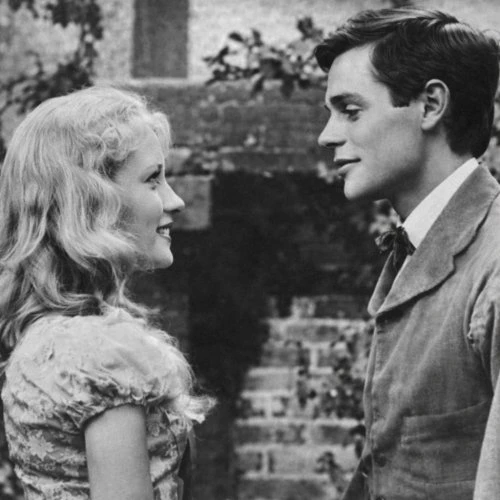
The supporting cast was equally strong. Childhood friends Ann and Sid Pornick appeared in flashback, played by Lorna Henderson and Colin Campbell, with Renny Lister and Barry Lowe portraying their adult counterparts. Young Kipps was played by John Gray. Additional performances included Dudley Sutton (Pearce), Sheila Steafel (Flo Bates), Barbara Hicks (Wogdelenk), and John Laurie (Masterman).
Particularly notable was Diana Fairfax, cast as Helen Walshingham. Australian-born and trained at RADA—where she won the Kendall Prize—Fairfax was no stranger to period drama. She remarked that she felt entirely at home in long skirts and whalebone corsets, a comfort that undoubtedly lent authenticity to her performance.
In The Stage (20 October 1960), critic Guy Taylor offered measured praise. He found Kipps “fascinating viewing” as a social portrait and commended Exton’s script as well as Latham’s direction—though he criticised what he saw as a clumsy and overlong flashback in the opening episode. While Murray’s portrayal earned approval, Taylor questioned whether the early episodes generated sufficient momentum to compel viewers—especially given the challenging early evening time slot (7pm).
Beyond this television version, Kipps has enjoyed a rich afterlife in stage, film and musical adaptations, most famously inspiring the musical Half a Sixpence. That endurance reflects the story’s enduring themes: class aspiration, social mobility, and the quiet dignity of returning to one’s roots.
The 1960 ITV serial may have prompted debate about pacing, but its meticulous production values, fidelity to Wells’ prose, and strong central performance ensure it stands as a thoughtful and respectful rendering of one of Wells’ most personal works.
Seen this show? How do you rate it?
Seen this show? How do you rate it?
Share on...
Published on February 13th, 2026. Written by Laurence Marcus for Television Heaven.