

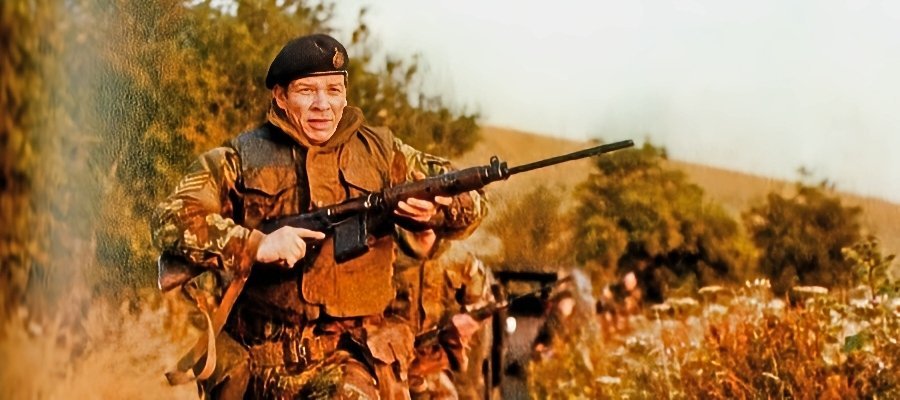
Spearhead
1978 United KingdomSpearhead is a quietly distinctive product of late-1970s British television, a drama that uses the framework of a fictional infantry regiment—the Wessex Rangers—to explore the realities of army life with an unusual level of restraint and authenticity. Produced by Southern Television and broadcast on ITV between 1978 and 1981, its relatively short run of three series and 19 episodes feels less like a limitation and more like a concentrated study of a particular moment in British military and social history.
What stands out immediately is its commitment to perspective. Rather than engaging in overt political commentary, especially during its Northern Ireland storyline, the series focuses on the lived experience of soldiers tasked with carrying out orders in situations they neither control nor fully understand. This is especially effective in the first series, widely the strongest, where the regiment’s deployment during the Troubles is depicted not as a platform for debate but as a grinding, ambiguous duty. The decision to keep the narrative largely apolitical gives the show a documentary-like tone, allowing the moral tension to emerge naturally through the men’s actions and uncertainties rather than through heavy-handed scripting.
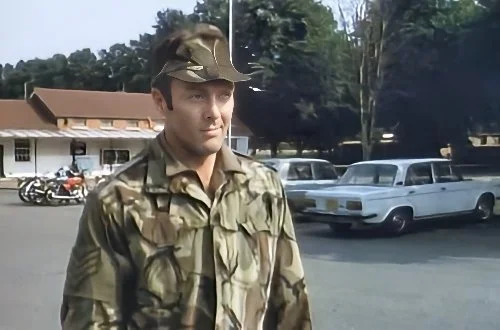
At the centre of this early run is Colour Sergeant “Jacko” Jackson (Michael Billington), whose temporary promotion to platoon commander provides one of the drama’s most compelling threads. His struggle is not just about leadership in the field but about navigating the rigid class structures embedded within the British Army of the time. The series handles this with subtlety, illustrating the unspoken “glass ceiling” that limits advancement for capable non-commissioned officers. Jackson’s authority is constantly tested—not only by his superiors’ scepticism but by the personal failings and pressures within his platoon—creating a layered portrayal of leadership under strain.
As the series progresses into its second and third runs, the structure becomes more episodic, and arguably less focused. The shift from Jackson to the inexperienced Lieutenant Pickering (Martin Jacobs) introduces an interesting dynamic—an upper-class officer leading battle-hardened men—but this premise is never explored as deeply as it could have been. Instead, the show leans more heavily on standalone stories, some of which are strong in isolation but lack the narrative cohesion that made the first series so compelling. Even so, individual episodes still manage to capture the tension of Cold War Europe and the uneasy routines of border duty in West Germany.
The final series, set in Hong Kong, offers a different kind of insight, portraying the soldiers in a quasi-policing role that is both physically unpleasant and morally complex. Patrolling swamps to intercept illegal immigrants and confronting organised smuggling operations, the men are removed from conventional warfare and placed into a grey area where military training meets civilian enforcement. It’s a setting that reinforces one of the show’s central ideas: that much of a soldier’s work is thankless, misunderstood, and far removed from the heroic narratives often associated with the armed forces.
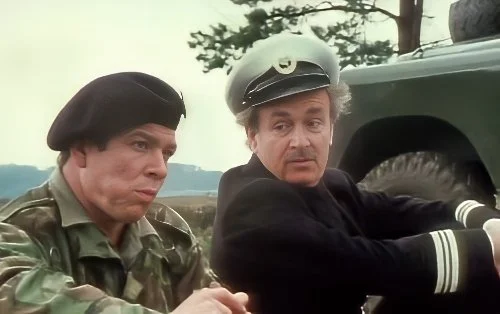
Across all three series, the personal cost of service is a recurring and effective theme. The strain on families, the instability of constant relocation, and the difficulty of reconciling military discipline with civilian life are explored with honesty. Some storylines are unflinching, including depictions of domestic violence and soldiers struggling to control impulses shaped—or exacerbated—by their profession. These elements add weight to the drama, ensuring that it remains character-driven rather than action-oriented.
While the acting is generally strong, there are occasional weak points among supporting characters, and certain performances—particularly later in the series—lack conviction. However, these inconsistencies rarely detract from the overall realism. The show’s grounded tone, combined with its willingness to portray the army in an occasionally unflattering light, gives it a credibility that many contemporaries lack.
Ultimately, Spearhead succeeds because it resists easy narratives. It neither glorifies nor condemns military life, instead presenting it as a complex, often frustrating reality shaped by hierarchy, duty, and circumstance. Though its later series lose some of the focus that defined its early episodes, it remains a thoughtful and engaging portrayal of soldiers navigating the blurred lines between order and uncertainty.
Seen this show? How do you rate it?
Seen this show? How do you rate it?
Share on...
Published on March 23rd, 2026. Written by Laurence Marcus for Television Heaven.