

Grady
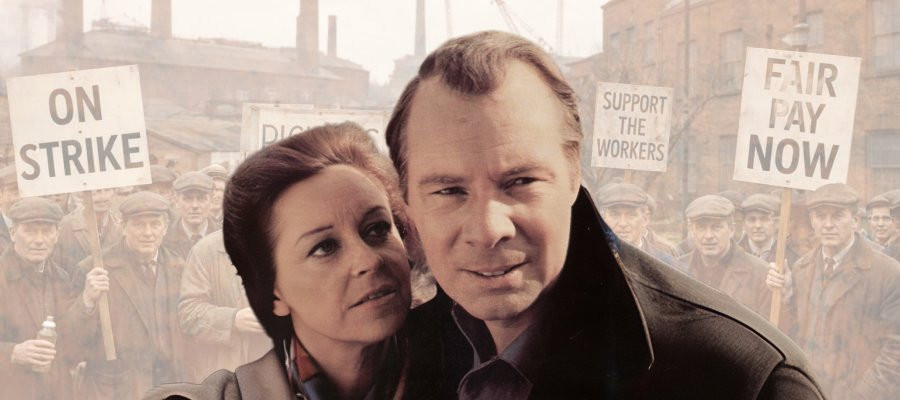
1970 United KingdomGrady is an ambitious and provocative drama series from Yorkshire Television that arrived on ITV in November 1970, at a moment when industrial relations in Britain were tense, politicised and rapidly changing. Spread across three plays, the series sets out to examine the moral, political and personal cost of militancy through its central figure, Grady: a working man variously labelled agitator, troublemaker, rabble-rouser and hero, yet stubbornly resistant to any single definition.
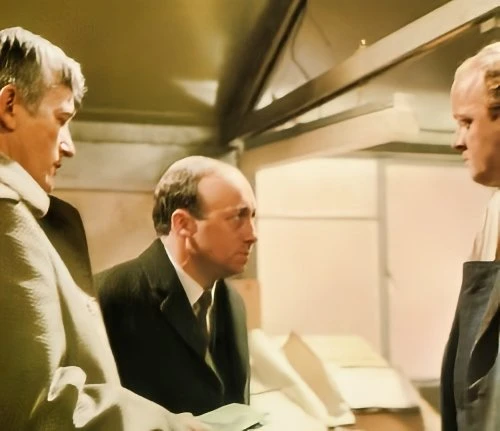
Recently released from prison and returning to his home town, Grady (Anthony Bate - Tinker, Tailor, Soldier, Spy) finds himself immediately pulled back into conflict. A militant strike committee from a local factory sees him as a useful weapon and offers a blunt ultimatum: join them or face exclusion. Desperate for work and conscious of his reputation, Grady knows he must tread carefully, especially when set against the more moderate figure of Harry Carswell (J.G. Devlin - The Newcomers), the trade unionist who once trained him and represents an older, compromise-driven tradition of organised labour. The drama’s central tension lies in Grady’s refusal to belong neatly to either camp. He distrusts ideology, mistrusts authority, and prefers to operate by his own risky, often dangerous rules.
Created by Edmund Ward, already known for intelligent industrial and business dramas such as The Plane Makers, The Power Game and The Main Chance, Grady is deeply rooted in the realities of late-1960s Britain. It reflects a period marked by rising shop-floor militancy, unofficial strikes, and growing anxiety about productivity and power, as unions reached the height of their cultural and political influence. Ward uses Grady to give voice to the individual caught between organised management and organised labour, a man who believes passionately in a better world but admits he has more questions than answers.
Anthony Bate’s performance captures this complexity superbly. Grady is principled yet flawed, persuasive yet cynical, capable of violence while hating it, and painfully aware of the toll his beliefs take on those closest to him. His wife Margaret, played with fierce emotional honesty by Diana Coupland (Bless This House), grounds the series in domestic reality, reminding him that ideals cannot feed children or pay the rent. Their relationship, full of love, bitterness and exhaustion, is one of the drama’s greatest strengths.
Critical reaction at the time was divided. Some reviewers found Ward’s view of industrial life oversimplified, or the characters too clearly drawn, while others praised the series for its ambition, intelligence and refusal to romanticise either militancy or compromise. Later critics noted that while the plays sometimes sacrificed pace and dramatic spark in pursuit of realism, they succeeded in portraying the shifting generational dynamics within trade unionism and the uneasy transition from idealism to pragmatism.
Supporting performances from Terence Alexander, Kathy Staff, Ken Jones, Ralph Bates and Wilfred Pickles add texture to a drama concerned not just with disputes and power struggles, but with work itself: its routines, its injustices, and its place in everyday life.
Ultimately, Grady resists easy conclusions. It asks whether its protagonist is a workers’ champion or a dangerously disruptive force and deliberately refuses to answer. What remains is a thoughtful, questioning piece of television drama that captures the uncertainties of its era and the contradictions of a man who will not accept the comfort of simple labels.
Seen this show? How do you rate it?
Seen this show? How do you rate it?
Share on...
Published on January 29th, 2026. Written by Laurence Marcus for Television Heaven.