

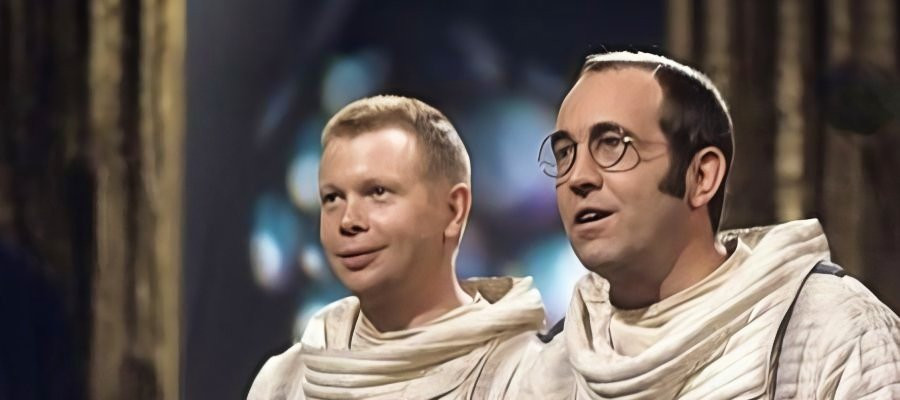
The Adventures of Don Quick
1970 United KingdomThere’s something admirably audacious about The Adventures of Don Quick, a series that dared to fire Cervantes into orbit and see what survived re-entry. Conceived by London Weekend Television as an adult-leaning blend of satire and science fiction, the show attempted to fuse interplanetary adventure with pointed social commentary — and did so with more ambition than longevity.
At the centre is Don Quick, played with earnest intensity by Ian Hendry. An astronaut assigned to the decidedly unglamorous Intergalactic Maintenance Squad, Quick is meant to concern himself with routine repairs. Instead, he imagines himself a cosmic knight-errant, a self-appointed emissary of Earth determined to correct injustices wherever he lands. His delusions of grandeur propel him from planet to planet, meddling in alien cultures he barely understands. Like his literary forebear, his certainty is unshakeable — and catastrophically misplaced.
By his side is Sergeant Sam Czopanser, portrayed by Ronald Lacey, a weary, pragmatic counterbalance to Quick’s idealism. As the Sancho Panza analogue, Czopanser provides grounding scepticism, though rarely enough to prevent the weekly spiral into chaos. Each episode follows a familiar rhythm: arrival for routine duties, moral outrage at some perceived societal flaw, interference, and unintended fallout. The satire is broad but edged with cynicism, targeting bureaucracy, imperialism, and human arrogance through extraterrestrial allegory.
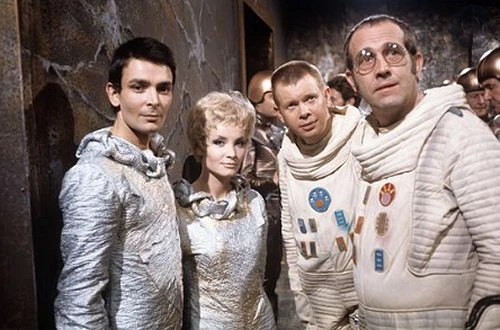
Production values were anything but modest. A 30-foot model spacecraft was constructed, and an imposing full-scale ship interior was built at Wembley Studios. The design work — from elaborate sets to distinctive costumes — suggested confidence and investment. Guest appearances from recognisable character actors such as Anouska Hempel, Kevin Stoney, Michael Sheard, Kate O’Mara, Colin Baker, Hildegard Neil, Roy Marsden, Madeline Smith, Derek Francis and Patricia Haines added further polish. The show even ventured into risqué territory for its time, becoming one of the earliest British series to incorporate nudity, signalling its clear intention to court an adult audience rather than family viewers.
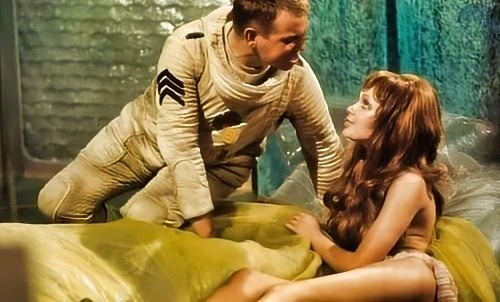
Yet despite the scale of its ambition, the series struggled to connect. Its tone, heavier on satire than outright humour, left it curiously adrift. Viewers expecting space opera found talky allegory; those anticipating sharp comedy encountered something more solemn than sparkling. Other ITV regions quietly relegated it to late-night slots, though LWT kept faith with a 9pm placement until the end. The faith proved misplaced. After only six episodes, the mission was aborted.
Time has been particularly unkind to the show’s legacy: only the first episode survives in the archives. What remains is less a cult classic than a fascinating relic — an example of late-1960s British television stretching for sophistication and landing somewhere between brave experiment and noble folly. Like Don Quick himself, the series aimed high, misjudged its surroundings, and vanished almost as quickly as it appeared — a shooting star with more aspiration than orbit.
Seen this show? How do you rate it?
Seen this show? How do you rate it?
Share on...
Published on February 19th, 2026. Written by Laurence Marcus for Television Heaven.