

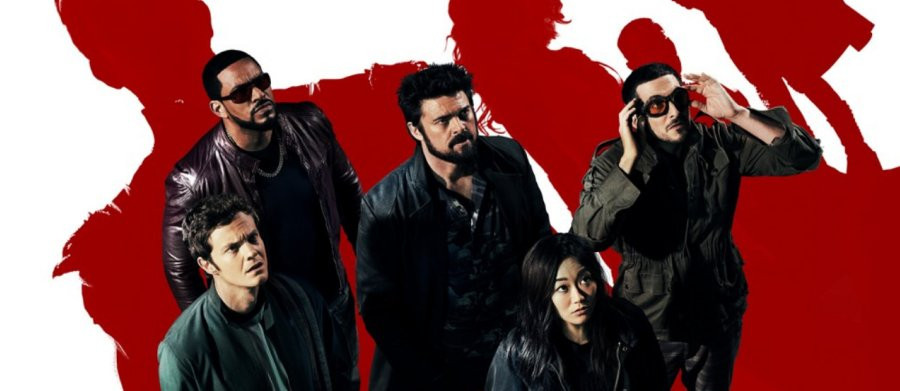
The Boys - Seasons 2 & 3
2020 - 2022 United StatesSeason 2 & 3 reviews by John Winterson Richards
There is no doubt that the best thing about Season One of The Boys was its spot on satire of contemporary corporate and popular culture, with ironic emphasis on the entertainment media themselves. This goes into overdrive in Season Two with spectacular success. If the triumph of satire was a little at the expense of character and plot in the first season, the second tries to compensate by spending a bit more time on character, again to good effect. However, since one cannot excel at everything at once, and it is usually a mistake to try, the price to be paid is a reduced emphasis on plot, which loses a bit of coherence. Important things happen but their impact is rather diluted by sub plots and character arcs.
Season Two still manages to top Season One simply because of the quality and courage of the satire. To appreciate it fully, you need to watch very carefully, with a quick finger on the pause and rewind buttons. The most amusing moments are often literally moments. For example, blink and you might miss the point that, amid all the tacky merchandising for the elite "Seven" superheroes, those endorsed by one with "Me Too" problems are discounted to clear.
The mock news reports and marketing material remain major highlights. For those watching on Amazon, the clever conceit that the "trivia" notes are heavily influenced by the evil Vought Corporation becomes more explicit, as if Amazon is in on the joke of satirising their own tendency towards product placement.

Even more daring is the show's willingness to satirise feminism, or at least corporate exploitation of feminism. Vought's crass "Girls Get It Done" campaign emphasising the strength of their female "Supes" seems to be a direct reference to a number of equally crass attempts to emphasise women more in real life franchises. Unlike previous portrayals of strong women in film and on television, recent positive female stereotypes are often the result of an explicit political agenda, and many fans who have no problem with strong women do object to having the agenda stuffed down their throats. In this context, there has been some online discussion about whether a scene in which several women characters beat up another in an apparent act of female solidarity is meant to be ironic or not. Your reviewer is, on balance, prepared to give it the benefit of the doubt on that point. If a hero beats up a female villain, the hero has to be female too. A male hero beating up a woman, however bad and dangerous she might be, would horrify feminists and social conservatives alike, albeit for different reasons, and rightly so. Perhaps the real issue raised by that scene is whether having several popular characters gang up on an unpopular one, irrespective of gender, endorses the lowest forms of bullying and mob mentality. That the unpopular character was genuinely unpleasant, and had shortly before shown the ability to take on multiple opponents, does not excuse the fact that supposedly sympathetic characters were literally kicking her when she was down and unable to defend herself. It was more 'Mean Girls' than female empowerment and it left a nasty taste.

If engagement with the controversial issue of feminism is not daring enough, the show dances on the live wire of fashionable susceptibility when one of the Seven is "outed" very much against her will as a "strong, proud lesbian." She does not in fact identify as such, but Vought sees this as a marketing opportunity. Much use is made of the words "brave," "pride," and "rainbow" - in selling a range of cheap fast food products.
The show even touches on the other great divisive issue of the moment, race, but so far only touches. While the cynical corporate attitude to "diversity" is duly mocked, it hesitates to go deeper at this point. It even "virtue signals" a little by bringing in white supremacists and actual Nazis - full on NSDAP not just people who get called Nazis by their opponents - as villains. As such, they are always problematic: on the one hand, genuine National Socialist types are now only a handful of marginalised losers, so few will complain if they get treated, er, unsympathetically - but, for exactly the same reason, they are not exactly convincing as an existential threat, much as it suits some to pretend otherwise.
So the satire is rather on how the frightened masses can be manipulated by actual fascists. While, given the politics of the people making the show, it may safely be assumed that this was a swipe at Donald Trump and his supporters, it is a universal truth, pointed out by Aristotle, that fear makes people irrational, and history shows how this is the basis of a strategy that has been used across the political spectrum. It is also to the writers' credit that a sinister new character seems to be based on the left wing Congressman Alexandria Ocasio-Cortez, so there is at least some attempt at equal opportunity satire, which is a refreshing change.
What appears to be a satire on a certain famously litigious organisation founded by a science fiction writer is a bit uncertain: it is witty and well observed but it is carpet bombing a soft target and it does not really contribute enough to the main plotline to earn its place.
The same can be said of many of the other sub plots of the season, including Butcher's family problems, Homelander's parallel attempt to co-opt his own family, Starlight's abrupt recovery of her faith after its equally abrupt loss in the previous season, Frenchie's coming to terms with his past, and a visit to a mental hospital. This might be a product of the episodic nature of the original "comic books," but it contrasts with the first season, which has a definite structure - the parallel stories of two youngsters joining dubious organisations led by psychopaths.
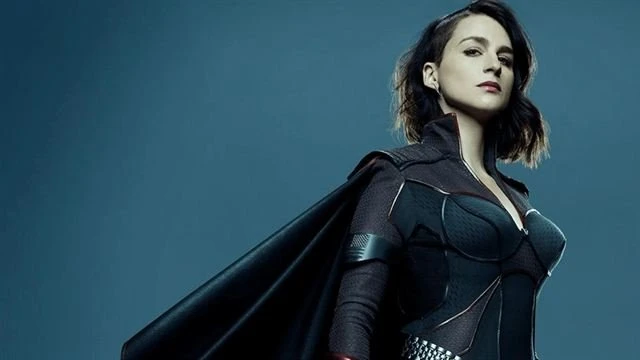
The most successful new storyline in Season Two, even if its resolution is not as satisfying as it might have been, is the introduction of a brand new character, Stormfront, played with complete authority by Aya Cash. Appointed to the Seven by higher authority, she has the confidence to present herself as a rebel, mocking even Vought. She is "social media savvy" - pause on her "memes" and you will indeed believe that they had more impact than an expensive advertising campaign - and she seems to be a law unto herself. There turns out to be a reason for this and Vought turns even her apparent rebellion to its advantage.
We get to see more of Vought's Chairman, Stan Edgar (Giancarlo Esposito), who has a few good scenes illustrating the nature of power. The one in which he puts Homelander in his place is particularly enjoyable. Another has him dealing with a player closer to own level, Alastair Adana (Goran Visnjic, a fine blend of dark magnetism and superficial affability), the Chairman of the "Church of the Collective," still making it clear who is in charge.
Homelander (Antony Starr) becomes slightly more sympathetic, or at least slightly less unsympathetic, in those moments when we see his loneliness and how his attempts to build his own family are doomed to fail. In the end, he’s still Homelander, literally looking down on the world and despising it, even if he is too complex to be simply written off as a villain. The same remains true of his alter ego, Butcher (Karl Urban), who also gets to reveal a bit more humanity. Nevertheless, one cannot help feeling that his only honest relationship is with his bulldog, Terror (a star - more of him, please), and there is a moment when he seems on the verge of doing something truly, truly horrible - and there is no doubt that he is capable of it.
Even more shocking is when a character we like apparently kills a security guard quite casually. Since he is one of "The Boys" we accept a degree of moral ambiguity, but later a character who is supposed to be positively good murders a totally innocent passer-by in a carjacking. There is little remorse, no accountability, and no repercussions. It is all rather chilling. The whole point of the show is to force us to question who the real heroes and the real villains might be, but few of us would want to follow a descent into total nihilism.
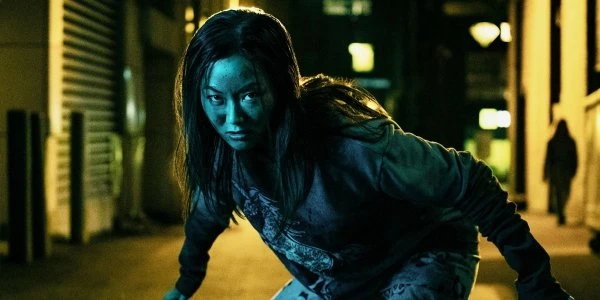
On the positive side of the ledger, it is good to see Queen Maeve (Dominique McElligott) get to do a bit more, even if her motivation is not well developed. Her colleague in the Seven, Black Noir (Nathan Mitchell) is revealed as a truly frightening killer, but also has moments of eccentricity, humanity, and vulnerability. Although he never says a word, it is a running joke that other members of the Seven claim to have a normal relationship with him off camera. His equivalent in the Boys, Kimiko (Karen Fukuhara) also begins to show more of her personality: she turns out to have a delightful smile. The Deep (Chace Crawford) has another of his comic disasters with one of his Ocean friends - we should not laugh, but remember it is only CGI...
Colby Minifie deserves a special mention as the Seven's overpromoted handler, Ashley - alternately upbeat and fraught, arrogant and nervous, well meaning and clueless, controlling and out of control, she believes she deserves her position and has no idea what she is doing, which seems to sum up a lot of people in big organisational hierarchies.
The season ends cleverly, with most of the outstanding business wrapped up - even if some of it seems a bit perfunctory - and a new villain set up for the next one. At the time of writing, events in this world - the coronavirus, "Black Lives Matter," the Capitol Riots - present satirists with a difficult challenge: how does one exaggerate reality for comic effect when it seems beyond exaggeration? Yet such events also present satirists with a lot of superb raw material if they have the courage to use it. Season One of 'The Boys' was brave and Season Two was braver still. Season Three is in a good position to be something quite special if the writers and producers keep their nerve - and do not go all Ashley on us.
Season 3
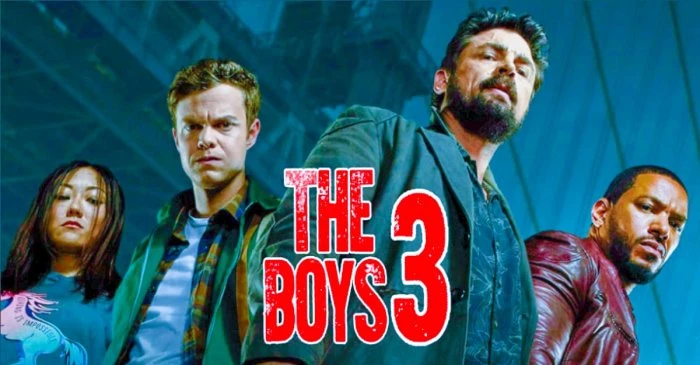
The most notorious episode of Season Three - and the most popular on IMDb as it happens - was preceded by a serious looking notice: "Some scenes may not be suitable for some, really most, let's be honest all viewers."
They are not joking. Well, they are, but they are also telling the truth. As usual with The Boys, there are so many levels of irony it is impossible tell the difference any more. The disclaimer continues: "Rest assured that any consensual relationships depicted, be they human, animal, Superhero, or other, aren't real, harmed no one, and in fact cost a hilariously large amount in visual effects."
A satirical show is now satirising itself. There has always been a self-referential aspect to it, not least the "trivia" notes on Amazon Prime some of which read as if they were advertisements written by the rapacious Vought International corporation. Is Amazon really Vought?
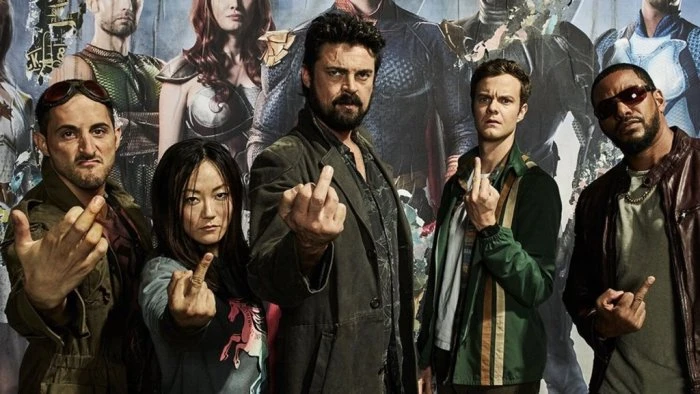
The point is that, even if we think they are joking, we have been warned - and the warning is justified. The Boys has always been an "adult" show - "adult" being defined in this case, as so often in the entertainment media now, as aimed mainly at teenaged boys - in terms of fairly graphic depictions of sex and violence, and a vocabulary that would probably shock a reunion of Merchant Navy veterans in a Hamburg bordello.
The episode in question certainly "pushes the boundaries" - and those boundaries have already been well and truly pushed by that stage. In the first few minutes of the opening episode of the season something occurs that is guaranteed to make every male viewer wince. To be fair, this is not entirely gratuitous. The whole point is to illustrate that Superheroes, or "Supes," live in an atmosphere of irresponsible self-indulgence and it is a point well made. Nevertheless, there are some images a man might well wish he could get out of his head...
That said, those first few minutes also remind us of why The Boys is one of the cleverest shows currently in production. We see part of ‘Dawn of the Seven,' the corny "film within the show" that we saw being made in the last season and it is in itself a perceptive satire of the whole "superhero" cinematic genre. It is particularly amusing to note the casting and script changes made necessary by the events of Season Two. There are knowing references to a "Director's Cut" and fears that the film would go straight to "Vought Plus" (because in the end, this being an Amazon show, Vought is less Amazon than Amazon's streaming rival Disney).
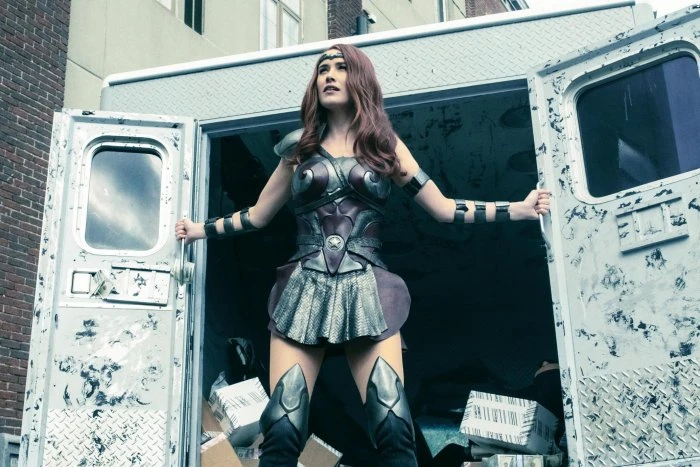
The satire reaches even greater heights soon after. The show had already been quite daring in previous seasons in ridiculing the prevailing fashion for multinational corporations to co-opt and exploit left wing causes out of the purely capitalist desire to make even more money. This becomes even more crass when we visit Vought's latest theme park attraction, "Brave Maeve's Inclusive Kingdom" - the sexually omnivorous Queen Maeve (Dominique McElligott) having been unwillingly rebranded as a "proud lesbian" for marketing purposes. Concession stalls include "Woke Wok," "LGBTurkey" and "BLM BLT." There are rainbow flags everywhere .
Yet there is a subtle difference. While the show is happy to mock the cynical corporate exploitation of such causes, it holds off from anything that might be mistaken for satirising the causes themselves. At the same time it does not hesitate to attack the other side of the political spectrum, its supporters, and their causes directly and somewhat heavy handedly. A fairly clumsy parallel is drawn between fans of the psychotic Homelander (Antony Starr) and a cartoon version of Trump supporters. This is only to be expected: after all the Executive Producers include the leftist comedy actor Seth Rogen - who also appears in a particularly cringeworthy cameo. However, one of the things that gave the first season such a broad appeal was its willingness to hit targets of opportunity on all sides. That seems to be gone now. It is another illustration of how much more entrenched the "Culture Wars" have become in just three years.
The non-political satire remains of a high standard, especially the satire of the "superhero" genre itself. A new factor emerges in the form of Soldier Boy (Jensen Ackles), an analogue of Captain America. This opens up the fertile territory of the exploitation of previous generations of "superheroes" by the Marvel Cinematic and DC Extended Universes. There also appear to be frequent references to Watchmen, itself a satire of historical "superheroes," so the show becomes a satire of a satire. Soldier Boy's older generation take on modern life sometimes looks as if it might be interesting but the character is made deliberately unsympathetic which rather negates the value of everything he says, a missed opportunity.
Otherwise Season Three benefits from a lot of solid character and relationship development. The most interesting and important is the fragile triangle formed by Homelander, Butcher (Karl Urban), and Ryan (Cameron Crovetti), Homelander's son by Butcher's late wife. Although Homelander and Butcher are, by any standards, truly reprehensible human beings, they are both at their best with Ryan and we understand why he is so uncertain about them. Crovetti balances Ryan's fear of both men with his longing for a real father very effectively. Ironically, it is a rare act of self sacrifice on Butcher's part that offers Homelander the opportunity to acquire what, deep down, he craves more than anything - someone to love who might even love him back.
We actually begin to feel moments of sympathy for Homelander just as he is committing some of his worst crimes. We also find out more about how Butcher became what he is.
It is good to see Hughie (Jack Quaid) grown up a bit, with a responsible Government job and, amazingly, the respect of his colleagues. However, beneath the façade, his exaggerated sense of his own inadequacies remains, especially when he compares himself with his Supe girlfriend, Starlight (Erin Moriarty). This leads him to some very bad decisions but eventually to an important realisation about his father's apparent weakness.
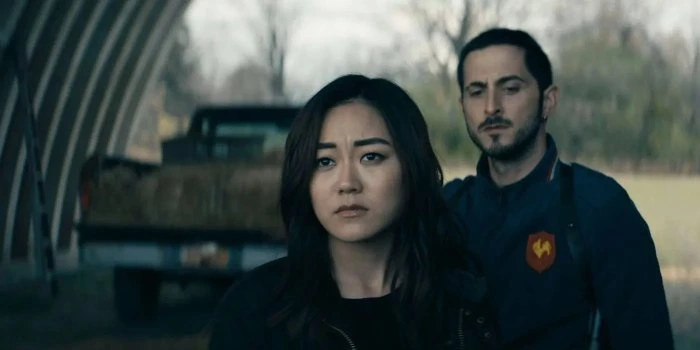
Frenchie (Tomer Capone) and Kimiko (Karen Fukuhara) are an increasingly delightful couple, so delightful that we are inclined to ignore the fact that some of the things being revealed about Frenchie's past are truly horrible. Mother's Milk (Laz Alonso), by contrast, is shown to be a reluctant avenger and there is a credible psychological explanation for his obsessive compulsive disorder.
On the other side of the fence, we finally find out more about the enigmatic Black Noir (Nathan Mitchell) - with the help of some charming Disney style animated animals? Is it significant that the controversial Song of the South seems to have been a particular influence on the animation style? Are we even allowed to mention that now?
The main story arc of the season is Homelander's growing awareness of his own power - not his physical power but his social and political power. He bullies A-Train (Jessie T Usher), the Deep, (Chace Crawford), and their hapless handler Ashley (Colby Minifie) mercilessly, but they also benefit as he begins to assert his authority within Vought. All three have moments when they look as if they want to make other choices but in the end ambition gets the better of them all. The Deep's sincere desire to protect his Oceanic brethren leads once again to what is best described as hilarious tragedy. If it gets too harrowing, just remember that the appealing Timothy the Octopus is CGI, just like the dolphin in Season One and the whale in Season Two.
The ease with which Stan Edgar is brushed aside by Homelander strikes a false note. This is a common problem with Giancarlo Esposito characters: he has had enormous success over the last decade or so playing antagonistic leader types whose dramatic function is to be defeated by other characters - but he always makes them so credibly competent that their defeat seems unlikely and rather forced. One suspects that Edgar will be back, but then it still hard to accept Gus Fring will not. Anyway, at least his - possibly temporary - absence gives Homelander and his reluctant acolytes the opportunity to find out what it takes to wield real power and discover that none of them have it. Seeing poor Ashley swim even further out of her depth, knowing as much and still making the deliberate choice to ignore it, is both tragic and comic at the same time.
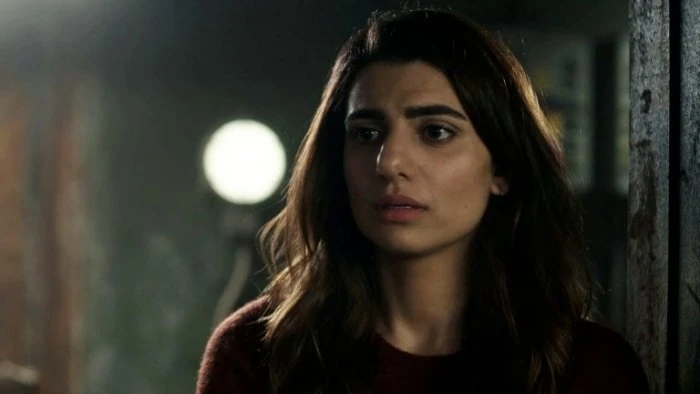
Congressman Victoria Neuman (Claudia Doumit), who was set up as the main antagonist at the end of the last season, is also rather sidelined for much of this one only to be set up as a major threat again at the end. Incidentally, without wishing to be picky, can a sitting Member of Congress direct a Federal Agency at the same time? Separation of the Powers, anyone?
The ending is not entirely satisfactory. It is good to put the death of established characters on the line, but one was rather thrown away while another was given a properly dramatic exit only to have it revealed later as an unconvincing fake death. Given the politics of the situation, it was predictable but still rather dishonoured the character and their sacrifice. Overall, Season Three exhibits all the strengths that made Season One stand out from anything else that was happening at the time, but it has to said that it is by definition not as original as it once was and it needs to learn to rely less on shock value if it is to remain at the cutting edge of satire.
Seen this show? How do you rate it?
Seen this show? How do you rate it?
Share on...
Published on July 13th, 2022. Written by John Winterson Richards for Television Heaven.