

The Browning Version
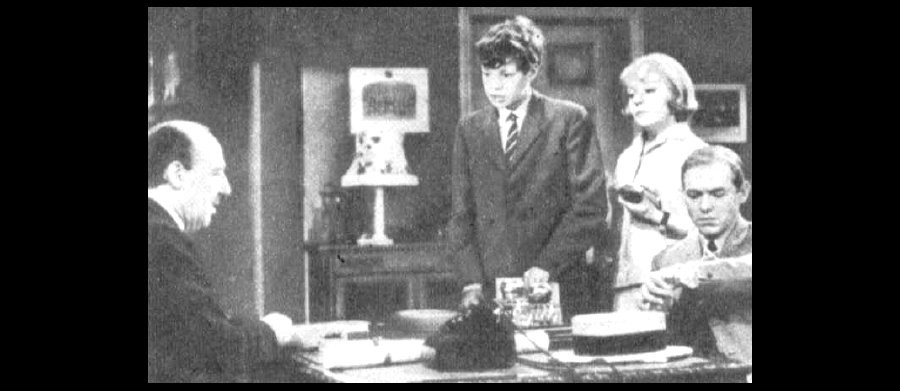
1966 United KingdomAndrew Crocker-Harris is a classics teacher at an English boys' school. Today is his last day before moving on to a position at another school. The Browning Version shows Crocker-Harris-"The Crock" as the boys call him due to him being generally despised as strict and humourless-in uncompromising, three-dimensional close up. It's a day that cruelly highlights his failings-in his marriage, his career, his relationships. It's also a day that subtly alters him.
We learn about "The Crock" through those nearest to him. Through his bitter and nagging wife Millie (Brenda Bruce), science master Frank Hunter (Michael Bryant) who is having an affair with Millie, and young Taplow (Christopher Witty), who mimics him while waiting for extra tuition. Taplow gives "The Crock" a small going-away gift and, uncharacteristically, Crocker-Harris is overwhelmed by the pupil's small act of kindness.
The Browning Version by Terence Rattigan was first performed on 8 September 1948 at the Phoenix Theatre in London. A 1951 film version, starring Michael Redgrave as Crocker-Harris, won two awards at the Cannes Film Festival, one for Rattigan's screenplay, the other for Redgrave's performance. It was remade in 1994, starring Albert Finney, Michael Gambon, Greta Scacchi and Ben Silverstone.
The earliest British television version was made in 1955, starring Peter Cushing as Crocker-Harris. John Frankenheimer directed John Gielgud in a 1959 television version for CBS. In 1960, Maurice Evans repeated his Broadway role for CBC television. Another TV version was made by the BBC in 1985 starring Ian Holm as the main character. This 75-minute version version was broadcast as part of ATV's Play of the Week series on Monday 25 April 1966 at 9.40pm.
Seen this show? How do you rate it?
Seen this show? How do you rate it?
Share on...
Published on May 15th, 2019. Written by Adapted from original TV Times (1966) article by Sarah Snow for Television Heaven.