

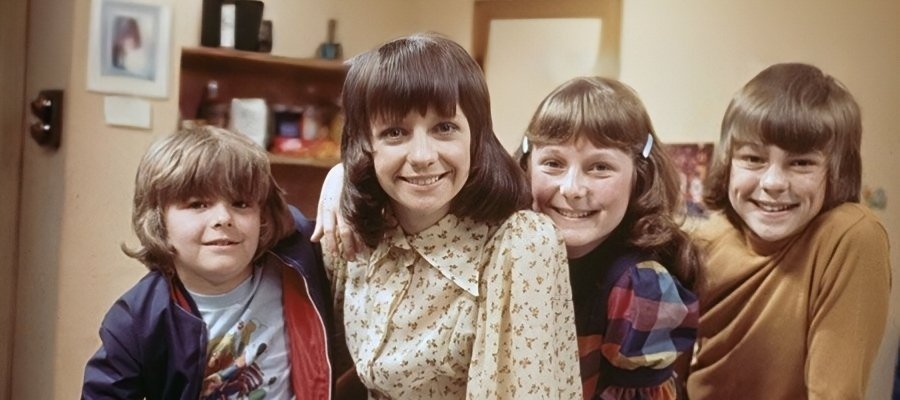
The Kids from 47A
1973 United KingdomThe Kids from 47A occupies a fascinating place in the landscape of early‑1970s children’s comedy-drama—a series that dared to treat its young audience with respect by presenting real‑world problems without condescension or melodrama. At a time when children’s television often leaned toward fantasy, this ATV production offered something refreshingly grounded: a portrait of a family trying to hold itself together in the face of adult responsibilities they never asked for.
Set in Birmingham, the series follows the Gathercole children, who are suddenly left to fend for themselves when their widowed mother is taken into hospital. Expecting their aunt to step in, they quickly realise she isn’t coming—forcing them to choose between struggling on alone or entering the care of social services. For the Gathercole’s, there’s only one answer. Determined to stay together, they suppress their own squabbles and avoid attracting too much attention from the authorities.
Creator Charlotte Mitchell insisted that this was no fairy tale, stressing that social workers would rather maintain a parentless family as a unit than see it dispersed over several homes. Therefore, the underlying premiss of The Kids from 47A was quite authentic. What makes the series so engaging is its refusal to sugar‑coat the Gathercole’s’ situation. The children aren’t plucky caricatures; they’re recognisably flawed, sometimes overwhelmed, sometimes resourceful, and often simply doing their best, balancing the multiple concerns of schoolwork, shopping, bill paying and other domestic chores.
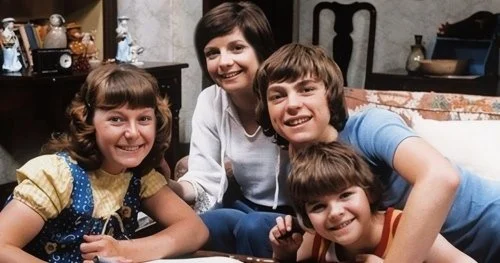
Sixteen‑year‑old Jess becomes the de facto head of the family, juggling her office job with the responsibilities of flat 47A. She is played with quiet strength by Christine McKenna who anchors the drama side with a performance of remarkable maturity. Her siblings—fourteen‑year‑old Willy (Nigel Greaves) who helps when he’s not absorbed in football, twelve‑year‑old Binny (Gaynor Hodgson) who dreams of becoming a romantic novelist, and eight‑year‑old George (Russell Lewis) who tries—sometimes successfully—to behave beyond his years—bring warmth, humour, and occasional chaos, creating a believable family dynamic that carries the series through its lighter and darker moments.
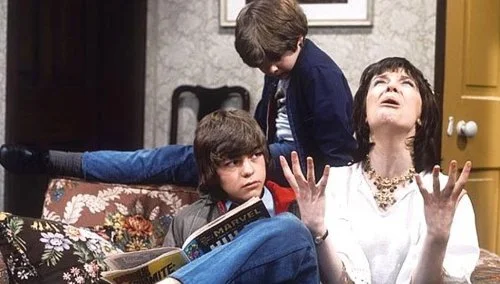
The show’s blend of comedy and drama is one of its greatest strengths. There are moments of genuine charm and gentle humour, but they never undermine the seriousness of the children’s predicament. Instead, they make the Gathercole’s’ world feel lived‑in and recognisable. The scripts, contributed by writers who would later become major figures in British television (such as Phil Redmond and Lynda Marchal (later known as Lynda La Plante)), strike a careful balance between entertainment and emotional truth.
The second series’ shift into deeper territory—following the death of the children’s mother—could easily have tipped into bleakness, but the production handles it with sensitivity.
Supporting characters, from the initially meddlesome Mrs Batty (Maryann Turner) to the more sympathetic Mrs Grubb (Peggy Ann Clifford), add texture without overshadowing the central quartet. And the final series’ conclusion—Jess’s marriage—provides a natural endpoint to a story about growing up too soon.
Looking back, The Kids from 47A stands out as a rare example of children’s drama that trusted its audience to handle complexity. It tackled serious themes—bereavement, responsibility, financial hardship—without ever losing sight of its primary goal: to tell an engaging, character‑driven story. It’s a reminder of a time when children’s television didn’t feel the need to preach, but simply to entertain with honesty and heart.
Seen this show? How do you rate it?
Seen this show? How do you rate it?
Share on...
Published on May 3rd, 2026. Written by Laurence Marcus for Television Heaven.