
The Tripods
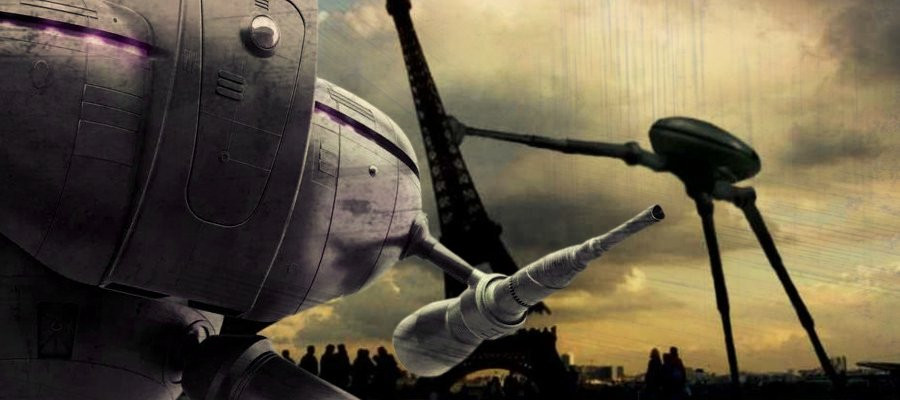
1984 United KingdomBroadcast on BBC One on Saturday afternoons during the 1980s, The Tripods was conceived as one of the corporation’s most ambitious science-fiction ventures. Adapted from John Christopher’s popular novels, it set out to tell a sweeping story of resistance and survival, but ultimately became a reminder of how fragile large-scale genre television could be in that era.
At its heart, The Tripods follows three boys, Will Parker (John Shackley), his cousin Henry (Jim Baker), and the French teenager Jean-Paul Delier (Ceri Seel), better known as Beanpole. Living in a world already conquered by alien Tripods, humanity exists in a state of enforced submission. The invaders maintain control through “capping”, a process in which adolescents are fitted with metal caps that suppress imagination, independence and dissent. Life goes on much as before on the surface: people work, marry and raise families. Yet once capped, no one is ever truly free.
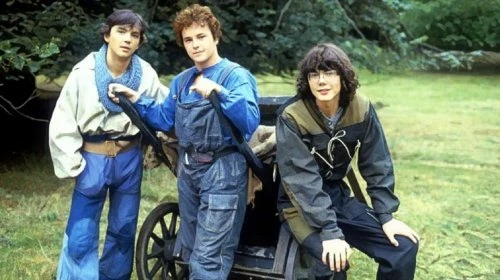
This unsettling idea gives the series its most powerful edge. Society has regressed to something resembling the late nineteenth century, stripped of innovation and ambition, but with faint echoes of the modern world still lingering. It is a quietly dystopian vision, and for a children’s teatime slot it was unusually thoughtful and bleak. When Will learns of the fate that awaits him, he refuses to submit and escapes, eventually joined by Henry and Beanpole on a long, dangerous journey across Europe. Their goal is the legendary Free Men, the last organised resistance, and ultimately the destruction of the Tripods and their alien masters. It is a classic coming-of-age adventure framed as a story of human triumph over slavery and domination.
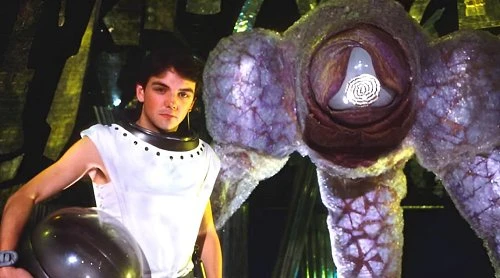
Despite its strong premise, The Tripods never quite fulfilled its promise. Although viewing figures peaked at around nine million, respectable by today’s standards for a Saturday afternoon audience, the series was cancelled after two seasons. The decision came from BBC management under Michael Grade, who later admitted his dislike of science fiction and cited a combination of high production costs and allegedly disappointing ratings. In hindsight, the lack of confidence seems short-sighted, particularly given the modern appetite for ambitious, effects-heavy genre storytelling.
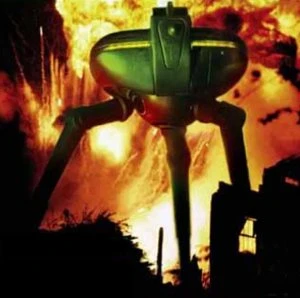
Critically, the response was mixed but often encouraging. The Daily Express praised it as “the most compelling imaginative teatime adventure story in years”, while Broadcast admired its strong acting, striking visuals and pervasive sense of menace. Others were less convinced. In The Classic British Telefantasy Guide, Paul Cornell, Martin Day and Keith Topping argued that the show was undermined by uneven scripts, inexperienced young actors, cheap-looking effects and a painfully slow pace, though they singled out several adult performances as reliably watchable. Author Brian Aldiss was blunter still, dismissing the series as backward-looking science fiction and comparing its aesthetic to a Hovis bread advert!
What remains undeniable is that The Tripods was ahead of its time in concept if not always in execution. Its ideas about conformity, control and the loss of creativity feel remarkably prescient, even if the production struggled to visualise its alien menace convincingly. Ultimately, The Tripods stands as a brave, flawed experiment: a series that dared to imagine a quietly terrifying future, but was denied the chance to complete its story. It might just be suitable for a modern remake.
Seen this show? How do you rate it?
Seen this show? How do you rate it?
Share on...
Published on January 21st, 2026. Written by Laurence Marcus for Television Heaven.