

Whiplash
1960 United Kingdom, AustraliaWith America growing tired of the British produced 'swashbucklers' such as Sir Francis Drake and The Adventures Of Robin Hood ITC decided to have a go at producing the more popular US genre, the Western.
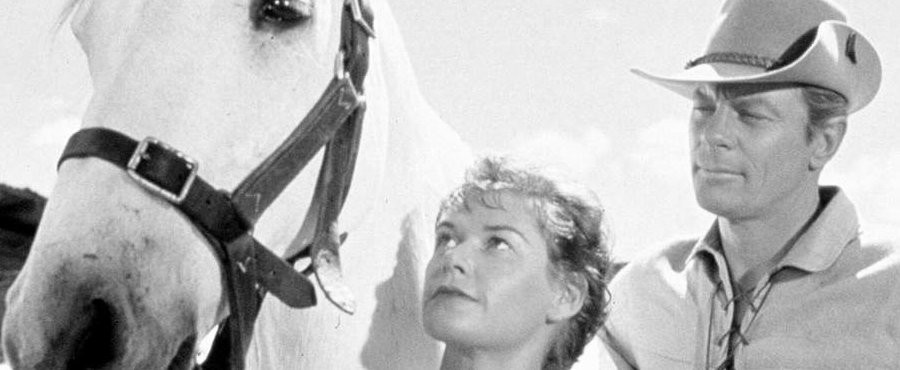
Whiplash was based on the true story of Cobb & Co., a stagecoach line that grew up in Australia in the Wells Fargo mould following the 1850's gold rush. Boss of the company was US actor Peter Graves (brother of Gunsmoke star James Arness) who would later find fame as Jim Phelps in the 60's spy thriller series Mission Impossible, and Whiplash was filmed at Alice Springs and used for its backdrop such locations as the MacDonnell Ranges, the Ormiston Gorge and Ayer's Rock.
Scripts were written by American writers which included Harry Fink and Gene Roddenberry and Australian writers Michael Noonan and Michael Plant, although there was (apparently) considerable concern amongst the Australian writers about 'unsuitable' American scripts - it was claimed that one script called for a scene featuring a 'herd of stampeding sheep!' The production was beset with other problems right from the beginning and before the series went into full production Executive Producer Ralph Smart resigned to be replaced by Leslie Harris.
Peter Graves played company boss Christopher Cobb, a handsome 30 year-old Bostonian and son of Jeremiah Fulton Cobb, a transportation tycoon in the USA with a sprawling railroad and stagecoach empire. The empire that they set up in Australia meant that by 1870 Cobb and Co. were using 6,000 horses a day over incalculable miles a week of sometimes trackless outback and by 1880 they controlled over 4,000 miles of coach routes. Their 'Great Coach' with 12 horses pulled some ninety or so passengers but by far their biggest coach was the 'Leviathan', which was pulled by 22 horses!
The series itself mainly concerned itself with standard Wild West stories with outlaws being replaced by bushrangers and the character got his name from his preference to using a bullwhip rather than a gun. At the time the series had a good following and was rated as slightly above average although it's star wasn't so certain that they really did it justice to it. Some years later Peter Graves told 'TV Week': "Whiplash could have been much, much better. It was kept in the mould of the American show because there was no time for proper research and production planning. The writers here should have gone down there and really studied the Cobb & Co era. Not enough was made of Australia itself, we were too often confined to the back-lot." The series is believed to be the first to feature aborigines acting in a tv film.
Seen this show? How do you rate it?
Seen this show? How do you rate it?
Share on...
Published on February 12th, 2019. Written by Marc Saul (2010) for Television Heaven.