

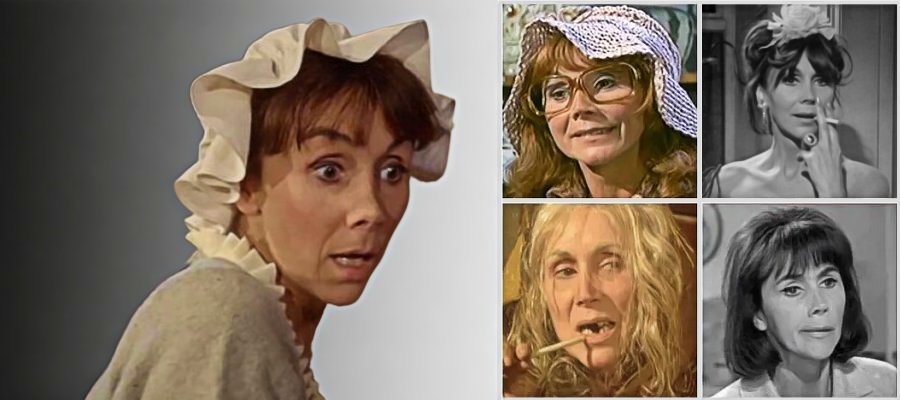
Marianne Stone
Marianne Stone was an English character actress whose familiar face appeared in hundreds of British films and television programmes over more than four decades. Best known for brief but memorable appearances as working-class women—barmaids, factory girls, receptionists, landladies and other everyday figures—she became one of the most recognisable supporting performers in post-war British entertainment.
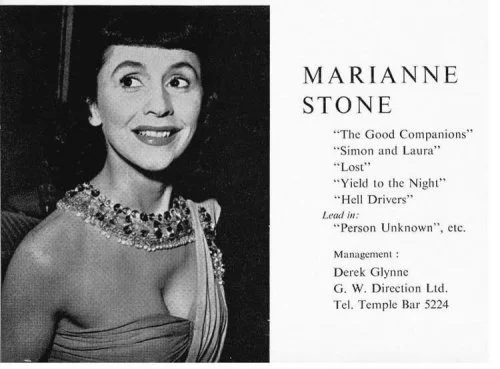
She was born Mary Stone in Kings Cross, London on 23 August 1922. As a young woman she won a scholarship to the Royal Academy of Dramatic Art, where one of her fellow students was the future actor and director Richard Attenborough, with whom she formed a lasting friendship. During the Second World War she gained practical stage experience with the company at the Intimate Theatre in Palmers Green, appearing there from 1943 to 1945. One of her earliest successes came with Emlyn Williams’ The Corn is Green, in which she received particular praise for playing the sharp-witted Cockney character Betty Watty.
A young journalist named Peter Noble regularly reviewed the Intimate Theatre’s productions for a local newspaper and seemed to give Stone notably generous notices even when her part was small. Their professional acquaintance soon became a personal relationship, and they often socialised with friends including Richard and Sheila Attenborough at the Arts Theatre Club in London. In 1947 Stone and Noble married, beginning a partnership that would last half a century. Noble later became a well-known film and theatre reporter, gossip columnist and critic, and the couple were famous for hosting lively gatherings at their large house in Abbey Road. They had two daughters, Kara and Katrina.
Stone continued to develop her stage career in the immediate post-war years. In 1946 she appeared at the St James Theatre in two alternating repertory productions presented by actor-manager John Clements: John Dryden’s Marriage à la Mode, in which she played the sister of Moira Lister’s character, and the premiere of Margaret Luce’s historical drama The Kingmaker, based on the life of Richard Neville, Earl of Warwick. She later returned to The Corn is Green at the New Theatre in Bromley, again portraying Betty Watty, this time alongside a young actor named Bryan Forbes who played the miner encouraged to pursue a university education.
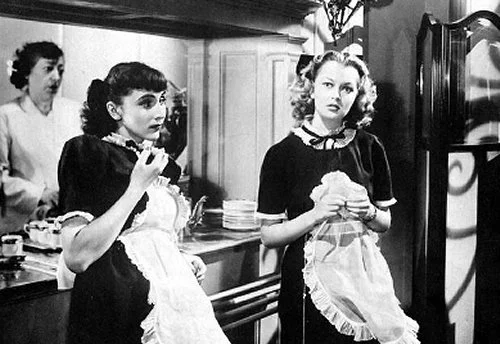
During these early theatre years she was billed professionally as Mary Stone, but as her screen career gathered momentum she adopted the name Marianne Stone, though friends continued to call her Mary Noble. Her screen debut (uncredited) had actually come earlier in the Arthur Askey musical comedy Miss London Ltd. (1943), and she soon became a dependable presence in British films, usually in small but vividly drawn roles. Early appearances included a factory worker in Miss Pilgrim’s Progress (1950) and a fleeting appearance as a “woman in a phone box” in the suspense drama Seven Days to Noon (1950). In 1954 she played barmaids in three different films—You Know What Sailors Are, The Good Die Young and The Gay Dog—illustrating the kind of brisk, colourful character parts that became her trademark.
The producing and directing team of brothers Roy and John Boulting also cast her in a number of their productions, usually in small supporting roles. Among the films in which she appeared for them were High Treason (1951), Brothers in Law (1957), I’m All Right Jack (1959), Man in a Cocked Hat (1959) and Heavens Above! (1963).
She joined the long-running Carry On series with Carry On Nurse (1959). Her talent for comic timing was particularly evident in Carry On at Your Convenience (1971). She also turned up in many well-known British films of the period, sometimes in roles so brief they were described only in the credits as characters such as a “woman in a scarf,” as in The Jokers (1967). In Richard Attenborough’s war satire Oh! What a Lovely War (1969) she appeared as a mill girl, reuniting with her former drama-school friend.
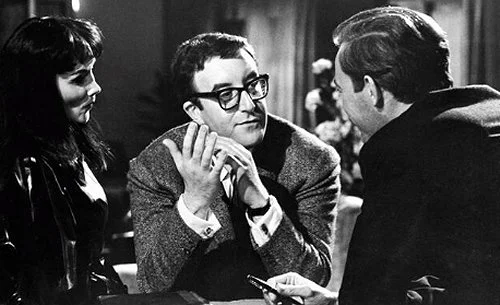
Although most of her other film appearances were fleeting, Stone occasionally received more developed roles such as in Passport to Treason (1956), and one of her most clearly defined film performances came as Vivian Darkbloom in Lolita (1962), appearing alongside James Mason, Shelley Winters, Peter Sellers and Sue Lyon in the title role. It was widely believed that Winters—who stayed with Stone during the film’s production—helped her secure the part.
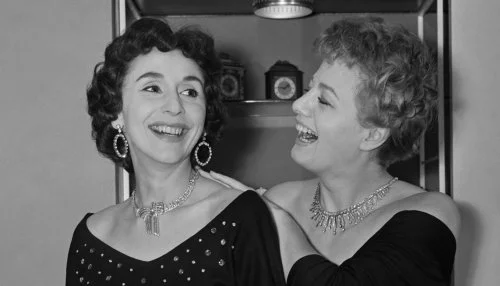
Another of her most substantial performances came later on television in the BBC drama Secret Army (1977–1978), where she portrayed Lena Van Broecken across three episodes, a part that allowed her greater dramatic range than her usual cameo roles. Television became a larger part of her career from the 1960s onward, and she was seen in series such as Ghost Squad, No Hiding Place, Gideon’s Way, Dixon of Dock Green, Man in a Suitcase and The Persuaders!. By that time, Stone, who was nicknamed ‘Mugsy’, had already appeared in over a hundred films. Other television credits included productions like Eccentricities of a Nightingale (1976), Little Lord Fauntleroy (1976) and the miniseries A Man Called Intrepid (1979).
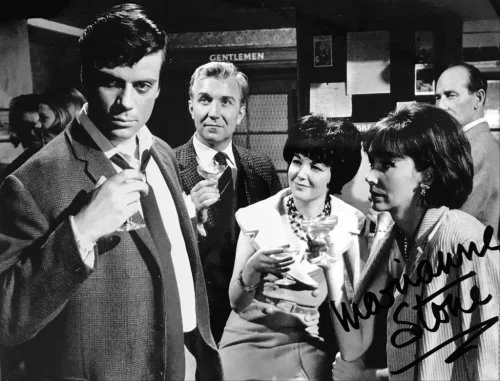
Stone’s film work continued steadily through the 1960s and 1970s, and sharp-eyed viewers could spot her in productions such as The Wrong Arm of the Law and A Hard Day's Night. Her tenth intended appearance in a Carry On film was cut before release, leaving her with nine completed entries in the series. One of her later film roles was in the comedy Funny Money (1983), in which she appeared alongside her daughter Kara Noble. Her final cinema appearance came in the gothic ballet-themed story Déjà Vu (1985). Her last screen performance overall was in Eric Sykes’ largely silent television film The Nineteenth Hole (1989).
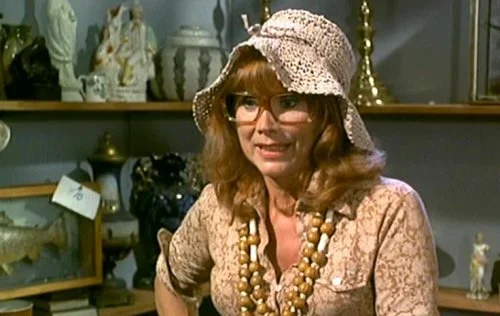
Over the course of her long career Stone accumulated well over three hundred screen appearances, most of them in films, becoming one of the most frequently glimpsed supporting actresses in British cinema. Despite the brevity of many of her roles, her distinctive presence made her a familiar figure to audiences for decades, an achievement that earned her a place in the Guinness Book of World Records as "the actress with the most screen credits".
Peter Noble died in 1997 after fifty years of marriage. Marianne Stone died on 21 December 2009 at the age of 87, survived by her two daughters. Her vast body of work, much of it made up of fleeting but colourful moments, left her as one of the most recognisable character performers in British film and television history.
Share on...
Published on March 10th, 2026. Written by Laurence Marcus for Television Heaven.