
Day of the Daleks
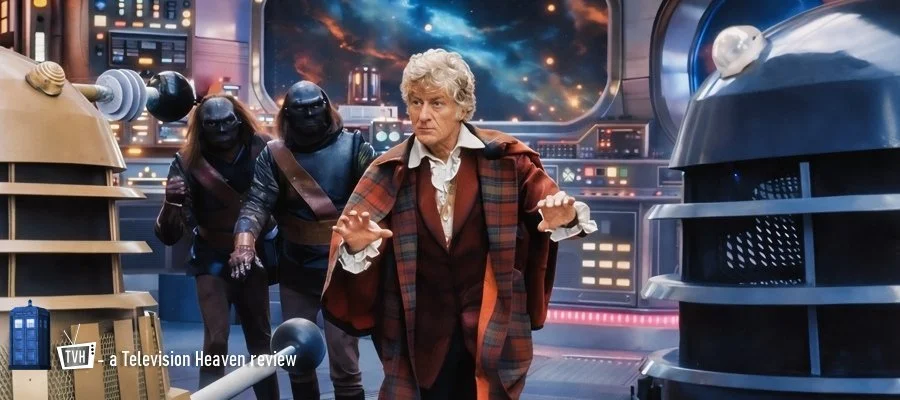
Day of the Daleks sits in an interesting place in the history of Doctor Who. It’s a story that had a lot riding on it: the return of the Daleks after several years, a deeper dive into time travel paradoxes than the show usually attempted, and the continued evolution of the Third Doctor’s era under Jon Pertwee. The result is a serial that’s a little rough around the edges in places, but still surprisingly thoughtful—and, in many ways, ahead of its time.
The story kicks off with a classic bit of eerie intrigue. Sir Reginald Styles (Wilfred Carter), a diplomat trying to organise a peace conference to avert World War III, is suddenly confronted in his own study by a soldier wielding a futuristic weapon… who then vanishes into thin air. It’s a great hook: part ghost story, part sci-fi mystery. Naturally, UNIT gets involved, and soon the Doctor, Jo Grant, and the Brigadier arrive at Auderly House to investigate what appears to be a haunting.
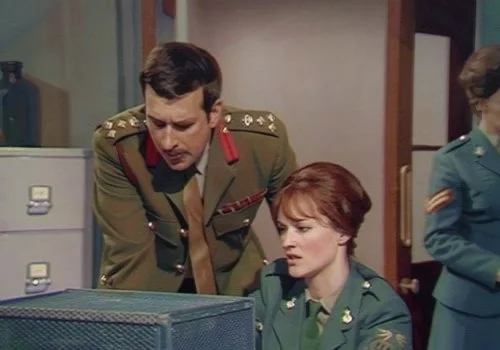
From the outset, the serial leans into atmosphere. The idea of “ghosts” turning out to be time travellers is a clever twist, and the Doctor quickly uncovers the truth: a crude but functional time machine, clearly not of contemporary origin. This blending of haunted-house tropes with science fiction is something Doctor Who has always done well, and here it’s handled with a confident touch.
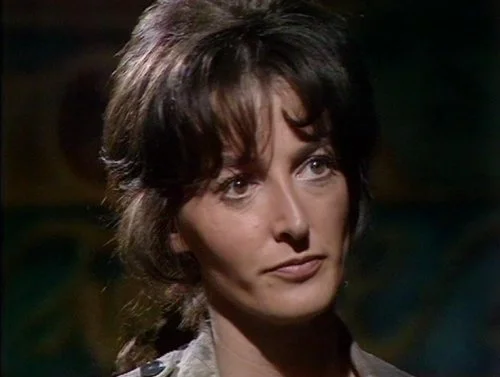
Things really kick into gear when the “ghosts” reappear—this time revealed as rebels from the 22nd century: Anat (Anna Barry), Boaz (Scott Fredericks), and Shura (Jimmy Winston). Their mission is stark and unsettling. They’ve come back in time to assassinate Styles, believing that his actions—a pre-meditated explosion and the death of all the participants at his peace conference—will lead to a catastrophic war that will allow the Daleks to conquer Earth. It’s a grim premise, and one that immediately introduces a moral dilemma at the heart of the story.
What makes Day of the Daleks stand out is how directly it engages with the idea of the time paradox. The Doctor quickly realises that the rebels’ plan is flawed—that their attempt to change history is actually what causes the very disaster they’re trying to prevent. It’s a classic causal loop, the kind of concept that would later become a staple of science fiction films like The Terminator. In fact, watching this serial now, it’s hard not to see it as a kind of proto-Terminator story: fighters from a dystopian future travelling back in time to stop a pivotal event, only to become part of it.
The future world itself is convincingly bleak. When the Doctor and Jo are transported to the 22nd century, they find a war-ravaged Earth under Dalek control, with human survivors reduced to a slave class. The Ogrons—hulking, primitive humanoids—serve as enforcers, while a human Controller (Aubrey Woods) oversees operations under Dalek command. It’s a chilling setup, and the production does a decent job of selling the desolation, even within the limitations of early 1970s television.
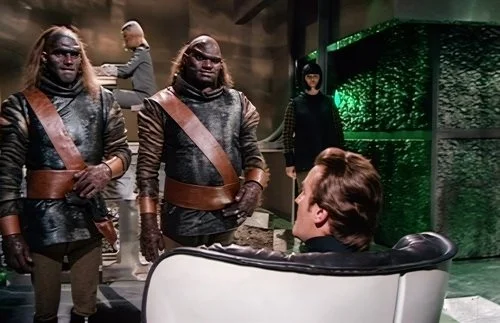
Interestingly, the story wasn’t originally intended to feature the Daleks at all. Early drafts focused on the Ogrons, with the Daleks slated to return later in the season. But the production team realised they needed a stronger hook to open Pertwee’s third season, and so writer Louis Marks was asked to alter his serial to include the Daleks. That decision arguably saved the serial in terms of its immediate impact—Daleks always draw attention—but it also introduces one of the story’s more noticeable weaknesses.
Simply put, there aren’t enough Daleks.
Due to budget constraints, only three Dalek props were available during filming. The production tries to compensate with editing tricks, but it’s often obvious that the invasion force is… well, a bit underwhelming. Nowhere is this more apparent than in the final battle at Auderly House. What should feel like a large-scale assault instead comes across as a small skirmish, and it’s easy to see why viewers at the time found it disappointing.
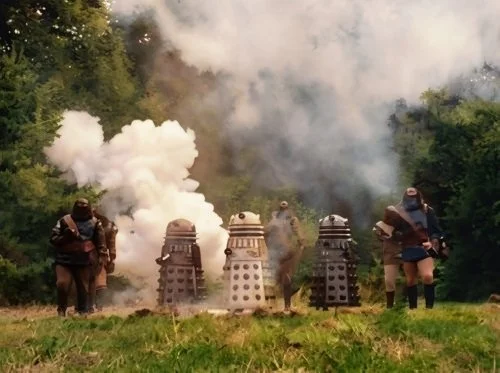
That said, the narrative still delivers where it counts. The climax—where Shura sacrifices himself by detonating a dalekanium bomb—has real emotional weight. It’s not just an action beat; it’s the culmination of the story’s moral arc. Shura begins as someone willing to commit assassination for the greater good, but ultimately becomes a figure of self-sacrifice, choosing to destroy the Daleks without taking an innocent life.
This ties into one of the serial’s strongest elements: its exploration of morality. The Doctor’s stance is clear and unwavering—killing Styles, even to save billions, is wrong. It’s a powerful moment for the character, reinforcing his role not just as a hero, but as a moral compass.
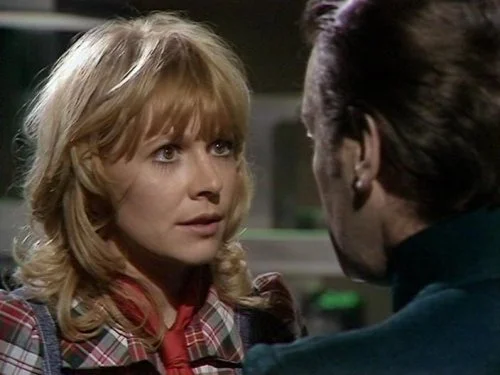
Katy Manning as Jo Grant also gets some solid material here. She’s more than just a companion along for the ride; she actively participates in the investigation and adapts quickly to the strange circumstances. Her chemistry with the Doctor continues to develop, and their scenes together—particularly in the quieter moments—help ground the story.
Behind the scenes, Day of the Daleks is full of interesting quirks. This was the first time the Daleks were seen in colour in the television series, which should have been a big moment. However, the decision to forgo the traditional ring modulator effect on their voices resulted in a very different—and, to some ears, less effective—sound. It’s one of those choices that makes the Daleks feel slightly “off,” even if everything else about them is familiar.
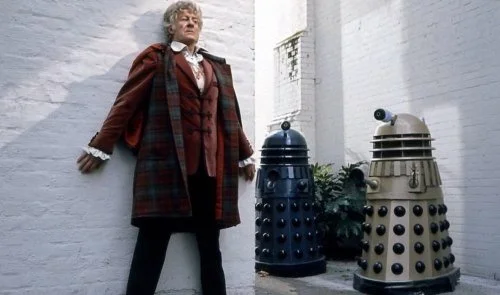
Jon Pertwee, despite famously not being a fan of the Daleks, enjoyed working with the guest cast and particularly liked the Ogrons, whose design allowed for more expressive performances. He also pushed for the inclusion of a trike chase sequence—a decision he later admitted led to one of the more dangerous stunts he performed on the show.
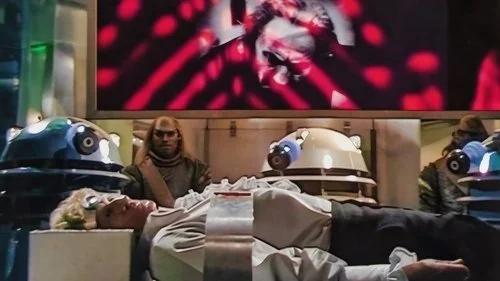
Another surprise moment for fans is the brief appearance of earlier Doctors during the mind analysis machine sequence. Seeing images of William Hartnell and Patrick Troughton again would have been a treat for those longtime viewers, adding a sense of continuity and history to the series.
The story also plays with time in a more literal sense during a clever early scene in the Doctor’s lab, where he and Jo accidentally glimpse their future selves. It’s a neat visualisation of the time loop concept, and it’s a shame that a planned mirror scene at the end—bringing the narrative full circle—was never filmed.
In terms of pacing, Day of the Daleks moves along briskly. There’s always something happening, whether it’s the mystery at Auderly House, the incursions from the future, or the excursions into the terrifying 22nd century.
Of course, it’s not perfect. The limited Dalek presence, some slightly clunky action sequences, and the occasional production constraint do hold it back from being a top-tier classic. But what’s remarkable is how well it holds up despite those issues.
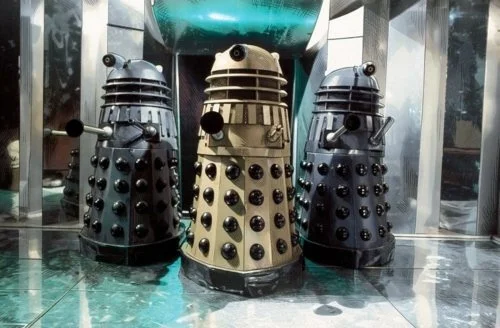
The 2011 Special Edition DVD goes a long way toward addressing some of these shortcomings. With updated CGI effects, additional footage, and newly recorded Dalek voices by Nicholas Briggs, the story feels much closer to what it was probably always intended to be. The enhanced final battle, in particular, finally gives the Daleks the scale they deserve.
At its core though, Day of the Daleks succeeds because of its ideas. It’s a story about cause and effect, about the dangers of trying to rewrite history, and about the moral compromises people are willing to make in desperate circumstances. It asks big questions and doesn’t offer easy answers.
And perhaps most importantly, it reminds us that even in a universe of time travel, some principles remain constant. The Doctor’s refusal to accept murder as a solution—even in the face of unimaginable stakes—is what ultimately sets him apart.
So, while it may not be the flashiest Dalek story, Day of the Daleks is one of the more intellectually engaging ones. It’s a thoughtful, slightly flawed, but ultimately compelling piece of science fiction that proves Doctor Who can be just as much about ideas as it is about monsters.
Share on...
Published on May 6th, 2026. Written by Laurence Marcus for Television Heaven.