
The Evil of the Daleks
Terrall: Doctor, no doubt you're a keen student of human nature, but some things are better left alone.
Doctor: No, Mister Terrall, I am not a student of human nature. I am a professor of a far wider academy, of which human nature is merely a part.
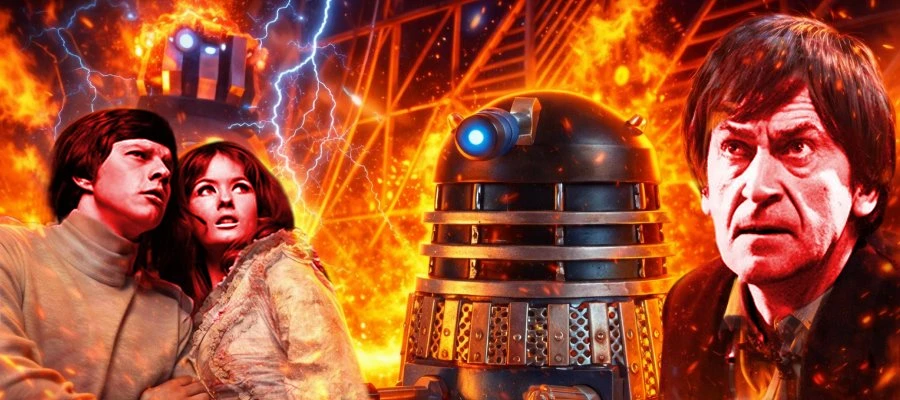
The Evil of the Daleks occupies a singular, almost mythic position in Doctor Who history, and watching it today—particularly in its animated reconstruction—only reinforces why it has long been spoken of in reverent tones. Conceived in 1966 as a grand farewell to the Daleks, David Whitaker’s story is ambitious, intelligent and unusually sombre, blending Victorian Gothic, science fiction and moral allegory into what is arguably one of the Second Doctor’s finest hours.
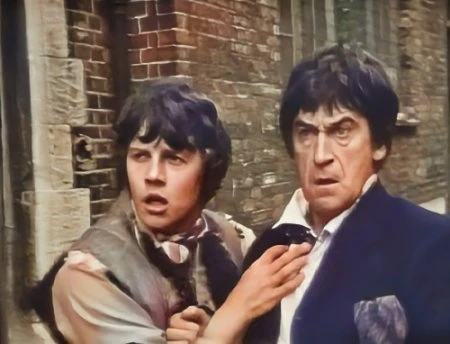
The story opens with a note of helplessness that immediately wrong-foots the audience. Picking up directly from the end of The Faceless Ones, the Doctor and Jamie can do nothing but watch as the TARDIS is unceremoniously loaded onto a lorry and driven away from Gatwick Airport. It is a wonderfully mundane image for such a profound violation, and it sets the tone for a serial that is constantly interested in power, coercion and loss of agency. The trail leads to Edward Waterfield’s antique shop, where Victorian bric-a-brac that looks suspiciously new hints at temporal wrongdoing, and where the Daleks—kept hidden at first—reveal themselves to be more calculating and manipulative than ever.
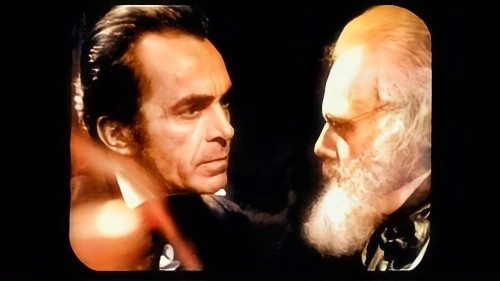
One of the serial’s great strengths is its patience. For several episodes the Daleks remain largely in the background, exerting control through fear and proxies rather than brute force. Waterfield, beautifully played by John Bailey, is a tragic figure: a grieving father forced into collaboration by the kidnapping of his daughter Victoria. His partner, Theodore Maxtible, provides a chilling counterpoint—his willingness to cooperate with the Daleks out of greed and intellectual vanity makes him as culpable as he is pitiable. When the story shifts back to 1866 Kent, the period setting is used not merely for atmosphere but to ground the science fiction in human motivations: ambition, love, cowardice and betrayal.
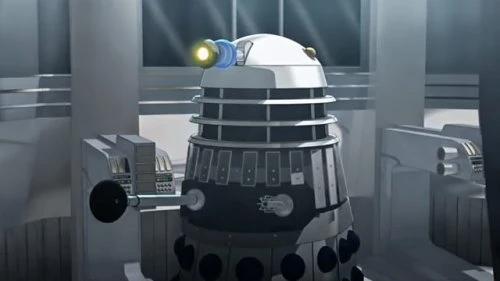
Patrick Troughton’s Doctor is at his most enigmatic here. His apparent cooperation with the Daleks, particularly in manipulating Jamie into undergoing a series of “tests” to isolate the so-called Human Factor, is deeply unsettling. The serial asks the viewer to trust the Doctor even when his actions seem morally dubious, and that tension pays off handsomely. Frazer Hines gives Jamie a real sense of integrity and ingenuity during the rescue of Victoria, and it is through Jamie’s compassion and bravery that the Doctor is able to define what the Daleks can never truly understand.
The central conceit—the attempt to distil and transplant the Human Factor into Daleks—is classic Doctor Who: bold, philosophical and faintly mad. The trio of “human” Daleks, childlike and gentle, are genuinely unsettling in their own way, not least because they expose how warped Dalek ideology truly is. The eventual revelation on Skaro, before the imposing Dalek Emperor, is one of the serial’s finest moments. The idea that isolating the Human Factor also isolates the Dalek Factor is a brilliantly symmetrical piece of writing, and the Emperor’s plan to spread that factor throughout human history is chilling in its scope.
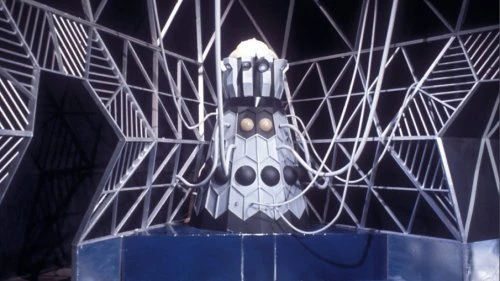
The final episodes on Skaro deliver the action that the earlier chapters deliberately withhold. The civil war between Daleks, the Emperor’s Black Daleks, and the city descending into chaos feel operatic, even in animation. Waterfield’s death—throwing himself in front of a Dalek blast to save the Doctor—is handled with restraint and dignity, and his final concern for Victoria gives emotional weight to the spectacle. Maxtible’s fate, rushing back into the burning city while proclaiming the glory of the Dalek race, is a grimly ironic end for a man undone by his own hubris.
It is also impossible to ignore the historical context. This was intended to be the Daleks’ final bow, a definitive ending designed to free Doctor Who from its most popular monsters while Terry Nation pursued American ambitions that never materialised. That the story ends with the Doctor solemnly declaring “the final end” of the Daleks—only for a tell-tale pulsating light to betray the Emperor’s survival—is both dramatically effective and quietly knowing. Doctor Who has always been better at endings that are not quite endings at all. Production realities inevitably intrude. Troughton’s absence from episode four, relegating him to pre-filmed inserts, is noticeable but handled as gracefully as possible, and the behind-the-scenes reshuffling of companions explains Victoria’s somewhat abrupt introduction. Deborah Watling, however, makes an immediate impression, and Victoria’s quiet grief provides a poignant counterbalance to Jamie’s exuberance.
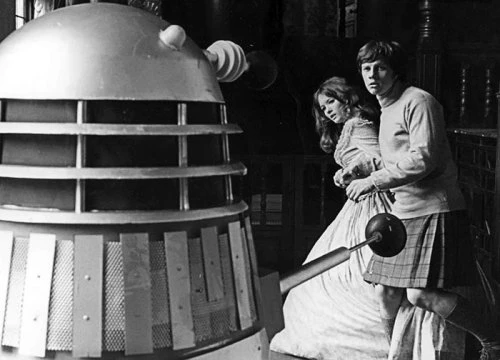
Denise Buckley was originally cast as Victoria Waterfield by director Derek Martinus. At the time, the production team were still hoping that Pauline Collins might agree to continue as Samantha Briggs following her appearance in the previous story, and Victoria had been devised as a contingency should Collins decline. When Collins confirmed that she did not wish to join the regular cast, the decision was taken to introduce Victoria as the new companion; Buckley was subsequently released from the role, though paid in full, and Deborah Watling was recast as Victoria as a more suitable long-term choice. Meanwhile, episodes two and three had initially been written to include previous companions Ben and Polly, but when Michael Craze and Anneke Wills were written out at the end of the preceding story—reportedly at the insistence of Head of Serials Shaun Sutton—David Whitaker was forced to rework his scripts accordingly.
This story was wiped from the BBC's archives by the mid-1970s. Only episode 2 remains, in a telerecording found at a car boot sale, alongside Episode 3 of The Faceless Ones. The story was released on DVD and Blu-ray in animated form on 27 September 2021, with the surviving episode two included.
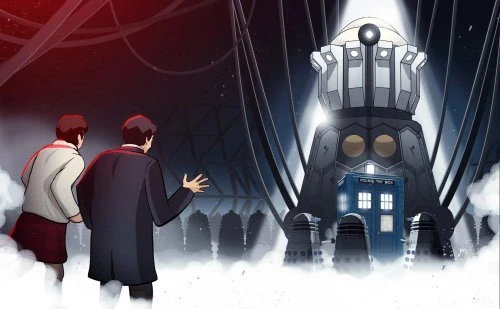
Viewed today, The Evil of the Daleks feels almost cinematic in its structure. Binge-watching it reveals a taut, well-plotted narrative that builds inexorably to its climax, even if its original weekly pacing may have felt slower in 1967. That it survives largely through animation, with only episode two extant, is a reminder of how little value was once placed on television’s afterlife. Yet its reputation has endured, confirmed by its high placing in the Doctor Who Magazine poll for the show's 60th anniversary in 2023, where it was was voted the sixth best story of the Second Doctor's tenure, and its unique role as the first Doctor Who story to be replayed within the series itself (re-introduced in the final scene of The Wheel in Space).
Ultimately, The Evil of the Daleks is not just a great Dalek story, but a great Doctor Who story. David Whitaker’s script is intelligent and lyrical, the supporting cast superb, and the Daleks themselves at their most devious and frightening. It is a masterpiece of the black-and-white era, and a fitting, if temporary, farewell to the Doctor’s deadliest foes.
Share on...
Published on January 6th, 2026. Written by Laurence Marcus for Television Heaven.