
The Abominable Snowmen
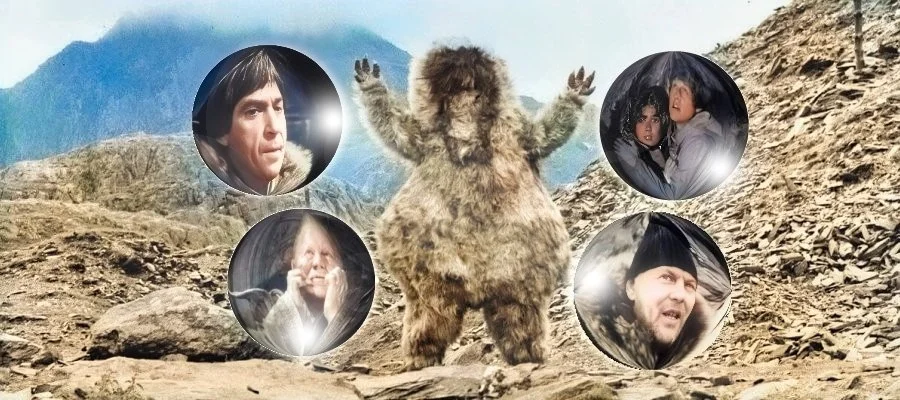
The second of season five's chilly adventures, The Abominable Snowmen is the first Doctor Who script by writing duo Mervyn Haisman (The Onedin Line, Howards' Way) and Henry Lincoln (author of The Holy Blood and the Holy Grail). One of Patrick Troughton's most highly regarded serials, it introduced some of the Second Doctor's most popular foes: the Great Intelligence and its robotic servants, the Yeti. Sadly, The Abominable Snowmen has suffered the BBC's junking policy particularly harshly: only the second of the serial's six episodes survives in the archives.
For many years, the only way to experience the bulk of this serial was through its soundtrack. Fortunately, The Abominable Snowmen is one of the most atmospheric serials of the 1960s, and even an audio-only experience gets this across. Nowadays, like many of the lost Doctor Who serials, The Abominable Snowmen has been recreated in animated form, giving us a new way to experience the story.
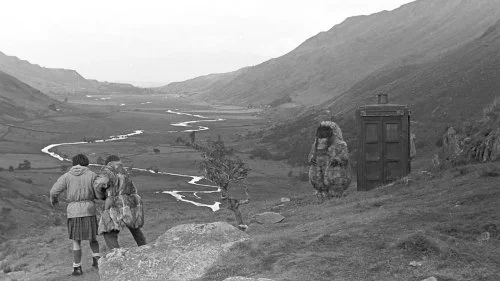
Set in the Tibetan Himalayas in the 1930s but filmed in the less exotic climes of Snowdonia and Ealing Studios, The Abominable Snowmen was made in response to Patrick Troughton's desire to film more Earth-based and historical stories. The Doctor, donning a very Yeti-like fur coat himself, is pleased to visit the monastery of Detsen, a place he visited four centuries earlier (presumably when he looked like William Hartnell). Tragedy befell the monastery that day as their holy ghanta – a sacred bell actually more associated with Hinduism – disappeared. The Doctor still has it in his knick-knack chest, and he realises it's about time he returned it.
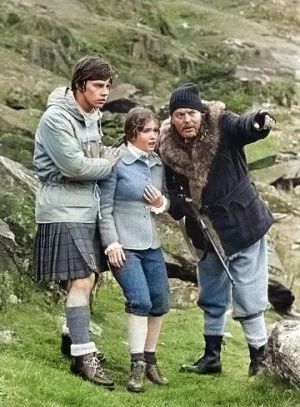
The Doctor promptly goes hiking up the mountain towards the monastery, leaving Jamie (Frazer Hines) and Victoria (Deborah Watling) lagging behind. Also on the mountainside is one Professor Travers, a Livingstone-esque explorer who is on the trail of the real Yeti. Travers is played by Jack Watling, the father of young Deborah. His character is a bit inconsistent: he's raving paranoid to begin with, accusing the Doctor of being a “newspaper man,” a charlatan and a murderer, quickly getting him into hot water with the monks. He makes an abrupt turn once he meets Jamie and Victoria on the mountainside, and decides they aren't such bad sorts after all. By that time, the monks have tied the Doctor up outside the monastery to see if he'll be torn apart by the Yeti. The monks are dubious that the normally peaceful beasts have become violent and begun attacking their people. If they kill the Doctor, then it's true. If not, then the Doctor must be the murderer.
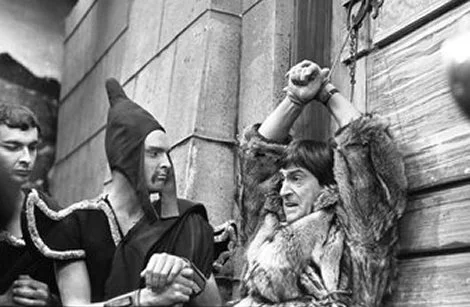
This brainwave comes from warrior monk Khrisong (Norman Jones – Bull Week, South Riding), who makes Travers look quite reasonable. This hot-headed chap gets in trouble for not running his decisions past the Abbot Songsten (Charles Morgan – Within These Walls), a more level-headed sort. There's a veritable herd of lamas at Detsen, but only one other really stands out. Thonmi, a good-natured and resourceful young monk, acts as the Abbot's messenger and a general dogsbody, and develops a bit of a soft spot for Victoria. He's played by David Spenser (Compact, Secret Beneath the Sea), who happened to be the life partner of Victor Pemberton – the serial's script editor, who'd also had a brief role in the previous season's serial The Moonbase and would soon provide his first full script for the series, Fury from the Deep.
Speaking of writers, Haisman and Lincoln considered the Yeti would make a good monster, being both familiar to viewers but also possessing an air of mystery. They may have been inspired by Nigel Kneale's 1955 television play The Creature or its 1957 Hammer film remake The Abominable Snowman (singular), both of which starred Peter Cushing and had more than a passing resemblance to this story. Whatever gave them the idea, Haisman and Lincoln added their own twist to the legend of the Yeti, transforming them into pure Doctor Who monsters: big furry robots.
The problem with the Yeti is that they're rather cute: pear-shaped towers of fluff that waddle along the mountain pass. In spite of their fearsome claws, they don't appear very threatening at all in the surviving footage. This was reportedly part of the writers' conception of the monsters, making the creatures appear harmless until it was too late. Still, the big fuzzballs aren't the most awe-inspiring of Doctor Who monsters, although the silver spheres that sit inside them, seemingly possessed of some living force, provide an eerie image.
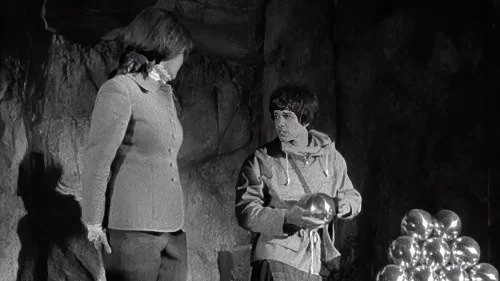
Far more chilling is their controller, the ancient monk known to his followers as the Master. No, not that one. This Master is Padmasambhava, the head of the Detsen monastery and above even the Abbott. Wolfe Morris, who had played the sherpa Kusang in the aforementioned Hammer film among a career of horrors and historicals, portrays Padmasambhava, named for a real historical Tibetan Buddhist guru. He's creepy enough just as the 400-year-old monk, kept alive in an almost zombie-like state by his own master, the Great Intelligence. When the Intelligence begins speaking through Padmasambhava, Morris's already haunting tones become chillingly ghoulish. An unknowably ancient, formless entity, the Intelligence has been playing a long game that will allow it to take on physical form on Earth.
The Abominable Snowmen develops into a base-under-siege story as with many of the Second Doctor's adventures, but the unusual setting and the eerie atmosphere set it apart from others in its era. While the remaining episode gives away some rather dodgy production decisions – from the brown Teletubbies they call the Yeti to the sundry white actors in unconvincing yellowface – it also offers a glimpse at some impressive location shooting and taut direction from Gerald Blake. The three regulars are on top form, and Jack Watling overcomes some inconsistent writing to make Travers a memorable guest character. While filming began on this serial, Haisman and Lincoln were already working on a sequel, which would see Travers, the Yeti and the Great Intelligence all return before the season was out.
Review by Daniel Tessier
Share on...
Published on February 28th, 2026. Written by Laurence Marcus for Television Heaven.