

The Ice Warriors
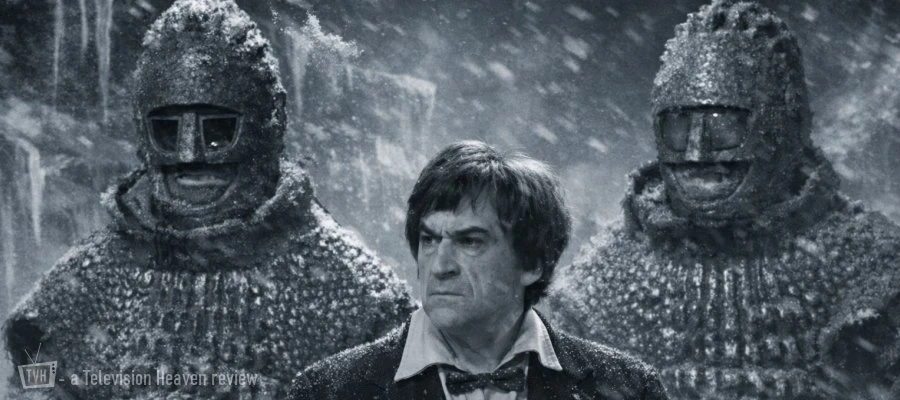
Arriving hot on the heels of The Tomb of the Cybermen and The Abominable Snowmen, The Ice Warriors completes an informal “ice trilogy,” embracing snowbound isolation once again but this time widening its scope from archaeology and mysticism to speculative climate science and Martian invasion. Written by Brian Hayles and directed by Derek Martinus, the story fuses contemporary scientific anxieties with classic monster drama, creating another distinctive serial of the Second Doctor’s era.
Hayles’ inspiration came from two compelling sources: the 1901 discovery of a remarkably well-preserved woolly mammoth in the Siberian ice, and a fascination with the hostile environment of Mars. From those ideas grew the striking image of a Martian warrior entombed in a glacier and accidentally revived in Earth’s distant future. The result is a premise that feels both pulp-adventurous and grounded in speculative science. The setting—a Britain on the brink of a new Ice Age—draws explicitly on then-current debates around nuclear winter and climate catastrophe.
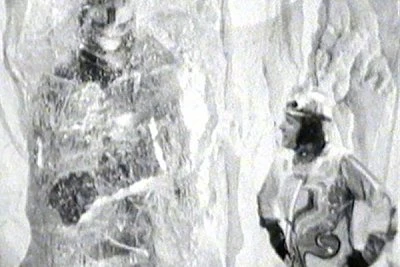
The story unfolds at Brittanicus Base, where Leader Clent and his team struggle to halt advancing glaciers with an ioniser. The tension is immediate and believable: this is not a cozy research station but a desperate outpost clinging to survival. When an armoured figure is uncovered in the ice, the narrative shifts from survival drama to alien awakening. The revived Ice Warrior Varga, played by Bernard Bresslaw, is an imposing presence—less through physical movement than through voice and stature. Martinus’ insistence that all Ice Warrior performers be over six feet tall pays off in their sheer visual dominance.
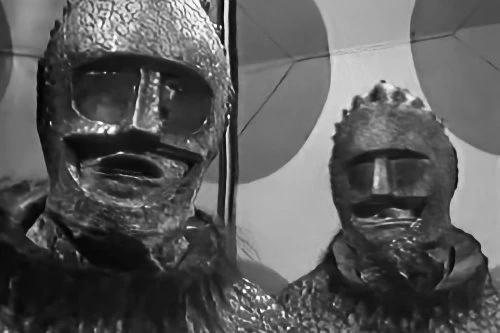
The design of the Ice Warriors is crucial to their impact. Hayles originally imagined medieval-style space soldiers, but costume designer Martin Baugh re-envisioned them as reptilian figures, upright crocodilian forms encased in segmented armour. The effect is memorable and enduring; the creatures feel ancient and militaristic, a race that evolved for war in a harsh environment. Bresslaw, famous for his expressive comic performances, was completely concealed within the costume—a fact he reportedly discovered only at rehearsals. Ironically, the loss of facial expression enhances the alien quality of Varga, whose cold, sibilant authority contrasts beautifully with the base’s brittle human leadership.
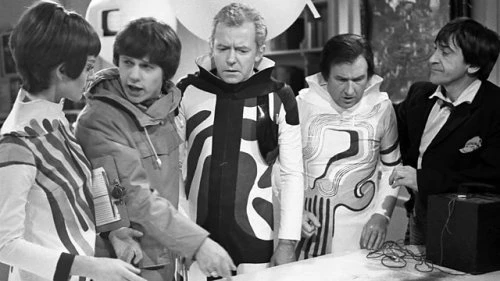
Much of the drama hinges on ideology rather than brute force. Clent is rigid, authoritarian, and obsessively devoted to computer calculations. Penley, the defected scientist living in the tundra, represents intuition and human judgment. Their conflict, echoing real scientific disputes of the 1960s about environmental manipulation and technological overreach, is one of the serial’s strongest elements, brought to life through fine performances by Peter Barkworth and Peter Sallis. The “don’t trust the machines” theme could have been routine, but here it feels urgent. The ioniser’s 50 percent chance of catastrophic failure is a potent metaphor for technological hubris, and Penley’s insistence on human decision-making ultimately saves the day.
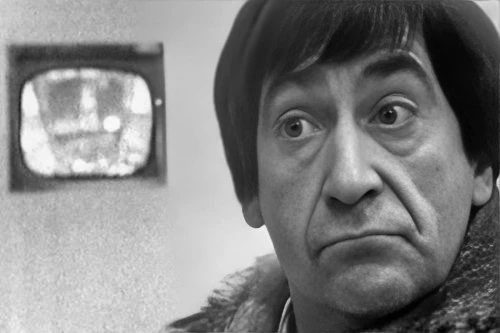
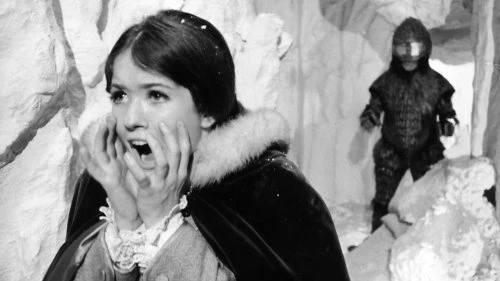
Patrick Troughton’s Second Doctor is in his element amid this clash of logic and instinct. He darts between factions, manipulates situations with apparent absent-mindedness, and ultimately finds the scientific key to defeating the Martians: ammonium sulphide as a chemical weakness, and the adaptation of their own sonic cannon against them. His moral compass remains steady; he pushes Clent to act decisively while subtly undermining blind faith in the computer. Jamie and Victoria are well used too—Jamie’s bravery and vulnerability in the ice caves, Victoria’s captivity and resilience, both adding dramatic stakes to the broader conflict.
Visually, the serial punches above its weight. The tundra landscapes create a stark, minimalist beauty, and the ice cave sets are impressively expansive by the standards of 1960s Doctor Who. Victoria’s wanderings through the frozen caverns convey genuine scale and isolation. The hissing, whispering voices of the Ice Warriors add an eerie soundscape that lingers long after individual scenes fade. Even small production details stand out—such as the rare instance of the TARDIS Police Box doors opening outward, matching their real-world counterparts.
If the story has a flaw, it is pacing. At six episodes, it occasionally feels stretched, with repeated captures and escapes slowing the momentum. Some secondary characters, like the unstable technician Walters or the opportunistic scavenger Storr, serve their narrative function without being fully developed. Yet the length also allows the ideological conflict to breathe and the atmosphere to settle in. The sense of encroaching ice and looming extinction is never far from the surface.
Historically, The Ice Warriors is significant as the debut of one of the series’ most enduring alien races. It is also partially missing from the archives, with two episodes reconstructed through full-length animation for modern release—one of the early examples of this now-familiar restoration approach. That survival through reconstruction feels fitting for a story about revival from ice.
In the end, The Ice Warriors transforms what could have been a straightforward base-under-siege tale into something richer. It blends environmental anxiety, political allegory, and classic monster thrills within a stark frozen landscape. Though slightly overlong, it remains a gripping and atmospheric adventure.
Share on...
Published on February 24th, 2026. Written by Laurence Marcus for Television Heaven.