

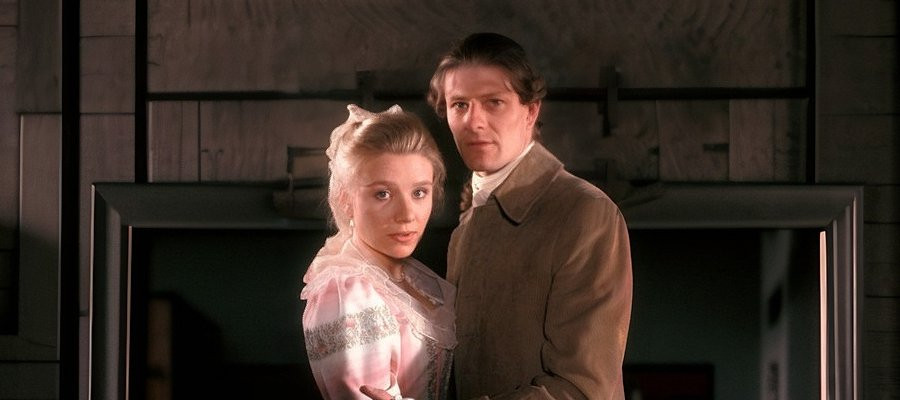
Clarissa
1991 United KingdomClarissa is a haunting and meticulously crafted British period drama that aired on BBC2 in three episodes between 27 November and 11 December 1991. The miniseries earned a BAFTA TV nomination for Best Drama Serial and stands as a powerful exploration of virtue under siege, obsession, and the suffocating structures of family control.
At its heart is Clarissa Harlowe, played with remarkable depth by Saskia Wickham (Hollyoaks). Though she inherits a fortune from her grandfather, she selflessly places it under the control of her jealous and socially ambitious family—a decision that seals her fate. Wickham transforms what could have been a one-dimensional paragon of virtue into a living, breathing young woman: pious yet strong-willed, naïve yet quietly defiant. Far from the “simpering ingénue” some critics have labelled the literary character, this Clarissa refuses to surrender her moral autonomy, even as her world collapses around her.
The drama ignites when the notorious rake Lovelace, embodied with magnetic intensity by Sean Bean (Sharpe), arrives intending to seduce Clarissa’s sister Arabella (a sharp performance from Lynsey Baxter – Peak Practice). A chance encounter in the garden shifts his attention irrevocably toward Clarissa. From that moment, what begins as fascination curdles into obsession. Bean was made for this role; his Lovelace is charismatic, witty, and dangerously persuasive, yet simmering with cruelty. He convincingly portrays a man who mistakes domination for love and corruption for conquest.
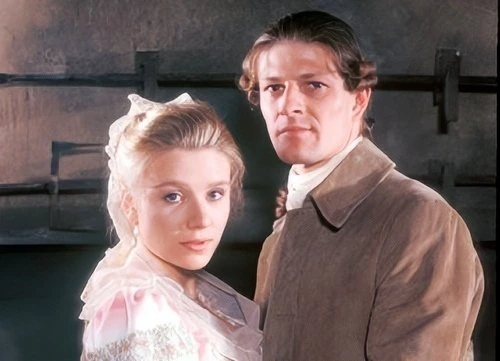
As Lovelace schemes to see Clarissa again, her family tightens its grip. Her devious siblings—Arabella and James—engineer her isolation, pushing her toward marriage with the wealthy but repellent Mr. Solmes (Julian Firth - Cadfael). Letters to her once-loving parents and uncle are torn up unread. Her confidante Anna Howe (Hermione Norris – Cold Feet) is removed from the household. A spying maid monitors her movements. Even physical force is used to break her resistance. The family’s campaign is chilling not because of spectacle, but because of its plausibility: a systematic dismantling of a young woman’s agency under the guise of propriety and advancement.
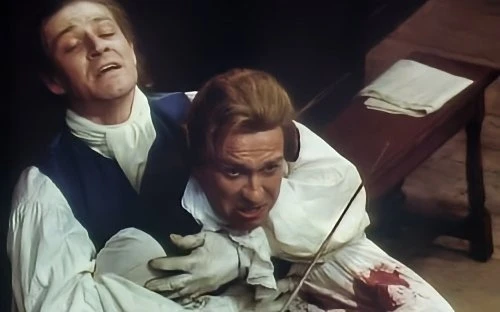
One of the production’s most striking elements is its psychological intensity. On paper, the plot may seem sparse, but the emotional and moral battles are riveting. A dream sequence—Clarissa in white at her wedding, Lovelace turning his sword first on her family and then fatally upon her—beautifully foreshadows the spiritual and physical violence to come. It encapsulates the story’s central tension: innocence encircled by predation.
Driven to desperation, Clarissa secretly contacts Lovelace through a loose brick in a henhouse and flees her home. Yet escape only shifts her captivity. Though initially lodging in separate rooms at an inn, Lovelace’s intentions grow increasingly transparent. He oscillates between seduction and supplication, even invoking religious reformation and brandishing a Bible in a calculated bid to win her trust. Clarissa, clinging to hope that goodness can redeem corruption, agrees to guide his supposed repentance—while sensing the danger beneath his charm.
Her ruin unfolds with tragic inevitability. Lodged among prostitutes to destroy her reputation, tricked with promises of marriage, and ultimately assaulted while restrained, Clarissa is spiritually shattered. Lovelace’s insistence that he will marry her rings hollow; she rejects him utterly and escapes, but the damage is irreversible. In one of the drama’s most devastating turns, she wastes away, choosing death over a world that has stripped her of dignity. Lovelace, meanwhile, finds no triumph—his own family repudiates him, and retribution follows.
What makes this adaptation of Samuel Richardson’s 1748 novel unforgettable is its refusal to sensationalise. The horror lies in the psychology: the relentless testing of virtue, the warped fantasy of a man determined to conquer what he cannot understand, the suffocation of familial tyranny. It feels almost allegorical—evil obsessively pursuing the destruction of good—yet remains grounded in human frailty.
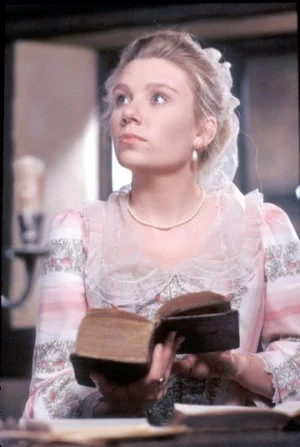
The period detail is sumptuous: costumes, interiors, and candlelit compositions evoke the 18th century with authenticity and restraint. But the performances are the true triumph. Wickham, in her first major role, carries the series with astonishing maturity. Bean’s presence is electrifying; his charisma commands every scene, making Lovelace as compelling as he is repellent.
Riveting from beginning to end, Clarissa is not merely a tale of seduction and tragedy, but a profound meditation on autonomy, morality, and the catastrophic consequences of obsession. It lingers long after the final episode—a stark, beautifully rendered portrait of virtue besieged and a society complicit in its destruction.
Seen this show? How do you rate it?
Seen this show? How do you rate it?
Share on...
Published on February 19th, 2026. Written by Laurence Marcus for Television Heaven.