

Gemini Man
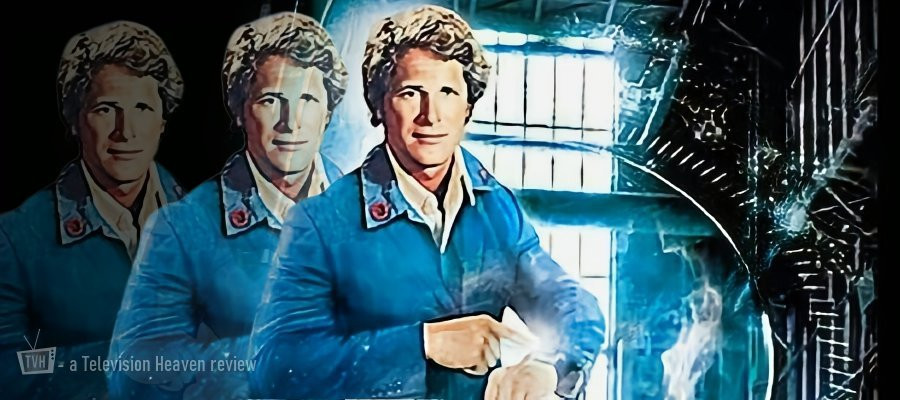
1976 United StatesGemini Man is one of those curious 1970s television experiments that feels both perfectly of its time and oddly out of step with it. Airing briefly on NBC in 1976, the series was an action-adventure reworking of H. G. Wells’ The Invisible Man, filtered through flared jeans, government conspiracies, and the glossy spy-fi style popularized by shows like The Six Million Dollar Man and The Bionic Woman. Despite an intriguing premise and undeniable charm, it vanished from American screens almost as quickly as its hero.
The series starred Ben Murphy (Alias Smith and Jones) as Sam Casey, a laid-back, denim-clad secret agent for a government think tank called INTERSECT (International Security Techniques). While diving to recover a fallen Soviet spy satellite, Casey is caught in an underwater explosion and exposed to radiation that alters his DNA, granting him the ability to become invisible. The twist—and the show’s central gimmick—is that Casey can only remain invisible for fifteen minutes per day. Any longer, and the transformation would kill him. To control this dangerous power, INTERSECT scientist Abby Lawrence (Katherine Crawford) invents a wrist-worn “DNA stabilizer,” a digital watch that allows Casey to vanish, clothes and all, at the press of a button.
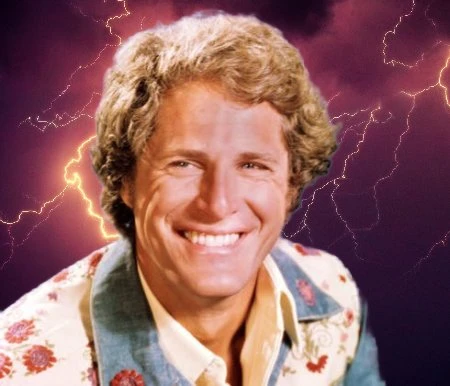
This constraint gives Gemini Man a built-in sense of urgency that distinguishes it from earlier Invisible Man adaptations. Rather than being a curse or a permanent state, invisibility becomes a tactical resource, something Casey must ration carefully while pursuing saboteurs, spies, and assorted Cold War villains. Murphy’s relaxed, easygoing performance helps sell the concept, grounding the science-fiction elements in a likable, human lead who feels more biker-detective than tortured superhuman.
The pilot, “Code Name: Minus One,” directed by Alan J. Levi, sets the template well. Casey uses his new ability to uncover evidence that the explosion which changed him was actually sabotage, establishing the espionage angle that would dominate the series. Richard Dysart appears in the pilot as Casey’s boss, Dr. Leonard Driscoll, before the role was taken over by William Sylvester for the remainder of the run—a transition that, like several others behind the scenes, hints at a production struggling to find stable footing.
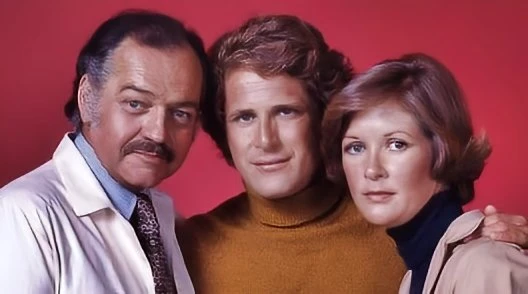
Behind the camera, Gemini Man was created in part as a cost-cutting replacement for the previous season’s The Invisible Man, using simpler and cheaper effects. Even so, the show proved too expensive for the ratings it delivered. Although 11 (or, by some counts, 12) episodes were produced, only five aired in the United States before NBC cancelled the series. Ironically, Gemini Man found a warmer reception overseas. The entire run was broadcast in the UK, where it achieved modest success and even inspired a hardcover Christmas annual and a record album—luxuries rarely afforded to a failed American import. The series also aired in South Africa, dubbed into Afrikaans.
The show’s afterlife is perhaps even stranger than its original run. Two episodes, “Smithereens” and “Buffalo Bill Rides Again,” were stitched together into a 90-minute television film titled Riding with Death in 1981. The result is an often incoherent patchwork, complicated by cast changes, continuity issues, and the sudden appearance of an arch-villain who seems to materialize out of nowhere. To pad out the production, footage from Colossus: The Forbin Project was repurposed for computer-room scenes, complete with visible “Guardian” logos and familiar speaker units. Both halves of the film feature country singer Jim Stafford as a trucker named Buffalo Bill, whose friendly assistance provides one of the few connective threads.
This awkward hybrid later achieved cult notoriety when Riding with Death was skewered on Mystery Science Theater 3000 in 1997. Mike Nelson and his robot companions gleefully pointed out the flimsy connection between the two halves and the general narrative confusion, cementing the film’s reputation as a classic example of repackaged television gone wrong.
Viewed today, Gemini Man is easy to mock, but it’s also easy to appreciate. Its blend of spy thrills, science fiction, and seventies style has a breezy appeal, and its central limitation—the ticking clock of invisibility—remains a smart narrative device. While it never found its footing in the US, the show endures as a fondly remembered curiosity among genre fans: a vanished series about a man who could vanish himself, leaving behind just enough episodes to spark nostalgia and “what if” speculation decades later.
Seen this show? How do you rate it?
Seen this show? How do you rate it?
Share on...
Published on January 10th, 2026. Written by Laurence Marcus for Television Heaven.