

Goodbye Again
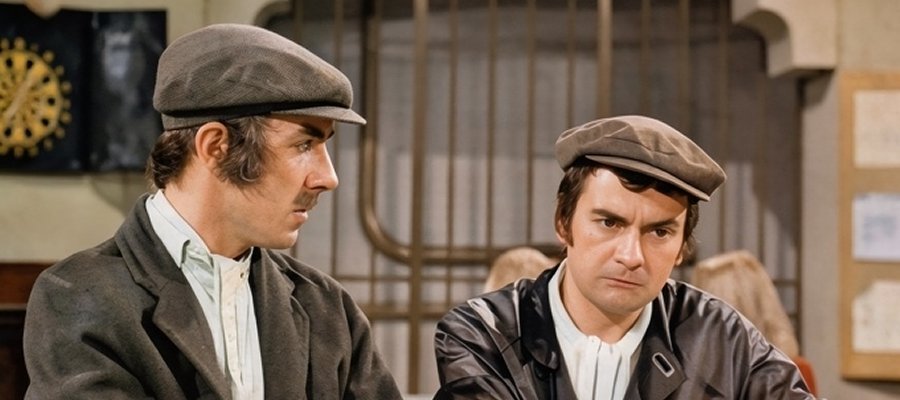
1968 United KingdomFollowing the success of Not Only... But Also, Peter Cook and Dudley Moore fled the BBC for a more lucrative deal offered by Lew Grade at ATV.
Not only was there more money on the table, but there was also the appeal of exposure on the other side of the pond. The promise of US network exposure, as well as American guest stars such as Ike and Tina Turner, Mel Tormé and Anne Bancroft, resulted in four sixty-minute shows that were broadcast under the Kraft Music Hall Presents banner.
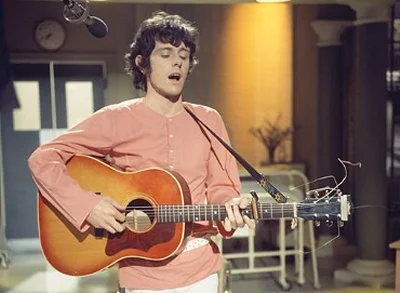
Unfortunately, somewhere along the line, the chemistry that had made their BBC show a classic of sketch-comedy brilliance faded, and no one felt the loss more keenly than the two stars themselves. Rumour has it they were unhappy with the format ATV pushed for, and that Peter Cook in particular—the main writer—didn’t fully commit his heart to the project. Even British music stars of the calibre of Donovan, Julie Driscoll, Georgie Fame, and actors Rodney Bewes, John Wells and John Cleese couldn't lift the series, which debuted at 9pm on Sunday 18 August 1968 in some regions, and at different times elsewhere (mainly due to a technicians’ strike—viewers in the Anglia region, for example, didn't get the first show until Saturday 14 September). Regionally, it was quickly relegated to a late-night slot from the second show onwards. The fourth and final show was broadcast almost a year later, on 3 August 1969.
Reviewing the first show, Elizabeth Goodman, writing in The Stage newspaper, wrote the following under the heading ‘Formula Too Familiar’: The title Goodbye Again gives some clue to what was wrong with the Dudley Moore and Peter Cook show on Sunday night. Repetition is dangerously unreliable, although in certain kinds of comedy it is essential to a point. The Dud and Pete sketches grew to a stage where the audience were ahead of the two characters in their familiar joke patterns, and by the time Dud got to his “Funny...” line, laughter had mounted to fortissimo. So it was quite legitimate and wise to go on repeating the successful formula for a time. But, and it is a big but, at what point does the familiar cease to be funny and begin to be boring? That kind of comedy, once exhausted, can only be revived as vintage material, to be laughed at long after its first appearance—and longer than Moore and Cook had given us. Their Scarlet Pimpernel sketch was almost very funny, relying on the incongruity of the smallness of Dudley's stature and the big deeds of Sir Percy, played by him. Salena Jones sang beautifully; Georgie Fame demonstrated his versatility; and Dudley Moore played the piano with his magical style that never palls. I wish the style of comedy could claim the same.’
Some members of the home audience were equally unimpressed, claiming the show was “pseudo-classical, infantile stuff—wrapped up as humour”. Well, you can please some of the people some of the time…
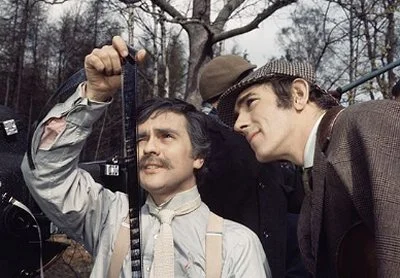
But not everyone agreed, and the duo were welcomed back in August 1969 by James Thomas of the Daily Express, who wrote: Peter Cook and Dudley Moore are two of the funniest people TV can claim to call their own. However corny their humour may be, they are a long way from the trials and tribulations of the average TV comedy show. For too long they have remained in the shadows of TV. They are entangled with film commitments that make money, and their TV appearances have been too sparse for too long. “Goodbye Again” (ATV) was really an exercise in nostalgia, back to the days when Pete and Dud made fun of anything and turned in pure comedy. I missed the abrasive, bitter look at life which their earlier shows provided. But if their look at the world had drifted somewhat in the transition from B.B.C. to commercial TV, there was still between them a tremendous rapport and a fantastic sense of fun which will not be bettered, in my view, for many years by any comedians.
A 90-minute compilation DVD of the best bits of the show was released in 2005 and is still available from various sources, giving today’s viewers a chance to see if the series was really cooking – or a bit of a dud
Seen this show? How do you rate it?
Seen this show? How do you rate it?
Share on...
Published on April 18th, 2026. Written by Laurence Marcus for Television Heaven.