

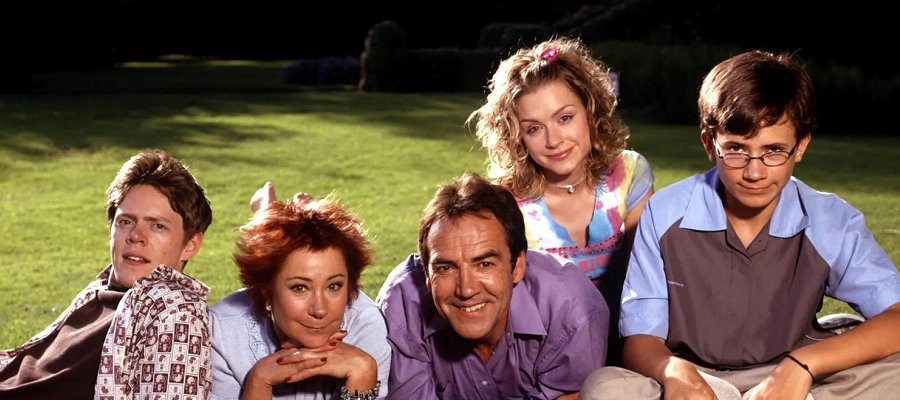
My Family
2000 United KingdomMy Family is one of those British sitcoms that, for better or worse, feels comfortingly familiar from the moment you step inside the Harper household at 78 Lancaster Road. Built around the reliable engine of family dysfunction, it never pretends to reinvent the genre—but over its long run, it proves surprisingly adept at squeezing warmth and longevity out of a well-worn format.
At the centre of the show is Robert Lindsay’s (Citizen Smith) Ben Harper, a grumpy, misanthropic dentist who would quite like nothing more than to be left alone. Of course, this never happens. Whether he’s sacking another dental assistant, dodging the relentlessly chipper fellow-dentist Roger, or being bled dry by his own children, Ben exists in a permanent state of weary irritation. Lindsay plays him with sharp timing and just enough humanity to stop the character becoming cruel; beneath the sarcasm, Ben genuinely loves his family, even if he expresses it mostly through complaining. His unexplained hatred of Christmas is a perfect example of My Family’s approach to humour: broadly drawn, slightly absurd, and content to let a joke exist simply because it works.
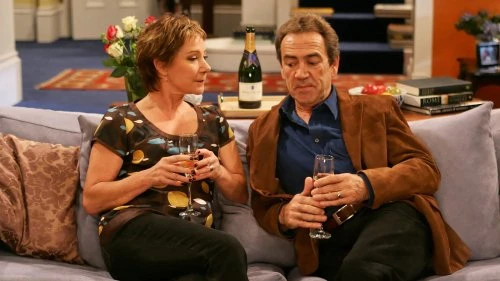
Zoë Wanamaker’s (The Shakespeare Collection) Susan Harper is Ben’s natural opposite. A full-blown control freak, Susan is constantly meddling in her children’s lives and manipulating Ben into doing the emotional heavy lifting. Wanamaker leans into Susan’s bossiness without losing her vulnerability, particularly in moments where her anxiety about her children bubbles to the surface. Her dreadful cooking, a knowing homage to Butterflies, adds a layer of sitcom tradition that My Family repeatedly nods to—sometimes self-consciously, sometimes affectionately.
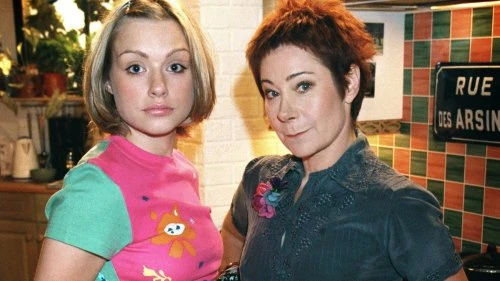
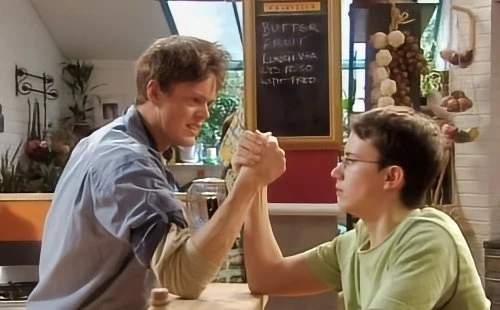
The Harper children provide much of the show’s early momentum. Kris Marshall’s (Death in Paradise) Nick is a masterclass in charming uselessness: a laid-back slacker who drifts from one ridiculous job to another, blissfully unconcerned by responsibility. His bizarre employment choices—stuntman, gorilla-gram, sperm donor—are among the show’s most memorable running gags. Daniela Denby-Ashe’s (Waterloo Road) Janey begins as a boy-mad, money-obsessed teenager, but over time develops into one of the show’s more rounded characters, especially after her unplanned pregnancy and return home. Gabriel Thomson’s Michael, the youngest, starts out as the family’s smugly superior brainbox, often rescuing the others from their own stupidity. His later storylines, including his coming out, are handled with a light touch that reflects the show’s generally accepting, non-preachy tone.
As the series progresses and characters move on—Nick leaving home, Janey becoming a mother—the focus shifts. Abi (Siobhan Hayes), Ben’s dim but oddly authoritative cousin, and Keiron Self’s eternally enthusiastic Roger take on a larger role. Their painfully awkward romance, eventual marriage, and even more awkward split are pure sitcom farce, but their shared lack of common sense makes them oddly endearing. Roger’s habit of turning up uninvited remains one of Ben’s greatest trials.
Behind the scenes, My Family was something of an experiment. Conceived with a US-style writers’ room—unusual for British sitcoms at the time—it aimed for broad appeal and long-term character relationships, not unlike 2point4 Children. That ambition shows in the way the series allows characters to age and change, even as it keeps its core dynamics intact. Ben stays grumpy, Susan stays controlling, and the house remains a magnet for chaos.
Critically, the show had a rocky start. Early reviews dismissed it as dated and mundane, but audiences disagreed, tuning in week after week. Over time, the writing sharpened, the characters deepened, and critical opinion softened. Recorded in front of live audiences at Pinewood Studios (and initially at Television Centre), the laughter often feels earned, if occasionally predictable.
Ultimately, My Family succeeds not because it is daring or innovative, but because it is dependable. It understands the pleasures of repetition, the comfort of familiar character types, and the enduring appeal of a family that drives each other mad but closes ranks when it matters. As Robert Lindsay himself admitted, the show’s greatest surprise may be just how much the public grew to love it—and, watching the Harpers bicker their way through yet another crisis, it’s not hard to see why.
Seen this show? How do you rate it?
Seen this show? How do you rate it?
Share on...
Published on February 9th, 2026. Written by Laurence Marcus for Television Heaven.