

Ozark
2017 United StatesSeason One review by Laurence Marcus
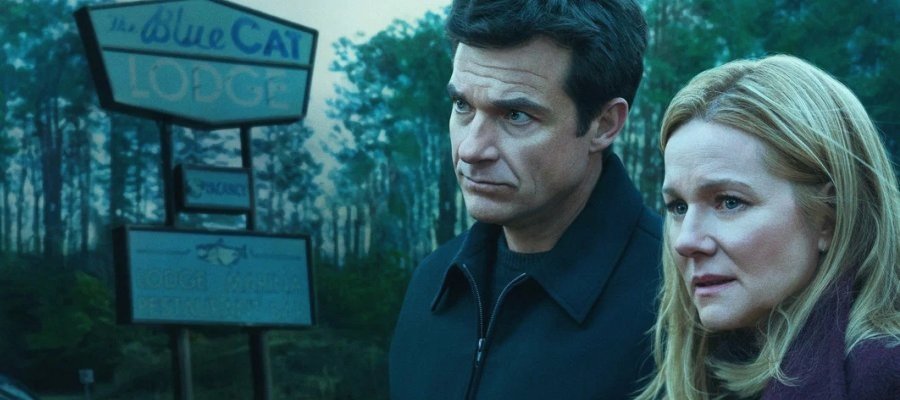
On the surface, Marty Byrde has everything the American Dream promises. He is a successful financial adviser with a thriving career in Chicago, a comfortable suburban home, a beautiful wife, Wendy, and two children. Yet beneath that carefully constructed façade lies a secret life built on laundering millions of dollars for a Mexican drug cartel. In Ozark, the acclaimed Netflix crime drama created by Bill Dubuque and Mark Williams, appearances are not merely deceptive—they are fatal.
The series opens with one of the most memorable monologues in modern television. Marty reflects on the nature of money, arguing that it is neither happiness nor security, but "a measure of a man's choices." It is a fitting introduction to a story in which every decision carries devastating consequences. Before long, Marty is confronted not only with the collapse of his marriage—after discovering Wendy's affair—but with a far greater crisis when a routine meeting with cartel representative Del descends into shocking bloodshed.
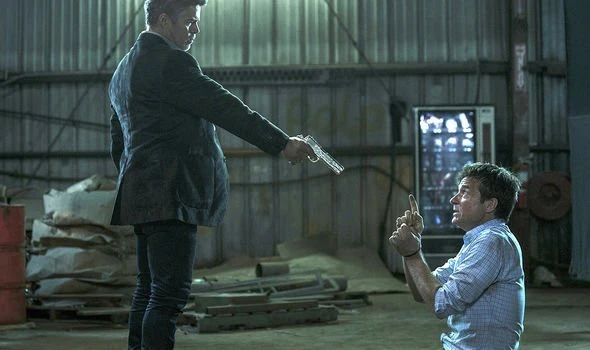
The opening episode wastes no time establishing the show's brutal tone. Believing that someone within his operation has stolen five million dollars from the cartel, Del executes Marty's business partner Bruce, Bruce's fiancée, and two other associates in a horrifying display of calculated violence. Jason Bateman's performance during these scenes is remarkable. Marty survives not through heroics or physical strength, but through intelligence and desperate improvisation, pitching an ambitious plan to relocate to Missouri's Lake of the Ozarks and launder $500 million over five years. It is an extraordinary gamble made in the few seconds between life and death, and it sets the entire series in motion.
Forced to uproot his family, Marty and Wendy flee Chicago for Osage Beach, where they must build a sophisticated money-laundering operation under the constant threat of execution should they fail. Their arrival in the Ozarks quickly reveals that the idyllic lakeside community is already home to an entrenched criminal underworld every bit as dangerous as the cartel itself.

Bateman delivers one of the finest performances of his career. His Marty Byrde is deliberately understated—a quiet, analytical man whose greatest weapon is his ability to think several moves ahead. He rarely raises his voice or loses his composure, making his occasional flashes of emotion all the more effective. Marty is not a traditional antihero in the mould of television's charismatic gangsters. Instead, he is an ordinary man whose exceptional financial talents have trapped him in an increasingly impossible situation. Every episode forces him into new moral compromises as he struggles to keep both his family and himself alive.
Equally outstanding is Laura Linney as Wendy Byrde. Initially introduced as an unfaithful wife whose affair appears to have shattered the marriage beyond repair, Wendy quickly proves herself far more ambitious and ruthless than first impressions suggest. Rather than remaining a passive observer, she gradually embraces the criminal world surrounding her, contributing increasingly bold ideas to Marty's laundering schemes and revealing an appetite for power that often exceeds her husband's own. The relationship between Marty and Wendy becomes one of the series' greatest strengths—a marriage built on betrayal, necessity, resentment and reluctant partnership, with each constantly manoeuvring for control.
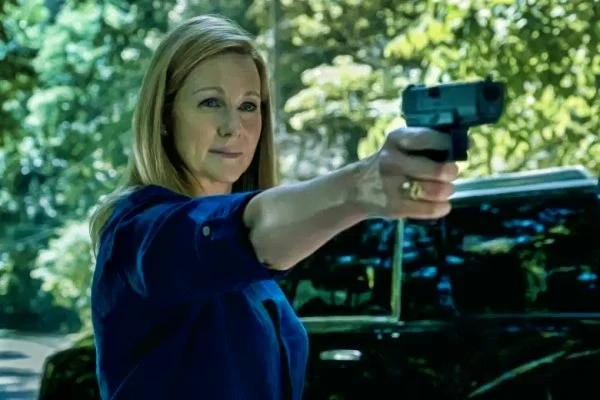
The Byrdes' domestic tensions are compounded by relentless pressure from law enforcement and the cartel alike. FBI agents attempt to persuade Marty to become an informant, while the cartel's ever-watchful representatives ensure that failure is never an option. The family exist in a permanent state of anxiety, trapped between organisations capable of destroying them from opposite directions.
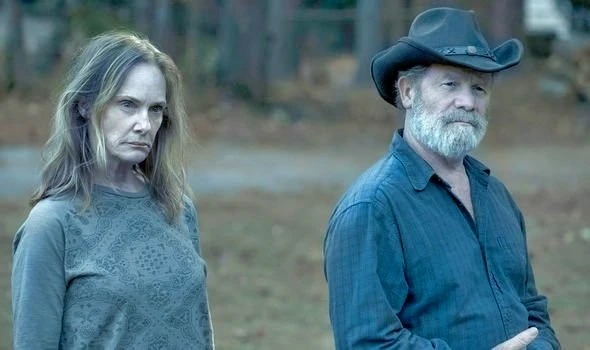
Once established in Missouri, Marty discovers that the Ozarks are far from the untouched financial opportunity he imagined. Local crime bosses Jacob and Darlene Snell already dominate the region's heroin trade, and their violent determination to protect their territory creates some of the season's most memorable confrontations. Peter Mullan brings quiet authority to Jacob, while Lisa Emery is terrifying as the unpredictable Darlene, whose capacity for sudden, explosive violence frequently catches both characters and viewers off guard. Their twisted marriage also provides moments of wonderfully dark humour, perfectly encapsulated when Jacob attempts to excuse one of Darlene's murders simply because she later brought Marty fresh honey by way of apology.
Perhaps the season's greatest revelation, however, is Julia Garner's Ruth Langmore. Introduced as a sharp, foul-mouthed young criminal from one of the Ozarks' poorest families, Ruth initially appears to be another obstacle for Marty. Instead, she becomes his most valuable ally. Fiercely intelligent, endlessly resourceful and driven by a desire to escape the cycle of poverty and crime into which she was born, Ruth emerges as the emotional heart of the series. Her evolving relationship with Marty—part mentorship, part partnership and part rivalry—is compelling throughout, and Garner's performance deservedly established her as one of television's finest young actresses.

One of Ozark's greatest achievements is its atmosphere. Although set around Missouri's Lake of the Ozarks, the series is filmed largely in Atlanta, Georgia, with its distinctive blue-grey colour palette creating a world that feels permanently overcast and emotionally suffocating. Every frame reinforces the sense that danger lurks beneath the calm waters and picturesque forests.
The show's authenticity is strengthened by the extensive research undertaken by its creators. Bill Dubuque drew inspiration from summers spent working around the real Ozarks during his youth, recognising the region as an ideal setting for a money-laundering operation. The writers consulted both FBI agents and financial professionals to understand the practical realities of laundering money, while showrunner Chris Mundy ensured that the series remained focused not simply on criminal logistics, but on the emotional motivations that drive people towards wealth, power and survival. The result is a crime drama that feels grounded even as its stakes become increasingly extraordinary.
Comparisons with Breaking Bad are inevitable and, in many respects, deserved. Both series excel at placing fundamentally flawed protagonists into impossible situations before forcing them to make progressively darker choices in order to survive. Yet Ozark possesses its own distinct identity. Where Breaking Bad often revelled in transformation and spectacle, Ozark is colder, more restrained and relentlessly oppressive. Its violence is sudden rather than operatic, its victories temporary, and its characters are rarely allowed moments of genuine relief.
Season one is an uncompromising introduction to a world where morality is negotiable and survival depends upon choices that become harder with every passing episode. It combines superb writing, exceptional performances and a constant atmosphere of dread to create one of Netflix's finest original dramas. By the time the closing credits roll, Marty and Wendy Byrde may have survived their first ordeal, but the audience understands that they have merely traded one nightmare for another.
Dark, intelligent and gripping from beginning to end, Ozark's first season is a superbly constructed crime thriller that announces itself with confidence and rarely loosens its grip. It is a series where every choice has consequences, every alliance comes at a price, and every apparent solution only leads to a deeper, more dangerous problem.
Remaining Seasons by John Winterson Richards
Season One hit the ground running, opening dramatically and scarcely pausing until the Byrdes secured the deal that saved their lives—only for everything to unravel again. Since that relentless pace could hardly be sustained, Season Two slows down as the characters come to terms with recent events and attempt to build new lives in the Ozarks.
The central storyline continues to follow the Byrdes' plan to reconcile the cartel with local interests by opening a casino aboard a disused riverboat. Achieving this requires political influence, allowing Wendy Byrde to draw on the skills she acquired in Chicago's Democratic machine. She discovers that understanding how power really works is just as valuable in Republican-leaning Missouri.
As a result, Wendy increasingly becomes the driving force of the story. One of the season's strongest themes is the reversal of roles between her and Marty. In the first season, Marty was admirable despite his compromised morality. Faced with impossible situations, he repeatedly saved his family through courage, ingenuity and calm thinking under immense pressure.
Wendy, by contrast, was initially difficult to like. Having betrayed Marty twice, she only fully committed herself when she realised she had no alternative. Here, however, she emerges as a formidable player in her own right, taking the initiative as Marty begins to lose some of his sharpness, perhaps suffering the lingering effects of the trauma he endured.
A similar reversal occurs with their children. Charlotte (Sofia Hublitz), previously cooperative despite the upheaval of moving, begins to rebel in ways that threaten the family's survival. Jonah (Skylar Gaertner), who had seemed the more troubled child, instead matures rapidly. Fascinated by his father's work, he reveals an aptitude for finance alongside Marty's secretive nature.
Jonah benefits greatly from the influence of Buddy (Harris Yulin), the Byrdes' initially unwelcome houseguest. What begins as an inconvenience develops into one of the season's most touching relationships as Buddy becomes an honorary member of the family, proving loyal and resourceful while revealing unexpected depths to his own colourful past.
The Byrdes also strengthen their relationship with Ruth Langmore, who increasingly views Marty as both mentor and substitute father. Ruth hopes he can offer her and her younger cousins a better future than the one provided by her own family. This inevitably brings Marty into conflict with Ruth's father, Cade (Trevor Long), a manipulative bully determined to drag everyone around him down to his own miserable level.

Another formidable presence arrives in the form of cartel lawyer Helen Pierce (Janet McTeer). Urbane, intelligent and quietly terrifying, Helen demonstrates that calm professionalism can be more intimidating than open threats. She rarely issues explicit orders, leaving others to interpret her wishes, but it is obvious that every task is a pass-or-fail test whose outcome may not become apparent until it is too late.
Even local crime boss Jacob Snell recognises Helen's authority, though his impulsive wife Darlene remains characteristically defiant. As the season progresses, however, Darlene proves considerably more perceptive than first appearances suggest, while her unusual relationship with Jacob acquires an unexpected poignancy.
The acting is outstanding throughout. Bateman confirms his ability to carry a serious dramatic role, but the season truly belongs to Laura Linney, whose performance gives Wendy remarkable authority and complexity. Janet McTeer, Harris Yulin and Peter Mullan are equally impressive, while Julia Garner deservedly won an Emmy for portraying Ruth's constant struggle between loyalty and self-preservation.
Not every supporting character is equally successful. FBI agent Roy Petty (Jason Butler Harner) remains difficult to believe as a federal investigator, while preacher Mason Young (Michael Mosley) suffers from Hollywood's familiar inability to write convincing religious characters. Rachel Garrison (Jordana Spiro), so engaging in the first season, is underused, and political powerbroker Charles Wilkes (Darren Goldstein) lacks credibility. His fixer, Jim Rattelsdorf (Damian Young), is far more intriguing and hints at greater importance later.
The plot itself is less dramatic than before. There are still sudden deaths and constant setbacks, but the Byrdes spend much of the season moving two steps forward and one step back. In retrospect, its main purpose is to prepare the ground for the far more explosive third season.
Season Three opens with the Byrde family enjoying a rare period of relative stability. Against the odds, their riverboat casino is operating successfully, and thoughts are turning to expansion. Even their dispute with the Kansas City mob has settled into an uneasy truce. Naturally, such stability cannot last. New threats soon emerge, and, as throughout Ozark, the greatest dangers come from within the family as much as from outside.
Marty and Wendy bound together by adversity, appear to be repairing their damaged marriage and have even agreed to counselling. Yet they are moving in opposite directions. Traumatized by recent events, Marty has become increasingly cautious, while Wendy grows more ambitious.
Their disagreement over strategy widens into a dangerous rift. Wendy favours bold expansion, whereas Marty increasingly prefers caution and careful management. Worse still, both have fallen into the habit of acting independently, withholding vital information from one another. Marty even works behind the scenes to undermine Wendy's plans, an extraordinarily dangerous course when those plans have already received the cartel's approval.

The situation is complicated further by the arrival of Wendy's brother, Ben (Tom Pelphrey). Rather than feeling like a contrived late addition, Ben has been subtly foreshadowed in earlier seasons through Wendy's references to his troubled past. His introduction is therefore entirely natural.
Ben quickly proves immensely likeable. His warmth wins over almost everyone, including the guarded Ruth Langmore. Gradually, however, it becomes clear that his impulsiveness is rooted in serious mental illness. For a family whose survival depends upon discretion and predictability, Ben represents an escalating danger, however innocent his intentions may be.
At the same time, pressure on the Byrdes intensifies from several directions. Helen Pierce decides to spend the summer in the Ozarks with her children, ostensibly for family reasons but really to supervise the Byrdes more closely. Her daughter Erin (Madison Thompson) forms friendships with Charlotte and Jonah, highlighting how much more quickly the Byrde children have been forced to mature. Yet Helen's insistence that Erin remain ignorant of her criminal world creates an obvious source of future conflict.
Meanwhile, Helen herself is under growing strain. The Navarro cartel is losing a violent war in Mexico, making Omar Navarro increasingly suspicious and unpredictable. No longer content to manage events from afar, he takes a direct interest in the Byrdes' affairs. A paranoid cartel boss fighting for survival is an especially dangerous master, as Marty discovers.
At the same time, Marty comes under renewed scrutiny from the FBI. Replacing the reckless Roy Petty is Agent Maya Miller (Jessica Frances Dukes), whose calm professionalism makes her a far more formidable opponent. Courteous but utterly committed to her work, Maya patiently follows the money trail, creating a sense of relentless inevitability that recalls the financial investigations which brought down organised crime figures such as Al Capone. This aspect of the story feels particularly convincing.
Nor has the Kansas City mob disappeared as a problem. Although its leader can be reasoned with, his arrogant son creates tensions with Ruth, now effectively Marty's deputy at the casino. Marty's willingness to risk much in order to protect Ruth demonstrates how highly he values her loyalty.
Darlene Snell meanwhile, sees an opportunity to draw Ruth and the Langmores away from the Byrdes. Beneath her stubborn arrogance lies a shrewd understanding of local loyalties and traditions that outsiders such as the Byrdes never fully grasp.
Although Ozark has never lacked tension, Season Three introduces something largely absent from earlier years: dark humour. Much of this comes through the Byrdes' thoroughly unethical marriage counsellor, Sue Shelby (Marylouise Burke), whose scenes provide welcome comic relief without undermining the drama.
The emotional heart of the season, however, belongs to Ben. His tragic story provides Laura Linney with some of her finest moments in the series and exposes Wendy's deepest conflicts between family loyalty and survival. At the same time, Ben's relationship with Ruth reveals a vulnerable side to her character rarely seen before. Beneath her abrasive exterior lies a lonely young woman desperate for affection and a better life. Julia Garner's second Emmy was richly deserved.
The season concludes with one of television's most memorable cliffhangers. A conventional happy ending never seemed likely, yet neither would a simplistic moral reckoning have suited a series in which almost every character occupies some shade of moral grey. The Byrdes are deeply compromised, but much of what they do is driven by the instinct to survive rather than simple greed. The real question going into the final season is no longer merely whether they can stay alive, but whether any of them can still recover enough humanity to rise above the compromises that now define their lives.
Season One was dramatic, Season Two subtle, and Season Three tragic. Season Four is all of these and, in addition, epic. Everything expands. Over four seasons, the Byrdes’ enterprises have grown from Marty’s modest Chicago financial firm to small Ozark businesses, then a casino, and now Wendy’s “Byrde Family Foundation,” which aspires to political influence across the Midwest.
At the same time, Marty’s shadow career deepens. Once a disposable subordinate laundering money for the Navarro cartel, he now answers directly to Omar Navarro himself. Navarro increasingly relies on Marty, drawing him into cartel politics—precisely what Marty never wanted.
Wendy, by contrast, thrives on empire building. Having crossed a moral line with her brother, she becomes controlling, claiming it’s for family safety while her obsession with the Foundation feels more like vanity—or perhaps a search for absolution after rejecting her father’s faith. Whether sincere or not, she emerges as the season’s true villain.
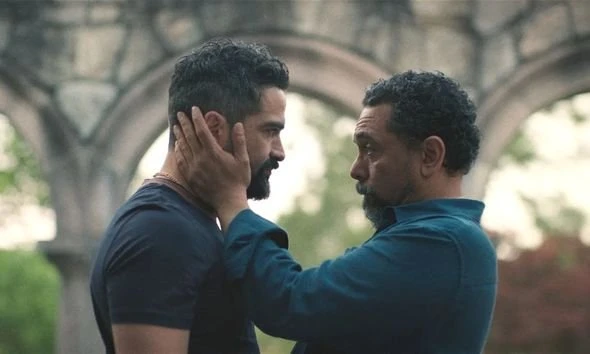
The villains themselves grow darker. Navarro, terrifying in Season Three, is eclipsed by his nephew Javi (Alfonso Herrera), a Business School graduate with Del’s polish but far more impulsive and violent. His unpredictability makes him dangerous. The stakes rise too: from the opening moments, it’s clear none of the Byrdes may survive.
Another adversary, Mel Sattem (Adam Rothenberg), a disgraced Chicago cop turned private detective, seems harmless—until his quiet persistence proves otherwise. Wendy also faces her father, who arrives with his Church group searching for his missing son. Casting Richard Thomas, once the wholesome John-Boy from The Waltons, cleverly misleads us into assuming decency beneath his flaws. He threatens to win his grandchildren’s affection, which Wendy views as a greater danger than the cartel. Gradually, we see the darker side she knows, though the writers wisely preserve ambiguity: their fractured relationship may be as much her fault as his. They are more alike than either admits.
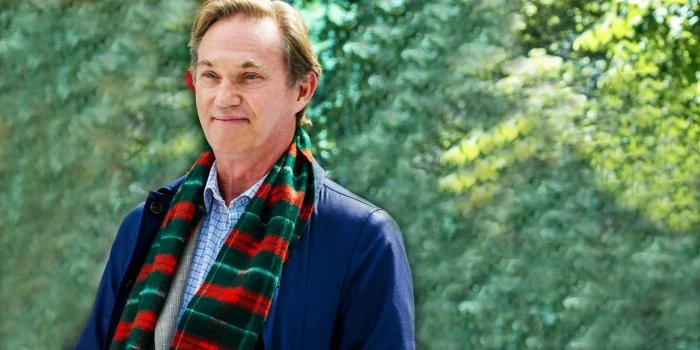
The Church group brings the theme of redemption to the surface. Gormless Sam (Kevin L Johnson), long exploited by the Byrdes, is baptised in Ruth Langmore’s motel pool and leaves with the Church group—a rare moment of grace. His departure subtly affects Jonah and Ruth. Jonah’s silence when Wendy mocks the Bible may be telling; his arc remains uncertain until the final second.
Ruth too is offered escape. A previous bid for independence ends badly, but unexpected good arises from evil. Rachel Garrison’s return from the Blue Cat feels contrived yet welcome, forming a likable partnership with Ruth. Marty, desperate for a way out, realises it’s too late. Even Navarro, a devout family man when not ordering torture, seeks redemption and escape. His Chaplain (Bruno Bichir) counsels both Marty and Wendy to leave. Marty seems remorseful but powerless, sliding further into darkness. Wendy, contemptuous of religion, doubles down like a gambler chasing losses.
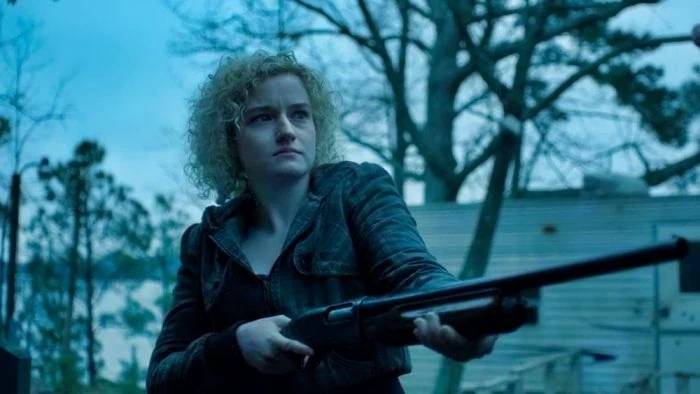
The reversal is complete. Marty, once the master dragging Wendy to the Ozarks, is now broken, unable to resist his remorseless wife. Family remains the central theme—contrasting the Byrdes’ survival through unity with the Langmores’ dysfunction. Yet the closing episodes suggest an alternative: perhaps the Langmores were happier before the Byrdes poisoned everything. Ruth’s nostalgia ignores her monstrous father, but Marty’s affection for her cannot disguise that the Byrdes are selfish and corrupting. Are they truly worthy of the viewer sympathy they’ve retained?
Season Four was released in two parts of seven episodes each. Part One builds to a magnificent crescendo, with two standout episodes directed by Robin Wright. They leave us desperate for resolution, which arrives swiftly—perhaps too swiftly—at the start of Part Two. After that, momentum falters. Navarro, expected to have one last trick, is sidelined. Lawyer Jim (Damian Young) conveniently solves Wendy’s problems off-screen—advocatus ex machina—without explanation. His joke about marrying Wendy hints at significance never pursued, though they would make the perfect “power couple.” Laura Linney delivers some of her finest work, even directing an episode, yet Wendy’s character lacks closure. A major plot thread proves a red herring.

Despite Jason Bateman’s direction, the finale is the lowest-rated episode on IMDb. Fans, invested in their own expectations, were disappointed. The writers deserve credit for rejecting fan service to make a valid statement about the world, but their execution defies dramatic convention: emotionally crucial events feel like afterthoughts. If they intended to subvert expectations, they should have done so with greater operatic force.
Comparisons with Breaking Bad are inevitable. Both reflect middle-class anxiety and the fantasy that respectable people could be effective criminals if they abandoned the rules. In this respect, Ozark may be the more honest and realistic, delivering the bleak truth that crime doesn’t pay—unless it’s big enough to buy your way out.
Seen this show? How do you rate it?
Seen this show? How do you rate it?
Share on...
Published on July 8th, 2026. Written by Laurence Marcus & John Winterson Richards for Television Heaven.