
Pinky and Perky
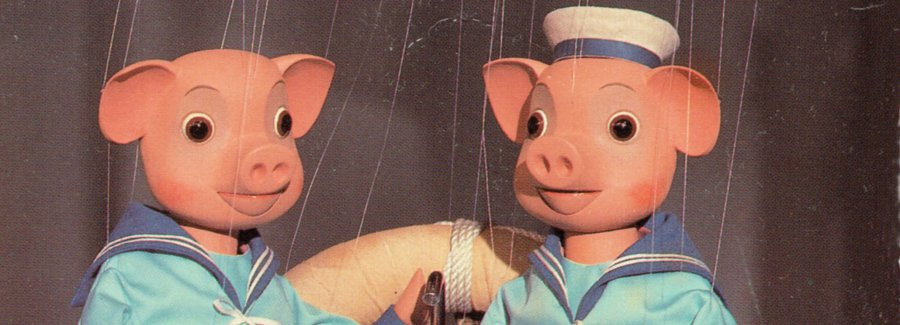
1957 United KingdomIn 1957 a dynamic new double act made their first appearance on BBC television, two puppet pigs with a cheeky attitude and speeded-up voices named Pinky and Perky, the creation of Czechs, painter and sculptor, Jan Dalibor and his actress wife, Viasta. "I had always been interested in puppets," says Jan, "and Viasta suggested I make some puppet pigs because the pig is a symbol of good luck in Czechoslovakia. I came up with twin boy pigs - Pinky who wore red and Perky who wore blue."
Originally aimed squarely at the children's share of the market, the porker's prancing around to the hit songs of the sixties unexpectedly transformed them into adult viewers favourites. At their peak, they succeeded in attracting more viewers than the mighty US sitcom import The Lucy Show with Lucille Ball, and even conquered the US themselves, making six appearances on the prestigious Ed Sullivan Show and doing a year at the gaming capital of the world, Las Vegas.
The Dalibors were quick to realise the power of music for their creations, and it quickly came to form an integral part of their shows. Their show's format underwent a change which saw the duo running their own television station, PPC TV, along with various human side-kicks including, Jimmy Thompson, Roger Mofat, John Slater, Brian Burdon and Fred Emney. Their theme song was the catchy 'We Belong Together' and they even introduced a group of puppet "Fab Four" called The Beakles. Amazingly, at the height of their fame, Pinky and Perky received almost as much fan mail as the genuine Beatles!
Ultimately, the Dalibors created a total of fifty puppets. Besides Pinky and Perky there was Ambrose Cat, Horace Hare (the spitting image of popular comedian, Ken Dodd), Basil Bloodhound, Morton Frog, Conchita the Cow, Bertie the baby elephant and the sultry Vera Vixen, plus an endless supply of mice. Noteable human guest stars included Michael Aspel, Stratford Johns (in 'Z Pigs'), Freddie and the Dreamers and Henry Cooper.
In 1966 the BBC took the drastic step of actually banning their show, charging it with being "too political". This had resulted from the The Dalibors planning an edition titled 'You Too Can Be a Prime Minister' but, fearful of any political content with a general election approaching, the BBC decided to postpone transmission until after polling day. However, a huge public outcry saw it quickly reinstated. Speaking at the time, Jimmy Thompson commented on how he was nonplussed by the corporation's drastic decision: "All that happens is I stand for election, have cabbages thrown at me and when I eventually arrive at Number Ten, I find Pinky and Perky already there." However, in a somewhat ironic twist when 'You Too Can Be a Prime Minister' was finally shown, it succeeded in attracting more viewers than Harold Wilson's party political broadcast which on the was on the ITV network at the same time.
After a defection to Thames, in the late sixties, Pinky and Perky finally retired from the nation's television screens in 1972. But a successful run of video releases of their old shows paved the way for a return of the squeaky voiced veterans in the form of an all-new CGI-animated television series on CBBC, beginning in November 2008 on BBC One (before CBBC became a channel). 52 episodes of 13 minutes duration were made. The series was produced by Lupus Films, and line produced by Sally Marchant. The first DVD of the new look Pinky & Perky featuring eight episodes from the new series entitled 'License to Swill' was released in April 2009.
Seen this show? How do you rate it?
Seen this show? How do you rate it?
Share on...
Published on January 18th, 2019. Written by Laurence Marcus for Television Heaven.