

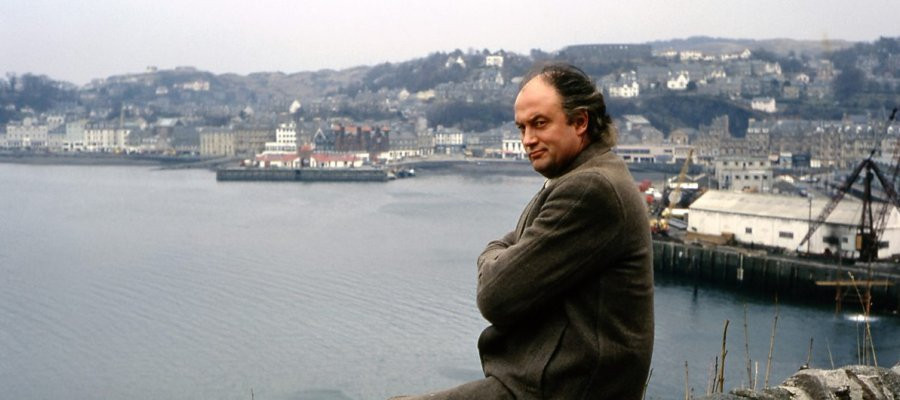
Sutherland's Law
1973 United KingdomWhen Sutherland's Law first appeared on BBC-1 in the early 1970s, it offered viewers something increasingly rare in British television: an original legal drama rooted in the distinctive procedures of Scots law. Spawned from the highly successful anthology strand Drama Playhouse, the series focused on the work of a Procurator Fiscal in the fictional west coast village of Glendoran — filmed in reality in the coastal town of Oban.
The origins of the programme lay in a single play broadcast in August 1972, titled Man Overboard. In this fifty-minute pilot, John Sutherland — then portrayed by Derek Francis (Oh, Brother!) — conducted a Fatal Accident Inquiry into the death of Ian Campbell, who had fallen from the deck of a fishing vessel under suspicious circumstances.
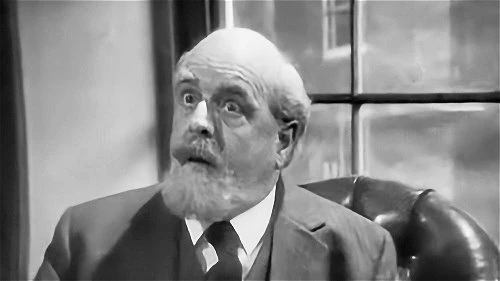
Assisted by Alec Duthie (played by Gareth Thomas – Blake’s 7) and Christine Russell (Maev Alexander - This Man Craig), Sutherland methodically weighed testimony and evidence before drawing a murderer from among the witnesses. The pilot’s popularity led the BBC to commission a full series for transmission the following summer.
In an unusual move, the original story was remade as the second episode of the first series under the new title The Sea. This time, the central role was recast with Iain Cuthbertson (Budgie) stepping into the shoes of John Sutherland — a decision that proved pivotal. Cuthbertson brought a blend of gravitas and emotional strength to the role, convincingly portraying both the professional detachment and personal weight carried by a Procurator Fiscal.
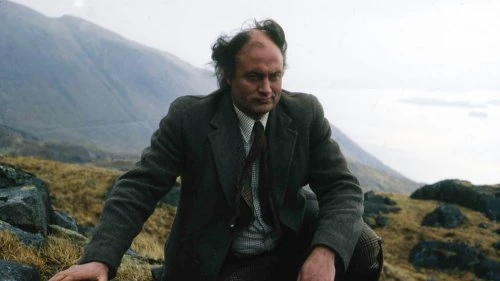
Central to the drama was the uniquely Scottish legal office of the Procurator Fiscal. As Cuthbertson explained in a 1973 interview with Radio Times journalist George Rosie, the Fiscal functioned somewhat like an American District Attorney or a French Examining Magistrate — but with crucial differences.
“In Scottish law the police don’t prosecute. They take their evidence to the Fiscal, who investigates it, then decides whether to lay the case before the Sheriff. There’s nothing like it in English law… It’s a marvellous part.”
This procedural distinction gave the series its distinctive tone. Rather than focusing on arrests or courtroom theatrics, Sutherland’s Law examined the careful weighing of evidence before a case even reached trial. The Fiscal’s responsibility was not to secure convictions, but to determine whether there was a case to answer at all.
Across five seasons and forty fifty-minute episodes, the programme explored cases that were rarely straightforward. Much like later forensic dramas, the stories required careful investigation and moral discernment.
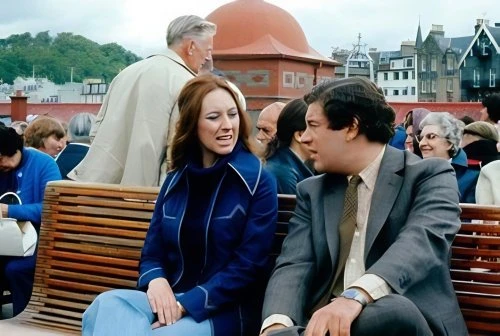
Plots ranged from mysterious hit-and-run incidents to financial coercion, land disputes involving lairds and landowners, and crimes whose motives lay buried beneath layers of personal history. The legal questions were often inseparable from the social fabric of Glendoran, giving the series a textured sense of place.
Periodic cast changes at the start of each season introduced new assistants and an expanding police presence, keeping the narrative fresh while reflecting the evolving demands on Sutherland’s office.
The series was created by Lindsay Galloway in consultation with retired Procurator Fiscal John Stevenson, who also served as technical adviser on the first series. This collaboration ensured a high degree of legal authenticity — part of the BBC’s longstanding commitment to grounding even its popular entertainment in procedural realism.
The show also featured notable performances from actors including James Cosmo, Michael Gough, Geoffrey Palmer and Roddy McMillan, further cementing the its place within the BBC’s rich 1970s drama output.
Although Sutherland’s Law attracted modest viewing figures, it performed strongly against its timeslot competitors and represented something increasingly unusual in late-1970s television: a wholly original legal concept.
Seen this show? How do you rate it?
Seen this show? How do you rate it?
Share on...
Published on February 17th, 2026. Written by Laurence Marcus for Television Heaven.