

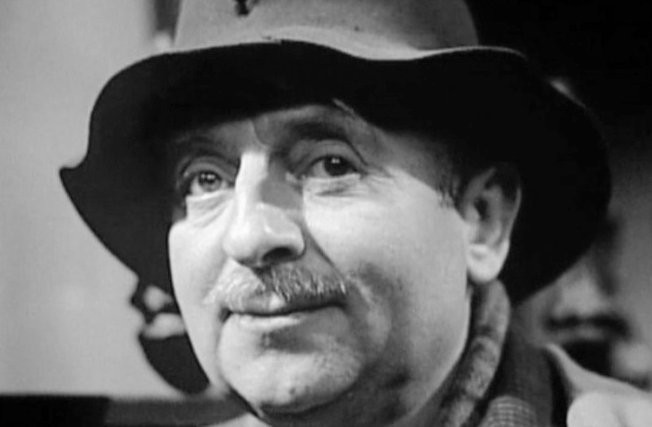
The Arthur Haynes Show
1957 United KingdomUntil its eventual release on DVD in 2011, The Arthur Haynes Show, which first appeared on Independent Television in 1957, was a forgotten classic. And although the first series does not capture Haynes at the peak of his career, it wasn't long before he was firmly established as Britain's favourite television comedian. A place he held in the viewing public's heart for almost ten years.
Arthur Haynes was born in Hammersmith, London in May 1914, and tried a number of jobs including that of stand-up comedian in order to bolster his income. When the War broke out in 1939 he joined the Army show Stars in Battledress as a props assistant before finally getting his chance to perform in front of an audience alongside the already established Charlie Chester. When the War finished and the stars returned to civilian life Arthur was invited by Chester to join him on BBC radio in Stand Easy, a light entertainment series that featured The Crazy Gang. Haynes continued to build his reputation for the next ten years until finally, in 1956 he got his big break on the small screen.
Associated Television approached Arthur to appear in a new series entitled Strike a New Note. Haynes became a big hit as a character called Oscar Pennyfeather, created by the writers Sid Collin and Ronnie Wolfe, a mischievous character who was never heard to speak aloud. Instead, viewers got to hear Oscar's thoughts; his conscience being spoken by actor Nicholas Parsons. Other characters soon developed and ITV were suitably impressed. In 1957 Arthur was given his own starring vehicle and on 2 January 1957, The Arthur Haynes Show debuted. Haynes was given a regular supporting cast including Parsons who many viewers came to regard as one half of Arthur's double-act. "(My agent) should have pushed for naming the show Haynes and Parsons instead of The Arthur Haynes Show with Nicholas Parsons ...but we were a good team and I was happy in terms of my contract. The billing was never a major issue to me." Parsons would later write in his autobiography.
The Arthur Haynes Show began, according to Parsons, modestly, going out at 1015pm and taking time to build up a loyal following. Critical review was good and after a while the show was moved to prime-time. By the early sixties The Arthur Haynes Show was firmly established as one of ITV's most popular programmes. Some of the highlights are Haynes and Parsons corpsing over fluffed lines but determinedly carrying on. With Johnny Speight writing and Haynes performing, the two of them built up a collection of characters the most memorable being an aggressive, know-it-all tramp who took great pride in telling all who would listen (and even those who didn't want to) how he had fought for his country whilst being up to his neck in "muck and bullets." However, one of the most memorable sketches is Haynes sitting down to a posh dinner party but finding the room too hot he takes off his dickie bow and places it on the empty seat next to him. No sooner has he done so than a young lady (Wendy Richard) sits in the seat. Haynes turns to her and says, "Excuse me, you're sitting on my dickie!" Quite daring for the 1960s!!!
Alongside Arthur on a regular basis were Dermot Kelly (originally brought in for only one show), Tony Fane, Freddie Frinton, Jack Parnell and Patricia Hayes. (A 1962 episode of the series featured a young relatively unknown actor called Michael Caine). Arthur became one of British TV's first star comedians - his series dominated the ratings for years and led to an appearance on the Royal Variety Performance in 1961 and being voted Independent Television Personality of the Year in 1962.
Arthur Haynes remained at the top of his profession for ten years until his untimely death at the age of 52. Once established, he never worked outside of prime-time television and he left behind a rich legacy of work that was only rediscovered years later when Network released several seasons of his show on DVD release, allowing Haynes to get the reappraisal he richly deserved.
Seen this show? How do you rate it?
Seen this show? How do you rate it?
Share on...
Published on November 28th, 2018. Written by Laurence Marcus (2011) for Television Heaven.