
The Demon Headmaster
1996 - 2019 United KingdomBlending school drama, psychological thriller and fantasy, the BBC adaptation of Gillian Cross's hugely successful novels created one of the most chilling villains ever to appear in children's television.
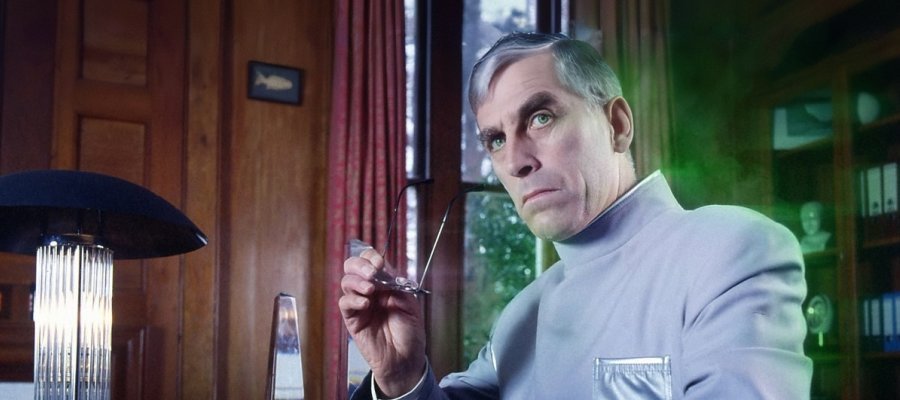
The origins of the books are charmingly simple. Gillian Cross was inspired by her daughter Elizabeth, who had particularly enjoyed a section of Cross's earlier novel Save Our School featuring a wicked headmaster. Elizabeth insisted that her mother write a story with this sinister figure as the central character. Cross, who would later win the Carnegie Medal for Wolf in 1990 and the Whitbread Children's Book Award for The Great Elephant Chase in 1992, initially struggled with the idea. She wondered how such an outrageous villain could plausibly exist within an ordinary state school. Her solution: the headmaster possessed the power to hypnotise both children and adults using nothing more than his piercing green eyes. While fantastical, the concept served as a powerful metaphor for bullying, peer pressure and the dangers of unquestioning obedience.
The television adaptation captured this perfectly. The first six-episode series combined the stories of The Demon Headmaster and The Prime Minister's Brain, with Helen Cresswell adapting Cross's novels for the screen. Subsequent series adapted The Demon Headmaster Strikes Again and The Demon Headmaster Takes Over, with Cross devising the television storylines before expanding them into novels, while Cresswell once again transformed them into compelling scripts.
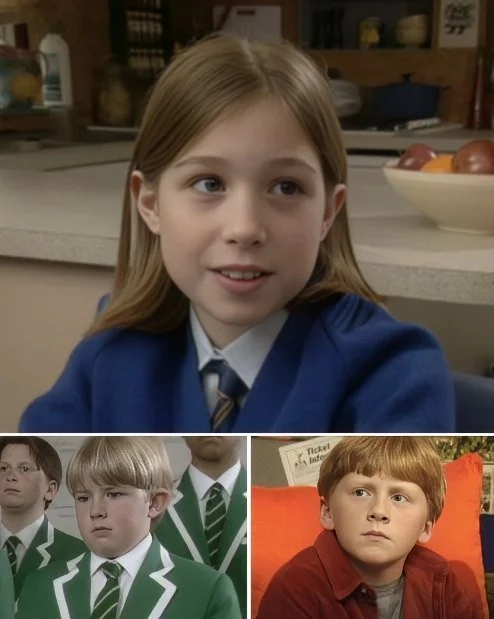
The story begins with eleven-year-old orphan Dinah Glass (Frances Amey), who has spent most of her life moving between children's homes before arriving at a new foster family. There she meets foster brothers Lloyd (Gunnar Cauthery) and Harvey Hunter (Thomas Szekeres), who are strangely reluctant to discuss the school she is about to attend. It quickly becomes apparent why. The school operates with unnerving military precision under the watchful eye of its mysterious headmaster, with prefects acting as his unquestioning enforcers. Even more disturbing, pupils and adults alike find themselves unable to speak ill of either the school or the Headmaster, regardless of what they truly think. Dinah alone begins to suspect that something unnatural is taking place, setting up an engaging battle of wills with an apparently unstoppable villain.
The Headmaster is never given a proper name. Both the books and television series refer to him simply by his title, and even when he adopts disguises—such as the Computer Director in The Prime Minister's Brain—he continues to hide behind job titles rather than personal identity. The audience knows he has a real name, and it becomes important to certain plots, but it is never spoken aloud. This deliberate anonymity only adds to his unsettling presence.
Dinah, Lloyd and Harvey eventually form SPLAT — the Society for the Protection Against Them — recruiting the handful of pupils immune to the Headmaster's hypnotic powers in a series of increasingly inventive attempts to thwart his latest schemes. Although they repeatedly defeat him, the Headmaster's inevitable return became one of the show's great pleasures, each new series presenting another imaginative conspiracy on an ever-larger scale.
Much of the programme's success rests on the unforgettable performance of Terrence Hardiman. Already familiar to television audiences through Secret Army, Hardiman created one of children's television's all-time great villains. His calm, measured delivery, combined with those unsettling pale green eyes concealed behind dark-tinted glasses until the moment of hypnosis, made him genuinely frightening without ever becoming inappropriate for younger viewers. Although the television version softened some of the Headmaster's darker qualities from the novels, Hardiman's performance retained every ounce of menace. It remains one of the defining villainous portrayals in BBC children's drama.
The supporting cast was equally strong, with Tessa Peake-Jones, Toby Osoba, Ed Bishop, Annette Badland and Danny John-Jules adding further quality to an already impressive ensemble.
The series became one of the BBC's flagship children's productions during the mid-1990s, earning a BAFTA Children's Award nomination in 1996 and building a devoted following that has endured for decades.
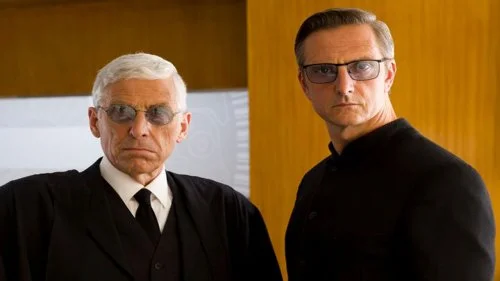
That affection led to a revival in 2019. Adapted by Emma Reeves and based on Gillian Cross's newer novels beginning with Total Control, the new series followed a different protagonist, Lizzie Warren, while acting as a direct sequel to the original. Nicholas Gleaves inherited the role of the Headmaster, with Charlotte Beckett and Sally Oliver returning as older versions of Dinah Hunter and Rose Carter. Original star Frances Amey was invited to reprise her role but had retired from acting, while Kathryn Wyeth was living in New Zealand. Fans were nevertheless treated to a memorable appearance by Terrence Hardiman, who returned for a single episode. Although the revival was renewed for a second series, production delays caused by the COVID-19 pandemic ultimately led to its cancellation.
More than thirty years after its debut, The Demon Headmaster remains a benchmark for children's drama. Beneath the hypnotic eyes, secret societies and science-fiction adventures lay an exploration of conformity, authority and the importance of thinking for oneself. Small wonder it continues to hold such a special place in the memories of those who grew up under the watchful gaze of the Demon Headmaster.
Seen this show? How do you rate it?
Seen this show? How do you rate it?
Share on...
Published on July 4th, 2026. Written by Laurence Marcus for Television Heaven.