

Midsomer Murders
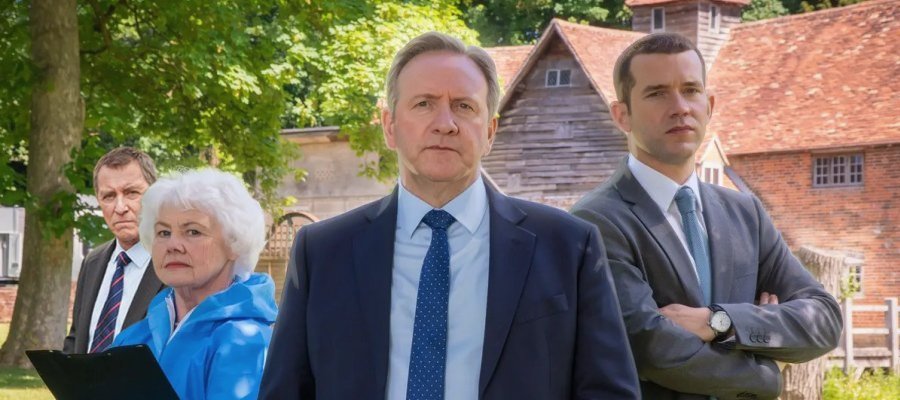
1997 United KingdomSet against the backdrop of idyllic English villages, where cricket matches unfold on the green opposite cosy pubs and church fetes are considered major social occasions, Midsomer Murders transforms the tranquillity of rural life into a landscape of deadly intrigue. Beneath the rose gardens, stately homes, and postcard-perfect scenery lies a county plagued by murder, creating one of television’s most delightfully improbable contrasts.
Adapted by Anthony Horowitz and Douglas Watkinson from Caroline Graham’s Chief Inspector Barnaby novels, Midsomer Murders first aired on ITV on 23 March 1997 with “The Killings at Badger’s Drift.” The debut episode proved an immediate success, attracting 13.5 million viewers and becoming the highest-rated single drama programme of that year. Since then, the series has grown into a global phenomenon, broadcast in more than 200 countries and territories and reaching an astonishing 144 episodes at the time of writing.
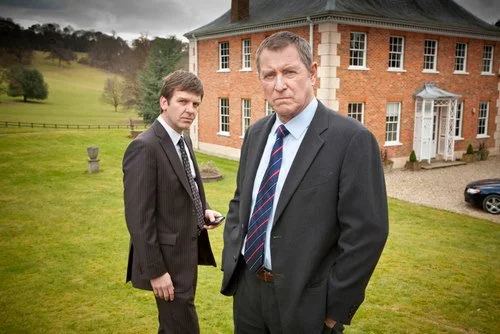
At the centre of the drama is Detective Chief Inspector Tom Barnaby, played with warmth and understated wit by John Nettles, later succeeded by his cousin John Barnaby, portrayed by Neil Dudgeon. Alongside them is a memorable supporting cast that has included Jane Wymark, Barry Jackson, Daniel Casey, Jason Hughes, John Hopkins, Gwilym Lee, and Nick Hendrix, all contributing to the show’s enduring charm and consistency.
The fictional county of Midsomer, with its market town of Causton serving as police headquarters, is as important to the series as any character. Although peaceful on the surface, the county harbours a seemingly endless supply of secrets, rivalries, and grudges that inevitably lead to murder. The show revels in the absurdity of this contrast, embracing its reputation for extraordinarily high body counts while rarely venturing into outright horror. Instead, most killers are ordinary people pushed by jealousy, greed, revenge, or desperation, often committing further crimes in increasingly frantic attempts to conceal the original offence.
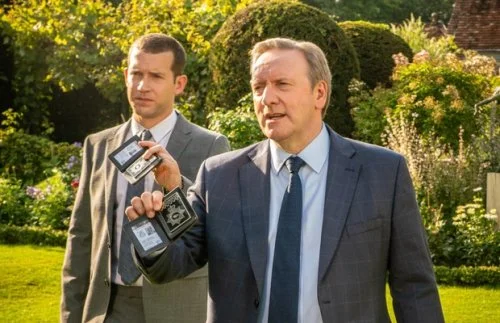
What distinguishes Midsomer Murders from more hard-edged detective dramas is its refusal to take itself entirely seriously. The series balances mystery with whimsy, blending dark humour, eccentric characters, and knowingly theatrical storytelling. Its tongue-in-cheek tone allows viewers to enjoy the murders as part of an elaborate puzzle rather than grim realism. Even the instantly recognisable theme tune, with its eerie theremin melody, perfectly captures the programme’s mixture of menace and playful eccentricity.
Part of the show’s appeal lies in its quintessentially British identity. Village fêtes, amateur dramatics societies, ancient family feuds, gardening competitions, and parish politics all become fertile ground for homicide. The series celebrates the traditions and quirks of rural England while simultaneously satirising them, creating a world that feels both affectionate and mischievous.
The programme’s longevity is a testament to its universal appeal. By 2004 it was already among the three best-selling British television exports worldwide, whether through broadcast rights or DVD sales. Anniversary specials and retrospectives, including Acorn TV’s 20th Anniversary Special presented by John Nettles and ITV’s Midsomer Murders – 25 Years of Mayhem, have highlighted the affection audiences continue to hold for the series decades after its debut.
Few television dramas have managed to remain so consistently entertaining for so long. Midsomer Murders succeeds because it understands exactly what it is: an escapist murder mystery that embraces eccentricity, atmosphere, and tradition with unapologetic enthusiasm. It is cosy crime at its finest — equal parts detective story, black comedy, and celebration of rural British life. Despite the ever-growing pile of bodies, there remains something irresistibly comforting about returning to the deadly villages of Midsomer.
Seen this show? How do you rate it?
Seen this show? How do you rate it?
Share on...
Published on May 28th, 2026. Written by Laurence Marcus for Television Heaven.