

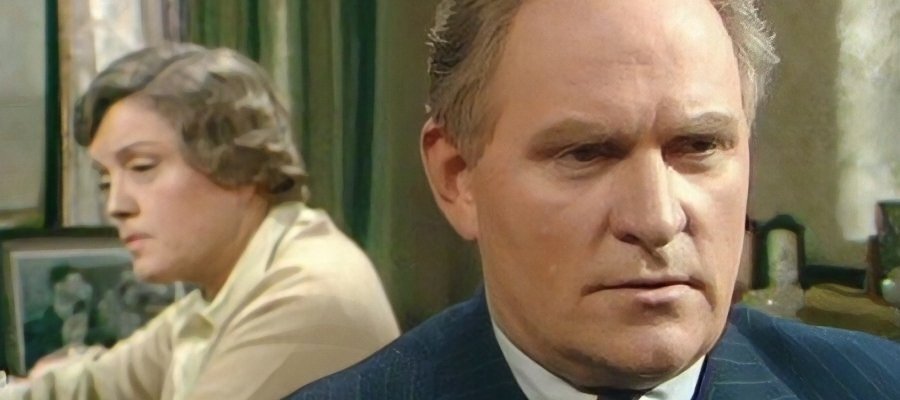
A Family at War
1970 United KingdomGranada's A Family at War was, at the time of release (April 1970), the longest and costliest series ever produced by an Independent Television Company. The story of an English family at war within itself in a framework of the Second World War, it was scheduled to run initially for 26 one-hour episodes - on a budget of £500,000 but proved so successful (with audiences often exceeding 26 million) that it ran almost continually for three years, prompting Sir Denis Forman, then head of Granada, to call it "The most cost-effective series ever made".
The series concerns the fictional Ashton family-a father, three sons and two daughters-living in Liverpool. The story opened in September 1938 and was originally intended to progress only to the end of 1942, as it dealt with the Ashtons, rather than the war. With people rather than events.
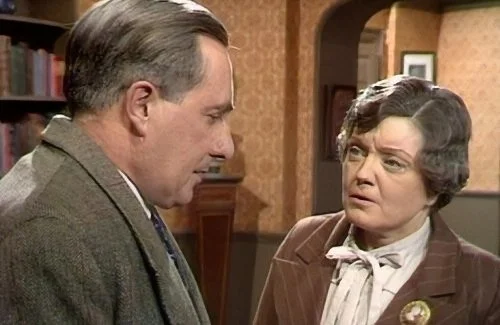
The father of the family is Edwin Ashton (Colin Douglas). 53 years of age he is a poorly paid assistant manager of a small printing works owned by his wife's family. His wife is Jean (Shelagh Fraser), she is 52 and married Edwin against her family's wishes. Hence, she owns shares in the family business even though her husband doesn't. Their youngest son Robert (David Dixon) is at nautical training school. David Ashton (Colin Campbell) is 25, charming, self-centred and irritable. He hates his menial job and working-class surroundings. At 18, he was forced to marry Sheila (Coral Atkins) after she became pregnant, and they now have two children.
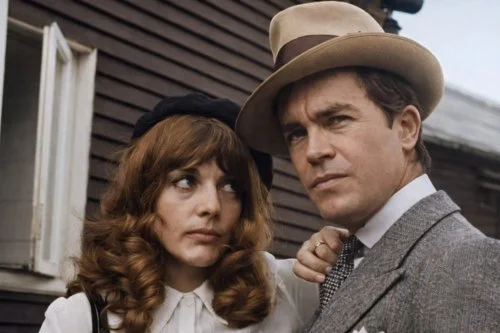
Margaret (Lesley Nunnerley) is a capable and unspoiled 24 year-old teacher who is going steady with John Porter (Ian Thompson), an N.C.O. in the Territorial Army. Philip (Keith Drinkel), aged 21 is quiet and sincere. He won a scholarship to Oxford where he read modern languages and developed left-wing ideas. He joined the International Brigade in Spain.
Freda (Barbara Flynn) is an 18 year-old flighty but naïve hotel receptionist. Sefton Briggs (John McKelvey) is Jean Ashton's brother. Aged 53, he inherited the family print business but likes to think of himself as a self-made man. Tony Briggs (Trevor Bowen) is Sefton's 26 year-old son. Very strictly brought up but totally disinterested in the family business even though his father has other ideas.
From this carefully constructed foundation, A Family at War unfolded with a remarkable level of emotional depth and narrative patience. Rather than relying on spectacle or large-scale depictions of battlefield action, it drew its power from the intimate struggles of its characters. The war is ever-present, but often felt indirectly—through absence, loss, strained relationships, and the slow erosion of normal life. This focus gave the drama a quiet authenticity that remains compelling decades later.
Each episode opened on a clearly defined date, with the narrative ultimately extending through to December 1945. Conceived by former Merchant Navy serviceman John Finch—who also served as script editor and principal writer—the series occasionally drew criticism for its persistent bleakness and sombre tone.
As the series developed, new characters were introduced, including those portrayed by Patrick Troughton (Doctor Who) and Margery Mason, whose sharp, acrimonious scenes were delivered with striking intensity. The series also gave an early role to John Nettles (Bergerac), and Coronation Street stalwarts Brian Mosely and Julie Goodyear also appeared. There were also roles for John Savident, Adrienne Corri, Wanda Ventham, Leonard Sachs, Kathy Staff, Keith Barron, Gareth Hunt and Richard Beckinsale.
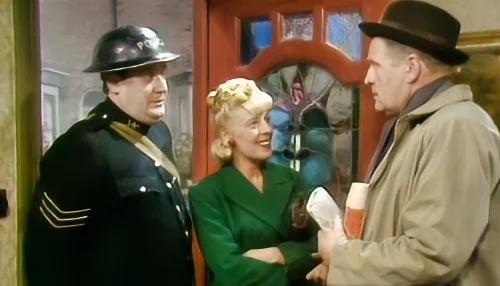
One of the show’s greatest strengths lies in its refusal to simplify its characters. The Ashtons are neither heroes nor villains; they are recognisably human, shaped by circumstance, class, and personal flaws. David’s resentment, Philip’s idealism, and Edwin’s weary resignation all feel grounded and believable. Even secondary characters are given space to breathe, ensuring that the world of the series feels lived-in rather than constructed.
The pacing, while deliberate, allows for a cumulative emotional impact. Moments that might seem understated in isolation build into something far more powerful over time. This is particularly evident in how the series handles tragedy—not as isolated shocks, but as events that ripple through the family, altering dynamics and leaving lasting scars.
Visually and tonally, the production reinforces its themes with consistency. The use of muted settings, combined with the symbolic opening titles, establishes an atmosphere of quiet tension and inevitability. Even the musical choices contribute to a sense of gravity, underscoring the seriousness of both the historical context and the personal stories being told.
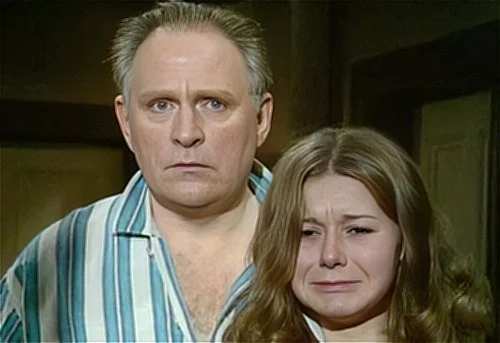
If the series has a weakness, it is perhaps its unrelenting tone. The persistent bleakness can be demanding, and there are moments where a lighter touch might have provided contrast. However, this very solemnity is also central to its identity, reflecting the harsh realities of the period it depicts.
Ultimately, this is a landmark television drama that succeeds not because of its scale, but because of its humanity. By focusing on the internal battles of one family, it captures something universal about life during wartime. It is a series that rewards patience and emotional investment, offering a richly detailed and deeply affecting portrait of a society under strain.
Seen this show? How do you rate it?
Seen this show? How do you rate it?
Share on...
Published on March 26th, 2026. Written by Laurence Marcus for Television Heaven.