

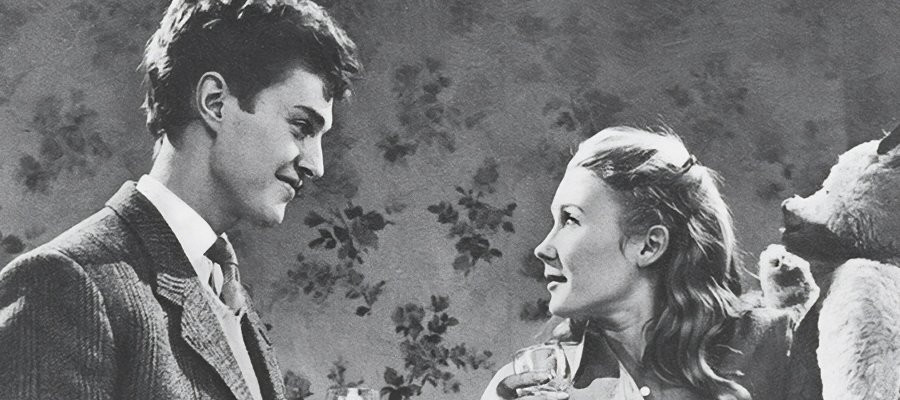
The Morning After
1962 United KingdomJuliet Mills, the elder of actor John Mills' two daughters, made her ITV debut on Friday 16 November 1962, in the Television Playhouse presentation, The Morning After by G. C. Brown, who wrote 12 small-screen plays between 1959 and 1965, and offered a quietly unsettling glimpse into the emotional battleground of young marriages gone sour. The play approaches its theme obliquely but pointedly: is the trend toward ever-younger marriages a sign of new freedoms, or merely a conveyor belt delivering younger and younger divorcees?
Brown answers by showing three young women—Carol (Juliet Mills – Nanny and the Professor), Liz (Annette Crosbie – One Foot In the Grave), and Lalage (April Olrich – Roberts Robots)—sharing a flat and clinging to each other like, as Liz puts it, “any other splinter group.” All are separated, all contemplating divorce, all trying to fill the emotional vacuum with the era’s fashionable bohemian parties. These gatherings—wild, numbing, aimless—leave behind the same desolation as the events that prompted them, ending in yet another “morning after.”
When the play opens on one such party, the swarm of revellers soon drifts onwards, and when it does, Carol, who has a four-year-old boy, stays behind. Alan (Robin Phillips – The Forsyte Saga) stays with her for company. Their tentative connection offers a flicker of hope: two gentle souls adrift in a world too loud for them. But Alan is ultimately an observer, not a participant, and when Carol’s husband Harry (Leonard Rossiter – Rising Damp), arrives to speak of custody and divorce, Alan sees her clearly for the first time. Carol’s fragile, tremulous manner masks a more complicated, even hardened inner core. Brown leaves us wondering whether her impulsive leap into marriage was the real tragedy—an error of youth, or something more enduring.
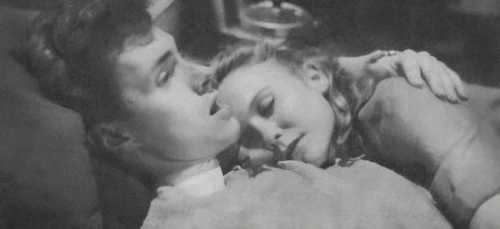
20 year-old Juliet Mills had only been married herself for a year when the play was made. Her husband, American film writer Russel Alquist Jr. was six years her senior. "Carol's marriage seems to have been a whirlwind affair", Juliet told the TV Times in 1962. "Russel and I were engaged nearly a year, and of that time we were apart for eight months, with the Atlantic between us. We hated it, but at least it reassured anyone who doubted our seriousness."
It was her first acting job after leaving school that led to their meeting. Juliet was about to go to drama school when she got a part in a stage play - Five Finger Exercise, directed by John Gielgud. The play ran 18 months in London and nine of Broadway where, still only 17, she met her future husband.
Despite remarking that her own engagement—long, transatlantic, and deeply tested—was the antithesis of Carol’s whirlwind romance, history would later echo fiction: Mills’ marriage ended in divorce in 1974.
Directed by John Hale, formerly of the Bristol Old Vic, the production benefitted from a cast that had already passed through his hands at the company: Crosbie, Rossiter, and Phillips. The result was a thoughtful chamber piece, exploring the emotional contradictions of youth, independence, and romantic expectation in a decade on the verge of social upheaval.
The Morning After is a quietly compelling example of early-60s British domestic drama—part moral inquiry, part character study. Though its framing is dated and occasionally paternalistic, its central concerns remain strikingly contemporary.
Seen this show? How do you rate it?
Seen this show? How do you rate it?
Share on...
Published on November 28th, 2025. Written by Laurence Marcus for Television Heaven.