
Triangle
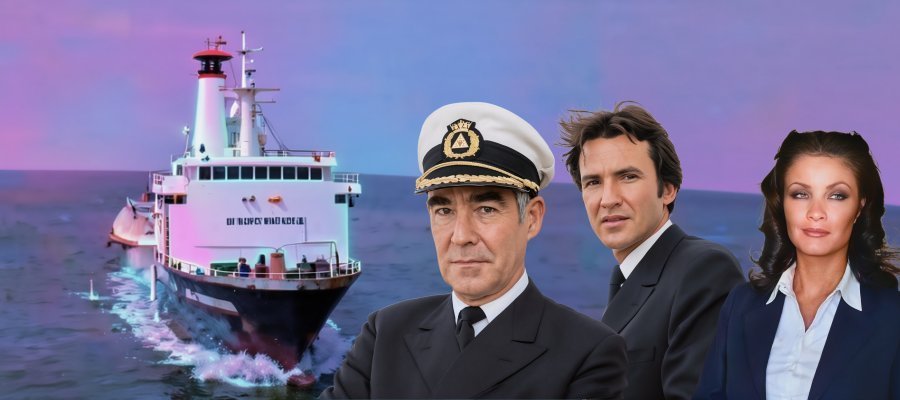
1981 United KingdomWhen the BBC launched Triangle in the early 1980s, it was promoted as the future of television drama. Thanks to newly developed lightweight video cameras, the entire series could be filmed on location rather than in the studio — a major technical breakthrough at the time. Unfortunately, the BBC chose to demonstrate this innovation in perhaps the least visually appealing setting imaginable: a North Sea ferry route between Felixstowe, Gothenburg and Amsterdam.
What must have sounded promising on paper quickly turned into a case study in how technology alone cannot save bad television. Producer Bill Sellars clearly hoped to create a British equivalent of The Love Boat: a floating setting where a regular crew interacted with a rotating cast of passengers against a backdrop of glamorous European travel, romance and intrigue. Instead, Triangle delivered 78 episodes of damp misery, seasickness and boardroom squabbling filmed under permanently overcast skies.
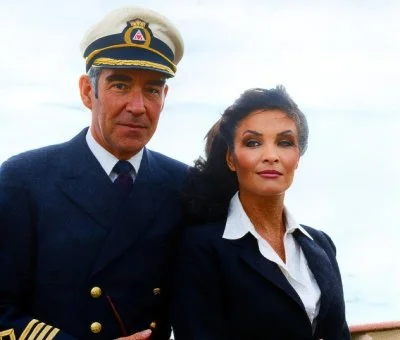
The show’s central problem was brutally simple: the North Sea is not glamorous. It is grey, freezing, bleak and notoriously rough. The cast often appeared visibly ill, with actors carrying the unmistakable greenish pallor of people trying not to vomit between takes. The most infamous example came in the opening episode, where Kate O’Mara’s supposedly seductive ship’s purser Katherine Laker attempts to sunbathe topless on deck while battling what looked suspiciously like 40mph winds and light drizzle. It set the tone perfectly: television glamour overwhelmed by meteorological reality.
Technical limitations compounded the misery. Early video cameras struggled terribly with mixed lighting conditions, especially the contrast between gloomy ship interiors and daylight outside. As a result, cabin scenes were frequently shot with portholes and windows covered by curtains to prevent bizarre colour distortions. The irony was hard to miss. A series designed to escape the artificiality of studio drama ended up trapping its characters in claustrophobic dark cabins that might just as well have been built at Television Centre.
This visual gloom infected every aspect of the production. Endless scenes of crew members discussing affairs, company politics and personal crises unfolded in cramped, badly lit rooms while the ferry rolled endlessly through cold grey water outside. Any sense of excitement or exotic travel was swallowed by the oppressive atmosphere. Watching Triangle often felt less like entertainment and more like serving time on a Scandinavian freight route.
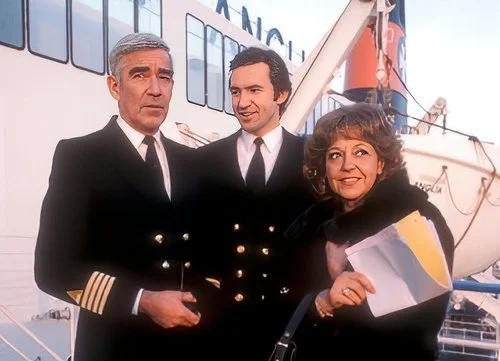
The acting could only do so much. Larry Lamb (Gavin & Stacey) and Michael Craig (Arthur of the Britons) gamely endured all 78 episodes, while Kate O’Mara wisely abandoned ship after the first season. She was replaced, rather bizarrely, by Diana Coupland — best remembered as the mother in Bless This House — in what felt less like a creative reinvention and more like visible desperation.
To be fair, Triangle was not a complete failure. Enough viewers tuned in for the series to survive three seasons, proving that audiences will watch almost anything involving workplace affairs and mildly scandalous uniforms. There is also a strange fascination in watching a programme so thoroughly defeated by its own ambitions. It genuinely attempted to push British television production forward, even if the result resembled a corporate training video filmed during a maritime emergency.
Yet the real problem went beyond the weather, the lighting or the seasickness. As critics and viewers quickly realised, the scripts themselves were painfully weak. No amount of technical innovation could disguise dialogue and storylines that were frequently laughable. The production team openly discussed the practical difficulties of filming at sea, but rarely acknowledged the far more serious issue: Triangle simply was not very well written.
Today, Triangle survives mainly as a curio — remembered less for its drama than for its astonishingly gloomy atmosphere and the spectacle of talented actors trying to perform romantic intrigue while apparently suffering hypothermia. It remains one of British television’s great noble failures: ambitious, groundbreaking, unintentionally hilarious and impossible to forget once seen (no matter how hard you try!)
Seen this show? How do you rate it?
Seen this show? How do you rate it?
Share on...
Published on May 28th, 2026. Written by Laurence Marcus for Television Heaven.