

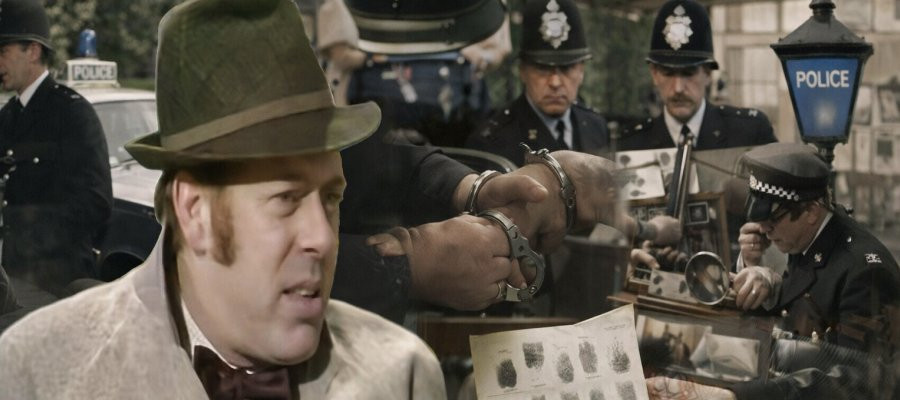
Waugh on Crime
1970 United KingdomInspector Waugh is one of those curious, half-forgotten BBC creations that repays rediscovery less for what it achieved than for what it was quietly pointing towards. Emerging first in the winter of 1968 as Something to Hide, with Charles Gray in the title role, the character returned in December 1969 before finally settling into his most recognisable form in 1970, when Clive Swift (Keeping Up Appearances) took over the role for a six-part run of half-hour episodes broadcast under the Thirty Minute Theatre banner. It was an unusual home for a continuing detective, a strand that prided itself on self-contained dramas, and Inspector Waugh became one of only five serials ever to break that rule.
Created and written by Arden Winch and produced by Innes Lloyd, the 1970 series is very much a police procedural of the old school. Action is minimal; intellect and persistence are everything. Waugh is a thinking man’s detective, methodical, confident, and occasionally smug, supported by his earnest assistant, Police Constable White (Robin Chadwick – The Brothers), a clear nod to the Holmes-and-Watson tradition filtered through more contemporary pairings such as Barlow and his subordinates. Each episode presents a discrete case, approached with a mixture of low-key humour and careful, sometimes painstaking, investigation.
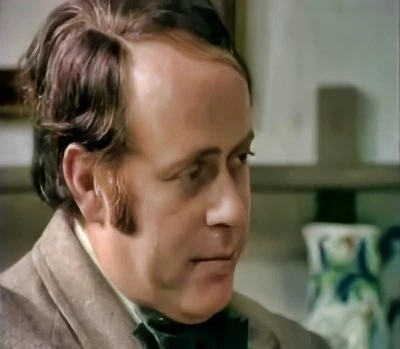
At the time, the programme found a receptive audience and sat comfortably among the more thoughtful offerings of Thirty Minute Theatre. In retrospect, it feels like a formative stepping stone in British television crime drama, a bridge between the cerebral detectives of literature and the character-driven television inspectors who would follow. There are unmistakable traces of Sherlock Holmes, Maigret and even the quietly authoritative Chief Inspector Barlow, and with hindsight it is difficult not to see Inspector Waugh as a proto-Morse: solitary, intellectually vain, convinced that the slow burn of reasoning will always outpace brute force.
Not everyone was convinced. Writing in The Stage, Patrick Campbell delivered a withering assessment of the opening play, accusing it of naïveté in both plot and dialogue. While he acknowledged a certain nostalgic charm—likening it to boys’ magazine detective stories of the 1930s—he found the artlessness overdone, even absurd. Deductions were spelled out too clearly, surprises smothered in exposition, and characters reduced to stereotypes who existed largely to explain things the audience already knew. Campbell’s review is particularly memorable for its frustration at the Inspector’s habit of explaining his reasoning twice: once implicitly, and then again in “words of one syllable,” just in case the viewer had missed the point.
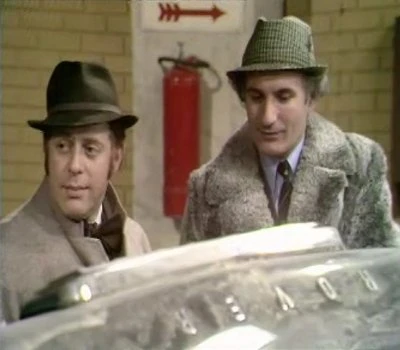
Yet even in this dismissive critique there are glimmers of what worked. Campbell conceded that Clive Swift, given very little to work with, nevertheless projected self-assurance and professional arrogance, hinting at a richer character waiting to be developed. Swift himself spoke at the time about the advantages of a series in allowing a role to grow, and one senses that, had Inspector Waugh been given more room and a stronger stylistic identity, that potential might have been realised. Robin Chadwick’s Constable White also emerges as a quiet success, grounding the proceedings with a believable mix of respect, doubt and mild scepticism that arguably reflects the audience’s own reactions.
Short-lived, never commercially exploited, and eventually overshadowed by heavier-hitting television detectives, Inspector Waugh slipped through the cracks of television history. The series returned briefly in 1972 as a standalone production, shorn of the Thirty Minute Theatre umbrella, but by then the moment had largely passed. Even so, it remains an intriguing artefact: a modest, cerebral crime drama whose ambitions exceeded its execution, but whose influence can be felt in the more fully realised detectives who came after. Inspector Waugh may have been disregarded in the long run, but he was very much part of the groundwork on which later British crime television was built.
Seen this show? How do you rate it?
Seen this show? How do you rate it?
Share on...
Published on February 11th, 2026. Written by Laurence Marcus for Television Heaven.