

You Can't Win
1966 United KingdomGranada’s You Can’t Win is one of those quietly ambitious 1960s television dramas that now feels like a fascinating snapshot of post-war British intellectual life. Adapted from William Cooper’s novels Scenes from Provincial Life and Scenes from Married Life, the seven-part series follows Joe Lunn, played by a very young Ian McShane (Lovejoy), through two distinct periods of his life: the uneasy months before the Second World War and the more settled, though no less complicated, years a decade later.
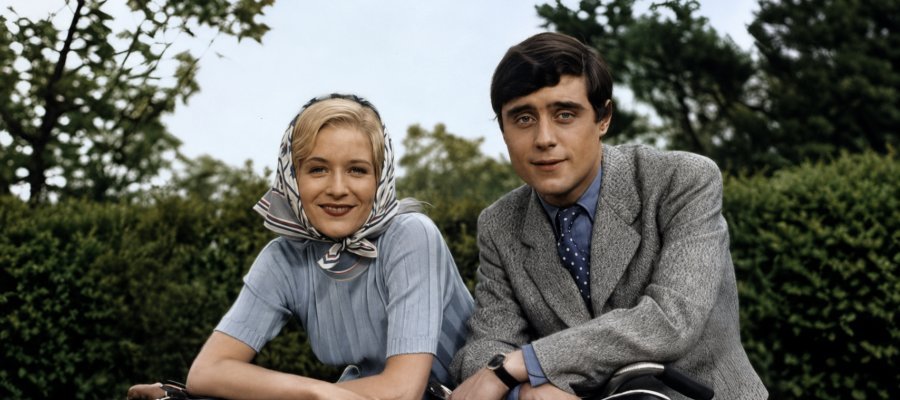
The early episodes, drawn from Provincial Life, are steeped in the uncertainty of 1939. Joe is a physics teacher in a provincial grammar school, a man who clearly feels out of step with the world around him. He wants to be a novelist, dreams half-heartedly about emigrating to America with his friends Robert (John Humphry – The First Churchills) and Tom (Peter Birrel – London’s Burning), yet remains emotionally tethered to Myrtle (Patricia Garwood – No Place Like Home), the lively young woman who alternately comforts and unsettles him. The relationship between Joe and Myrtle gives these episodes much of their charm; there’s an awkward realism to it, especially whenever marriage enters the conversation and Joe begins retreating into indecision.
Ian McShane was only 23 when he took the role, but even at that age he had the restless screen presence that would later make him famous. Joe is intelligent, distracted, faintly arrogant and often paralysed by overthinking, yet McShane keeps him sympathetic. There’s also an amusing irony in seeing him play a schoolteacher at a school where, in real life, he had once failed the entrance exam.
John Humphry’s Robert Watson is another highlight. The character is widely seen as a lightly fictionalised portrait of C. P. Snow, the scientist-novelist and longtime friend of Cooper. Robert acts as Joe’s mentor and sounding board, encouraging his literary ambitions while reflecting the same tension between science and the arts that fascinated Cooper throughout his career.
That tension lies at the heart of the series because William Cooper himself lived it. Born Harry Summerfield Hoff, he worked as a teacher before serving in the RAF Signals Branch during the war and later becoming a civil servant. By the mid-1960s, when You Can’t Win aired, he was employed by the Atomic Energy Authority in London as a Personnel Consultant. Visiting him at work reportedly involved security forms, badges and police checks, which somehow feels entirely appropriate for a writer so interested in the collision between ordinary domestic life and the machinery of modern Britain.

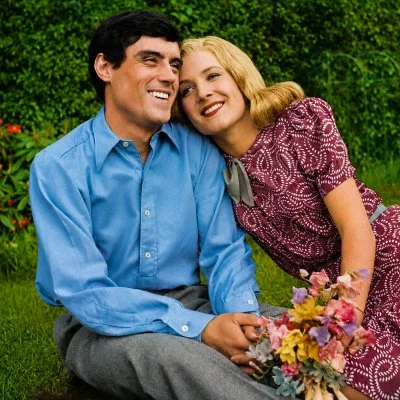
The later episodes, adapted from Scenes From Married Life, shift to London in 1949. Joe is now working in Whitehall recruiting scientists for the Civil Service and is married not to Myrtle, but to Elspeth, played beautifully by Jennie Linden (The Practice). The mood changes noticeably here. The uncertainty and emotional drifting of the pre-war years give way to something more mature and reflective. Joe finally seems anchored, and his marriage provides a sense of emotional stability that had always been missing before.
One of the strongest storylines involves Joe writing what he believes is his finest novel, inspired by his relationship with Elspeth, only for his publisher to reject it as too improper. It’s a wonderfully understated conflict, perfectly suited to the tone of the series. Rather than relying on melodrama, You Can’t Win finds drama in personal frustration, unrealised ambitions and the compromises people quietly make as they move through adult life.
The series itself formed part of a much larger literary journey for William Cooper’s central character, Joe Lunn. Cooper continued the story across several novels, including Scenes from Metropolitan Life, Scenes from Married Life (1961), Scenes from Later Life (1983) and Scenes from Death and Life (1999). Scenes from Metropolitan Life, although written during the 1950s, was delayed for years after the woman believed to have inspired Myrtle threatened legal action, eventually appearing in print in 1982. Cooper’s final novel faced its own difficulties when Macmillan rejected it, leading to publication through a small independent press instead.
The success of the novels also led to several adaptations beyond Granada’s 1966 version. BBC Radio 4 revisited Scenes from Provincial Life in both the 1970s and again in 2003, when Eric Pringle created a four-part dramatisation starring David Thorpe as Joe and Alison Pettitt as Myrtle. There were even plans for a further television adaptation by novelist Malcolm Bradbury, who wrote scripts combining Scenes from Provincial Life and Scenes from Metropolitan Life into six hour-long episodes, although the project was ultimately never produced.
Granada broadcast You Can’t Win during July and August 1966, with Thursday screenings in the London region and Fridays in the North, and the format suits the material well. Every episode feels like another chapter lifted directly from somebody’s memory.
Looking back now, You Can’t Win also serves as an intriguing early showcase for McShane before international fame arrived decades later. More importantly though, it captures William Cooper’s distinctive literary voice — thoughtful, observant and deeply interested in the ordinary frustrations of educated middle-class life in twentieth-century Britain.
It may not have the sweeping grandeur of prestige literary adaptations that came later, but there’s an honesty and intelligence to You Can’t Win that still lingers. Beneath the conversations about writing, science, marriage and emigration lies a simple question: how do you build a meaningful life when every choice seems to close off another possibility? The series never offers easy answers, and that’s precisely why it remains so compelling.
Seen this show? How do you rate it?
Seen this show? How do you rate it?
Share on...
Published on May 7th, 2026. Written by Laurence Marcus for Television Heaven.