

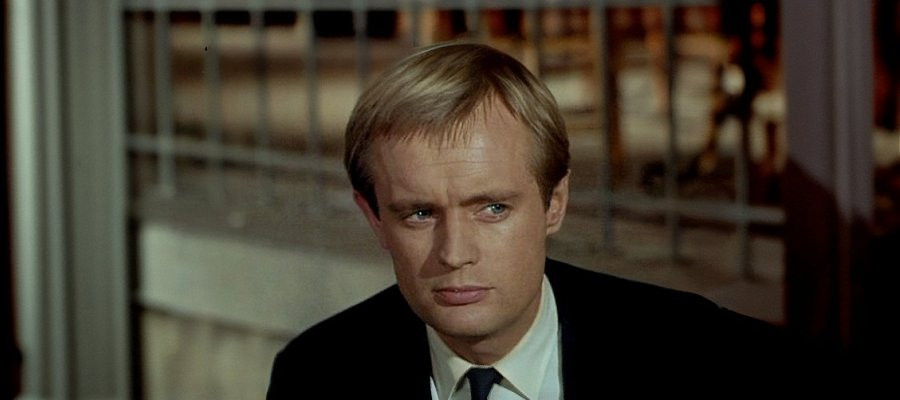
David McCallum
David McCallum was a British actor of remarkable range and longevity, whose career crossed film, television, radio and music, and who at his peak became one of the most recognisable faces in the world. In the mid-1960s he was, for a time, the most popular British actor in Hollywood. Dubbed “The Blond Beatle”, he turned into a global pin-up after playing a Russian intelligence officer on American television at the height of the Cold War. MGM later claimed that he attracted more fan mail from women than any actor in the studio’s history, including Clark Gable and Elvis Presley – an extraordinary outcome for a performer who had barely spoken in the pilot of the series that made him famous.
McCallum was born David Keith McCallum in Glasgow on 19 September 1933, the younger of two sons in a musical family. His parents were accomplished classical musicians, and in 1936 the family moved to Hampstead when his father was appointed leader of the London Philharmonic Orchestra. During the early years of the Second World War, McCallum was evacuated to Scotland and lived with his mother at Gartocharn, near Loch Lomond. After the war he won a scholarship to University College School. With his parents’ encouragement he trained seriously as a musician, playing the oboe, but his appearance as Prince Arthur in an amateur production of King John convinced him, at the age of eight, that acting was his true calling.
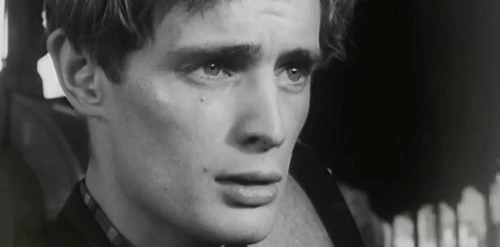
His professional career began early. In 1946 he obtained his Equity card following a radio appearance in Whom the Gods Love, Die Young for the BBC’s radio repertory company. Further children’s roles followed before he left school and worked as an assistant stage manager at Glyndebourne. After completing National Service with the Royal West African Frontier Force, he studied at RADA between 1949 and 1951, where he shared classes with Joan Collins.
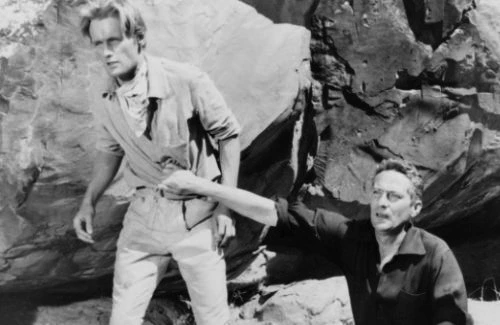
McCallum honed his craft in repertory theatre in Frinton-on-Sea and Oxford, before making his television debut in The Rose and the Ring in 1953. He sent photographs to the Rank Organisation with little expectation of success, but was cast by the first-time director Clive Donner as a rebellious, leather-clad youth in the crime film The Secret Place (1957). That same year he appeared opposite Stanley Baker in Hell Drivers, playing the injured younger brother; during the production he married his co-star Jill Ireland. The couple were reunited on screen in Robbery Under Arms (1957). More substantial roles followed, including radio operators in A Night to Remember (1958) and The Long and the Short and the Tall (1961), signalling his move away from juvenile parts. His British television work included The Eustace Diamonds, Our Mutual Friend, and guest appearances in Knight Errant and Sir Francis Drake.
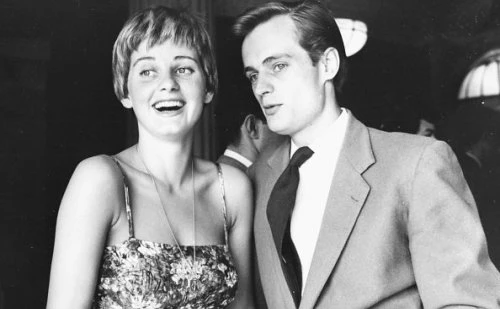
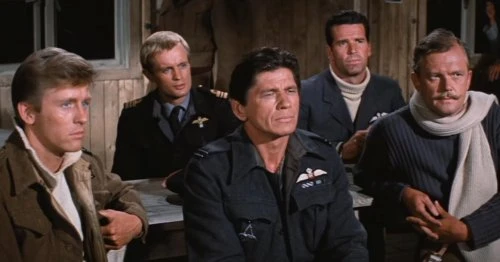
By the early 1960s McCallum had established himself as a serious actor. He appeared as Judas Iscariot in The Greatest Story Ever Told (1965), although delays meant it was released after he had already become a star. In 1962 he played a psychologically troubled patient in John Huston’s Freud and a humane naval officer in Peter Ustinov’s Billy Budd. His performance in The Great Escape (1963) as Eric Ashley-Pitt – nicknamed “Dispersal” for his ingenious method of disposing of tunnel soil – secured his place in cinema history.
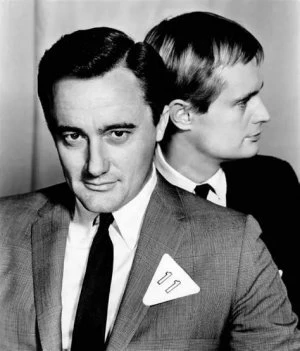
Despite this success on film, television became his natural home. He impressed in The Outer Limits (1963–64), portraying both a time-manipulating inventor and a Welsh miner undergoing a terrifying transformation. His defining role came as Illya Kuryakin in The Man from U.N.C.L.E. (1964–68). Originally conceived as a secondary character in the 1963 pilot Solo, the intense, cerebral Russian agent quickly emerged as co-lead alongside Robert Vaughn’s Napoleon Solo. McCallum’s restrained charisma and dry wit made Kuryakin a cult figure, earning him a Golden Globe and two Emmy nominations. He and Vaughn went on to star in eight spin-off films and reunited in The Return of the Man from U.N.C.L.E.: The Fifteen Years Later Affair (1983), which opened with Kuryakin reinvented as a fashion designer.
At the height of his fame McCallum also explored music, recording four instrumental albums with producer David Axelrod. One track, “The Edge”, later found new life when it was sampled by Dr Dre and featured in Edgar Wright’s Baby Driver (2017). He starred in the title role of The Invisible Man in 1975, although the series lasted only 13 episodes.
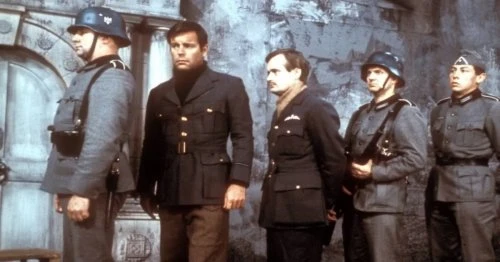
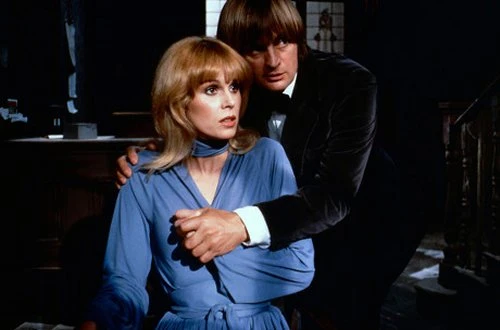
McCallum divided his later career between Britain and the United States. He returned to British television as a volatile RAF officer in Colditz (1972–74), then went back to America for The Invisible Man. After its cancellation he again worked extensively in the UK, starring as Alan Breck Stewart in Kidnapped (1978) and as the cool, otherworldly investigator opposite Joanna Lumley in Sapphire & Steel (1979–82). Later appearances included Mother Love (1989) with Diana Rigg and a memorable supporting role in Trainer (1991–92).
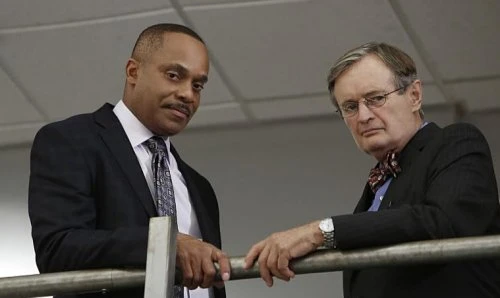
A late-career renaissance came in 2003 when a guest appearance in JAG led to a long-running role in NCIS. As Dr Donald “Ducky” Mallard, the bow-tied medical examiner with a taste for eccentric anecdotes, McCallum appeared in 457 episodes over two decades. He immersed himself in the part, studying pathology and attending autopsies to ensure authenticity. The episode “The Stories We Leave Behind” in season 21 was dedicated to him after his death.
David McCallum died at New York-Presbyterian Hospital in New York City on 25 September 2023, aged 90. He left behind a body of work that reflected intelligence, elegance and quiet authority, and a legacy that bridged generations of film and television audiences.
Share on...
Published on December 18th, 2025. Written by Marc Saul for Television Heaven.