
The Dominators
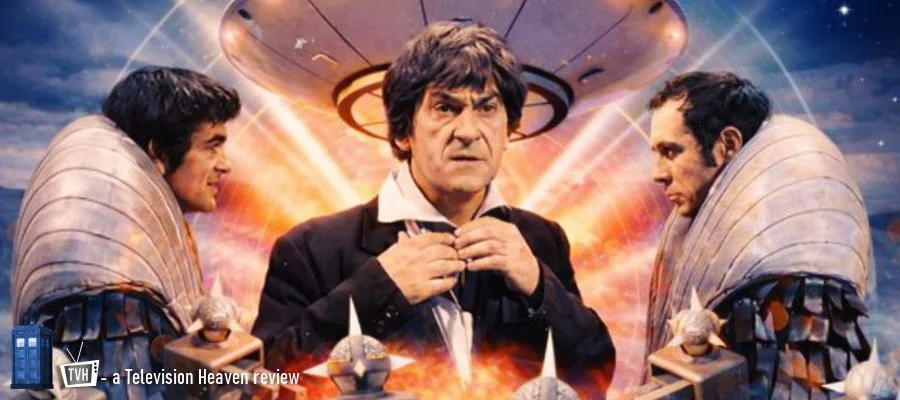
Landing on the planet Dulkis for what is meant to be a relaxing break, the TARDIS crew quickly find themselves in a far less restful situation. Unbeknownst to them, they have landed on an apparently abandoned island just as the Dominators arrive, a warlike species who rule ten galaxies and exist purely to conquer. Their purpose here is chillingly pragmatic: to turn the planet itself into fuel for their fleet. A single ship, accompanied by a handful of robotic Quarks, is all that is needed to begin surveying and drilling the five bore holes that will doom the world.
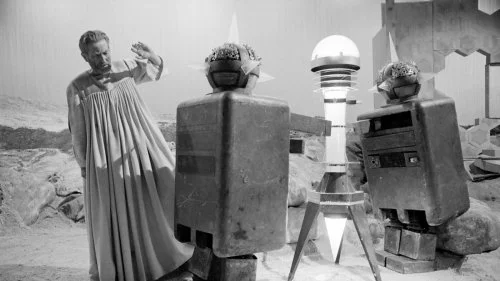
The only inhabitants on the island are a professor, his two students, and Cully, a restless outsider frustrated by the utter complacency of the Dulcian people. The Dulcians themselves are revealed to be absolute pacifists, having evolved beyond aggression to the point where they have also lost initiative, curiosity, and any meaningful sense of urgency. Even when faced with the imminent destruction of their planet, their leaders seem more inclined to debate trivialities than act. This satirical edge—clearly intended as commentary on the hippie movement of the time—has an interesting premise, but it is delivered with such heavy-handedness that it rarely feels insightful.
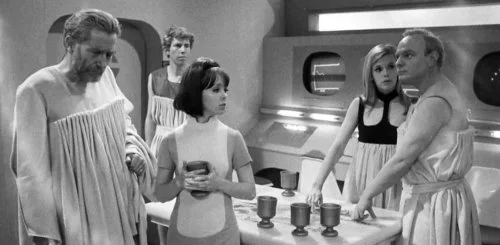
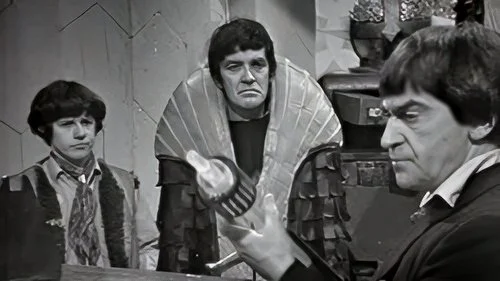
The Doctor, naturally, is intrigued by the Dominators’ intentions, especially given the apparent lack of valuable resources on Dulkis. However, the narrative momentum falters as events unfold. When Zoe is captured and forced into labour clearing a drill site, the stakes should rise, yet the story never quite generates the tension it promises. Jamie and Cully take on the more active roles in attempting a rescue, while the Doctor often seems oddly disengaged, further diluting the urgency.
Behind the scenes, the troubled production history perhaps explains much of what doesn’t work. Originally conceived as a six-part story by Mervyn Haisman and Henry Lincoln—the team behind the much-loved Yeti serials, The Abominable Snowmen and The Web of Fear—it was intended as a pointed allegory about what happens when a wholly submissive society is confronted with aggression. However, the scripts were reportedly delivered late and subsequently heavily rewritten by script editor Derrick Sherwin, who also cut the story down to five episodes. One can only assume that with their track record, Haisman and Lincoln's original script had far more meat on it than what was served up here. But it appears that even before all the episodes were fully delivered, Sherwin had deemed the story too short of content, stopped the writers from going ahead with the sixth episode and rewrote the fifth completely.
The result feels compromised; in truth, Sherwin could have done everyone a much bigger favour and reduced The Dominators to three episodes, as the pacing drags and the narrative feels padded rather than developed. Dissatisfied with the final product, the original writers distanced themselves by using pseudonyms, and it’s not difficult to see why.
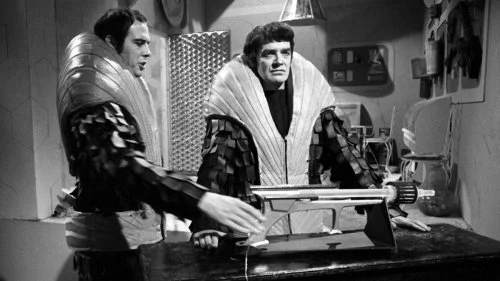
Characterisation is another major weakness. The Dominators themselves are reduced to bickering, one-dimensional figures lacking any real menace, while the Dulcians are portrayed as little more than ineffectual caricatures. The Quarks, heavily promoted at the time as potential successors to the Daleks, are particularly disappointing. Where the Daleks are sleek, fast-moving, and vocally intimidating, the Quarks wobble awkwardly like drunken penguins and emit high-pitched, almost comical sounds, akin to adolescents on helium-stripping them of any sense of threat. Rather than inspiring fear, they border on the absurd.
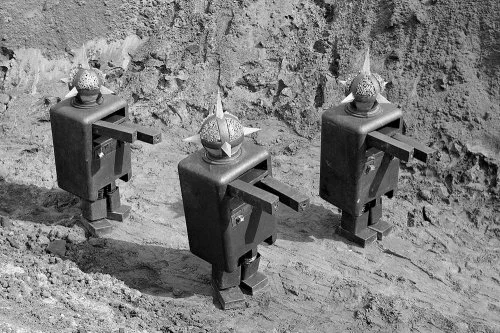
In retrospect, the serial has not been treated kindly, with modern commentators dubbing it "lazy", "disappointingly lacklustre", "push-button and pedestrian" and with "hopeless" cliffhangers that fail to compel continued viewing.
As the opening story of the sixth season, it lacks the excitement and ambition one might expect, particularly given the “dream-team” line-up of the Second Doctor (Patrick Troughton) and his travelling companions Jamie McCrimmon (Frazer Hines) and Zoe Heriot (Wendy Padbury). It stands as a disappointing start, made all the more evident by the far more inventive The Mind Robber, which followed shortly after and demonstrated just how much more engaging the series could be.
Share on...
Published on April 7th, 2026. Written by Laurence Marcus for Television Heaven.