

The Mind of Evil
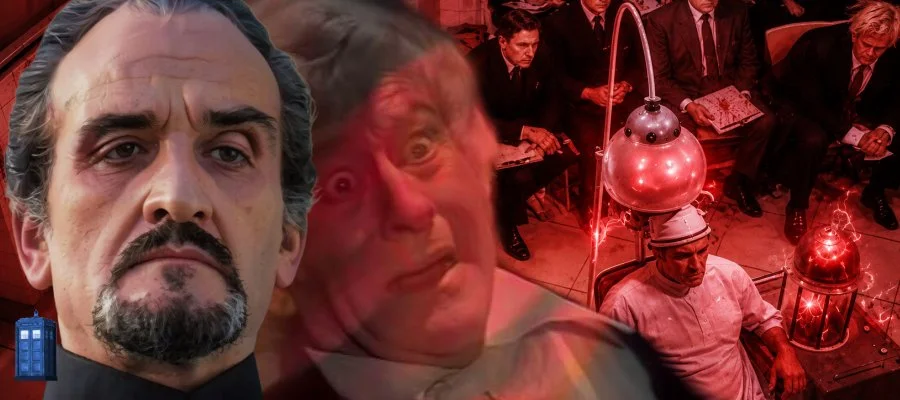
The Mind of Evil is one of those stories that perfectly encapsulates what made the Pertwee era so entertaining. It combines science fiction, political intrigue, prison drama, psychological horror and good old-fashioned action into a sprawling six-part adventure that feels ambitious even by the standards of early 1970s Doctor Who. While it occasionally struggles under the weight of its own length and ideas, it remains one of the most underrated serials of the era.
The story begins with an intriguing premise. The Doctor and Jo Grant arrive at Stangmoor Prison to investigate the Keller Machine, a device supposedly capable of removing criminal impulses from the human mind. What initially appears to be a piece of progressive science quickly develops into something far darker. The idea that fears can be weaponised is genuinely unsettling, and the scenes involving the machine remain remarkably effective. Victims are confronted by manifestations of their deepest phobias, leading to a series of deaths that give the story an unusually creepy atmosphere for its time.
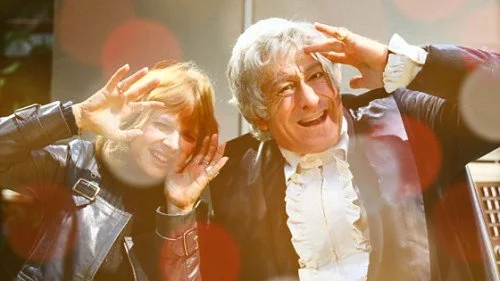
The psychological horror element is one of the serial’s greatest strengths. The Doctor himself falling victim to terrifying visions demonstrates just how dangerous the Keller Machine truly is, while the revelation that it houses an alien mind parasite elevates the threat beyond a simple rogue invention. There is a fascinating moral question at the centre of the story concerning whether evil can simply be removed from a person, although the script never explores this theme as deeply as it might have.
Alongside the prison storyline runs a tale of Cold War tensions and international diplomacy. The World Peace Conference, with delegates from China and the United States on the brink of conflict, taps into contemporary anxieties without becoming overly heavy-handed. The atmosphere of suspicion and paranoia gives the serial a distinct flavour, recalling thrillers such as The Manchurian Candidate. While this political subplot initially seems crucial, it gradually fades into the background as events at Stangmoor take centre stage, leaving some elements feeling underdeveloped.
As always, Jon Pertwee is superb. His Doctor is simultaneously irritable, authoritative and compassionate. He frequently finds himself exasperated by the people around him, yet his concern for their safety never comes into question. Pertwee's commanding screen presence helps anchor even the more convoluted stretches of the narrative, and he handles both the action sequences and quieter moments with equal confidence.
Katy Manning is equally engaging as Jo Grant. Although she spends a fair amount of time in peril, she avoids becoming merely a damsel in distress. Jo repeatedly proves resourceful when it matters most, particularly during the prison riot, and Manning’s natural charm makes her an immensely likeable companion throughout.
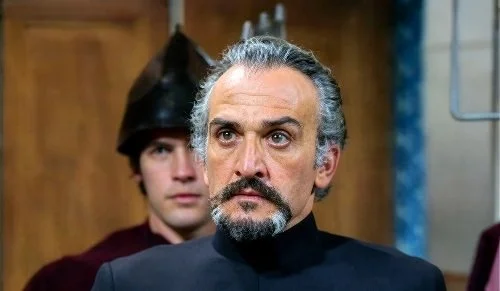
Of course, one of the major attractions of any early Pertwee story is the relationship between the Doctor and the Master. Roger Delgado is magnificent once again, bringing his trademark blend of sophistication and menace to the role. The chemistry between Delgado and Pertwee remains electric, with every confrontation crackling with energy. The Master's scheme is grandiose even by his standards, involving brainwashing, prison uprisings, a stolen missile and an army of convicts. It is gloriously audacious, and Delgado's performance makes almost every moment believable.
That said, the Master's plan does not entirely withstand scrutiny. The Keller Machine, while fascinating, feels only loosely connected to his ultimate objective. In many ways it becomes the very thing that undermines him, and there are points where his strategy seems unnecessarily complicated. This is one of several examples where the serial's many ideas do not always fit together as neatly as they should.
The supporting cast helps smooth over many of these issues. Neil McCarthy is excellent as Barnham, transforming what could have been a gimmicky role into one of the story's most sympathetic characters. His childlike innocence after conditioning creates some surprisingly moving moments, particularly during the tragic conclusion. William Marlowe brings plenty of presence to the role of Harry Mailer, making him a convincing and dangerous antagonist during the prison riot sequences. Michael Sheard also delivers dependable work as Dr Summers, while Nicholas Courtney continues to be endlessly watchable as the Brigadier. John Levene and Richard Franklin clearly relish the opportunity for action, with Benton and Yates both getting plenty to do.
The production itself is impressive. Director Timothy Combe handles the large-scale action confidently, particularly during the riot scenes and the climactic assault on the prison. The decision to use a real helicopter and a genuine Bloodhound missile lends the story an unusual sense of scale and authenticity. It is easy to see where some of the budget went.
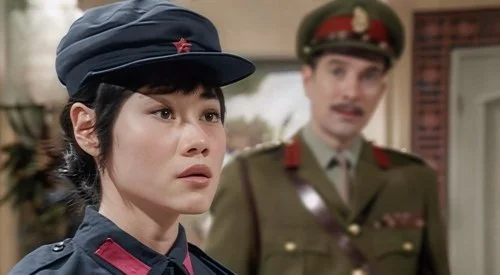
There are also some interesting historical footnotes attached to the production, including Doctor Who's first use of on-screen English subtitles during scenes featuring Hokkien dialogue. This was made possible because Jon Pertwee had been coached by actress Pik‑Sen Lim – who played Captain Chin Lee, an officer attached to the Chinese delegation at the World Peace Conference who is a mind‑controlled pawn of the Master, used to carry out his acts of murder and sabotage. The production notes explicitly state that Timothy Combe insisted on casting Chinese actors in Chinese roles, rejecting “yellowface” practices common at the time.
The biggest flaw is undoubtedly the pacing. At six episodes, The Mind of Evil occasionally feels stretched beyond its natural length. The opening instalments are gripping and the finale delivers plenty of excitement, but the middle episodes sometimes tread water, circling the same plot points without enough forward momentum. The result is a story that can feel a little bloated despite the abundance of action and interesting ideas. A tighter four-part version might have been close to a classic.
Even so, there is so much to enjoy here that the shortcomings are easy to forgive. The horror elements are memorable, the action is plentiful, the performances are strong across the board and the Doctor-Master rivalry is at its peak. The various plot threads may not always knit together perfectly, and some of the story's more intriguing themes remain frustratingly unexplored, but the sheer ambition on display is admirable.
The Mind of Evil is a wonderfully entertaining slice of early 1970s Doctor Who that showcases almost everything fans love about the Pertwee era. It may be overlong and occasionally unwieldy, but its blend of psychological terror, political intrigue and UNIT-era action makes it one of the strongest and most overlooked adventures of the period.
Share on...
Published on June 1st, 2026. Written by Laurence Marcus for Television Heaven.