


Bachelor Father
1970 United KingdomBachelor Father is an almost forgotten BBC sitcom from 1970–71 that deserves rediscovery, not least for its unusual real-life inspiration and the quiet professionalism of its execution. Written by Richard Waring and starring Ian Carmichael, the series ran for two seasons and a total of 22 episodes, with two additional mini-episodes produced for Christmas Night With the Stars.
The premise was loosely drawn from the life of Peter Lloyd Jeffcock, a lifelong bachelor and former RAF man who fostered twelve children through the London County Council and later chronicled his experiences in his autobiography, Only Uncle. Waring adapted several incidents from the book but deliberately toned down the reality, later admitting that many of Jeffcock’s true stories were so extraordinary that audiences might not have believed them. In this case, truth really was stranger than fiction.
Carmichael plays Peter Lamb, a comfortably well-off man who has always longed for a family but never managed to sustain a lasting romantic relationship. Rather than resigning himself to solitude, Lamb decides to foster children, gradually assembling a surrogate family of youngsters from varied backgrounds. The humour grows naturally from everyday domestic situations, culture clashes and Lamb’s gentle attempts to balance authority, affection and his own bachelor habits.
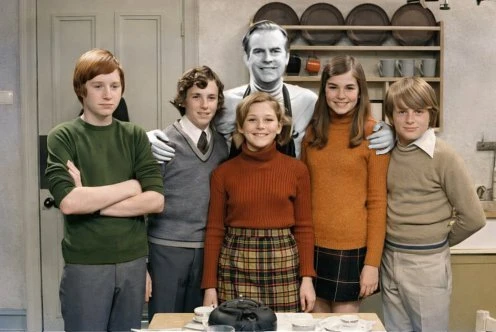
For Carmichael, Bachelor Father marked a return to situation comedy after his celebrated portrayal of Bertie Wooster in The World of Wooster. A known perfectionist who chose his roles carefully, he was not a jobbing actor and tended to involve himself closely in projects he believed in. That care shows here: although the series is essentially a middle-of-the-road family sitcom with modest ambitions, it is consistently polished, warmly performed and professionally written.
Carmichael was backed up by some experienced co-stars such as Gerald Flood and Joan Hickson as well as one-off guest stars like Frank Thornton, Donald Hewlett, John Ringham and Wanda Ventham.
Waring’s script is understated rather than gag-heavy, favouring character and situation over farce, and Carmichael’s restrained, humane performance anchors the show. When the concept had run its course, Carmichael moved on without overstaying his welcome, leaving Bachelor Father as a neatly self-contained piece of work.
Often confused by title alone with an unrelated American sitcom from the late 1950s and early 1960s, the BBC’s Bachelor Father stands apart as a distinctly British comedy. It may lack the enduring fame of some of its contemporaries, but its gentle charm, unusual origins and strong central performance make it a quietly satisfying example of early 1970s television comedy.
Seen this show? How do you rate it?
Seen this show? How do you rate it?
Share on...
Published on January 17th, 2026. Written by Laurence Marcus for Television Heaven.