

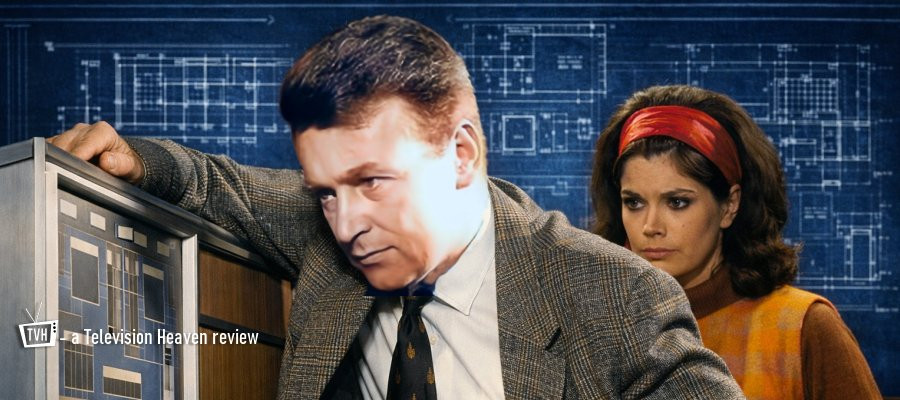
Breaking Point
1966 United KingdomBreaking Point stands as a striking example of the BBC’s ambitious cycle of thriller serials that dominated British television drama throughout the 1960s. Written by Victor Canning, already widely regarded as one of the foremost exponents of the genre, the five-part serial takes as its starting point a notion long embedded in popular imagination: that truly revolutionary inventions are quietly suppressed by powerful commercial interests to protect profits. From this premise, Canning fashions a tense and intelligent narrative that reflects the social, technological and political anxieties of Britain at the height of an era of great change.
The drama is rooted firmly in that era, a time when rapid technological advancement was transforming industry, medicine and everyday life. Against this backdrop, the discovery at the heart of Breaking Point feels both plausible and unsettling. Professor Max Stevens, a brilliant but volatile metallurgist, has perfected a form of steel immune to metal fatigue. The implications are enormous: cars that could last for generations, machinery that never wears out, and an industrial landscape in which the principle of built-in obsolescence is rendered redundant. Such a breakthrough promises public benefit on an unprecedented scale, yet it also threatens the economic foundations upon which modern industry depends. Breaking Point can be seen as a more cynical, politically charged descendant of the ideas first explored in The Man in the White Suit, transposed from post-war industrial comedy into the anxious, espionage-inflected landscape of the 1960s.
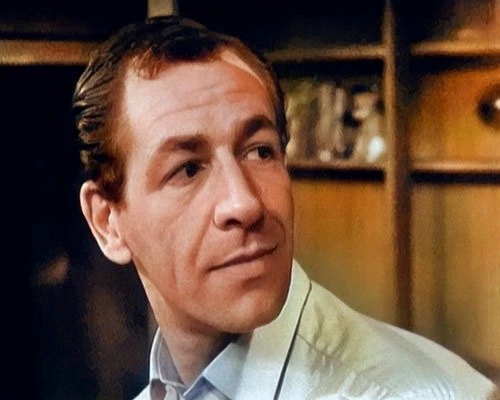
Unsurprisingly, Stevens’ work attracts dangerous attention. As rumours of the discovery spread, forces both domestic and international move swiftly to gain control of it. The British Government, anxious to secure the research for national interests and prevent it falling into hostile hands, deploys its Internal Security agency, Group S. Their chosen operative, Martin Kennedy, is tasked with locating Stevens and safeguarding his work before rival powers, including agents from behind the Iron Curtain, can exploit it for their own ends. What begins as a retrieval mission quickly becomes a race against time, with Kennedy forced into the role of protector as well as investigator.
The narrative gathers momentum when Kennedy arrives in Scunthorpe to find Stevens’ home ransacked, bloodstained and abandoned. The Professor has vanished, apparently wounded and terrified, and the sense that he is being systematically hunted gives the serial much of its urgency. Kennedy’s uneasy alliance with Diana Maxwell, Stevens’ assistant, provides both a practical and emotional counterbalance to his solitary professionalism. Together, they piece together the Professor’s movements while uncovering the far-reaching conspiracy in which ruthless industrialists and foreign agents are prepared to push a vulnerable man to his psychological and physical limits in pursuit of what amounts to a licence to print money.
While Breaking Point is shorter than some of Canning’s earlier contributions to the BBC’s thriller canon, it remains taut and consistently engaging. Certain elements of the plot adhere closely to genre conventions, yet the script is deftly paced and rarely allows tension to flag. Canning’s strength lies in his ability to weave political intrigue with personal drama, ensuring that the stakes remain human as well as ideological.
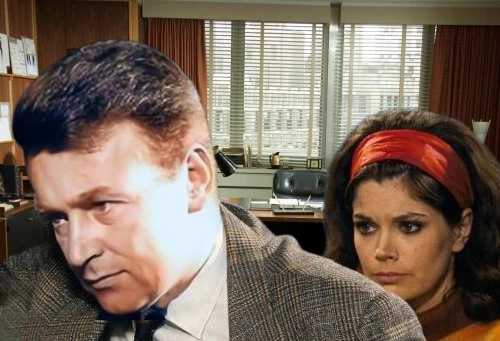
The production values further enhance the material. William Russell, shortly after leaving Doctor Who, delivers a commanding performance as Kennedy, combining steely competence with an underlying sense of moral responsibility, while Rosemary Nicols (Department S) brings intelligence and resilience to the role of Diana Maxwell. Bernard Kay is particularly effective as the increasingly fragile Professor Stevens, conveying the cost of genius under siege. The supporting cast, including familiar faces from British television drama of the period; Richard Hurndall, Vernon Dobtcheff, Terence Longdon and Lynda Baron, adds depth and credibility throughout.
Direction by Douglas Camfield gives the serial a grounded, almost documentary realism, complemented by Alan Bromly’s assured production. Location work and carefully staged confrontations reinforce the sense that this is a world in which progress and peril exist side by side. Viewed today, Breaking Point may show its age in certain stylistic touches, but it remains a compelling artefact of 1960s television: a thriller that captures a society riding a wave of innovation while nervously contemplating where that wave might finally break.
Seen this show? How do you rate it?
Seen this show? How do you rate it?
Share on...
Published on January 18th, 2026. Written by Laurence Marcus for Television Heaven.