

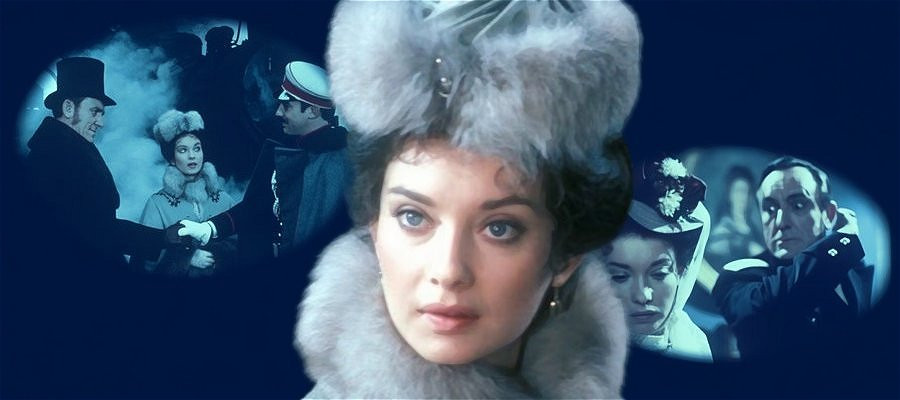
Anna Karenina
1977 United KingdomThis BBC adaptation of Anna Karenina remains, for many viewers, the definitive screen interpretation of the original 1878 novel by one of the greatest and most influential authors of all time. This BAFTA-nominated ten-part adaptation allowed the narrative space that cinema versions rarely achieve, unfolding over ten 50-minute episodes with a patience and fidelity that honours the psychological depth of Leo Tolstoy’s great novel of modern realism.
The story opens with an image that encapsulates the tragedy at its heart: a beautiful, impeccably dressed woman standing alone on a deserted railway platform, transfixed by the sound of an approaching train. As memory overtakes her, she recalls the day she first met her lover—and the railway worker crushed beneath the wheels at that very spot. The sound builds, the memory sharpens, and she throws herself beneath the engine. Tolstoy himself had witnessed such a death, and from that haunting image and the question in his mind, ‘what circumstances could lead a woman to take such drastic action?’, he constructed his meditation on love, infidelity, and the suffocating strictures of society.
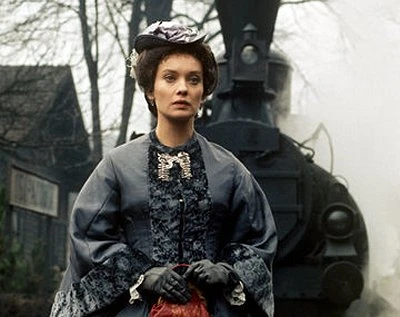
Set against sumptuous backdrops—exteriors filmed in Budapest and England—the series convincingly evokes 19th-century Russia, with its opulent mansions, candlelit interiors, and vast private estates. The visual richness never feels ornamental; instead, it underscores the emotional and moral constraints of aristocratic life. The grandeur of the settings contrasts sharply with the inner desolation of its heroine.
Anna’s story is, on the surface, simple. Married for ten years to a cold, emotionally distant older man, she falls in love with the dashing Count Alexei Vronsky and ultimately abandons husband and son to live openly with him. Yet the simplicity of the premise belies the moral complexity beneath.
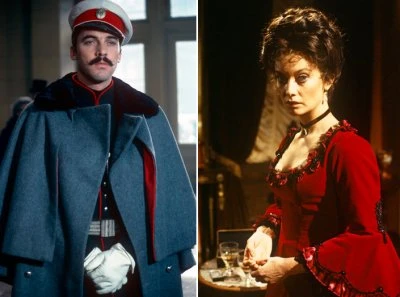
Her first encounter with Vronsky during her journey from St. Petersburg ignites a passion that defies social convention. As their relationship intensifies, Anna’s dissatisfaction with her marriage deepens. When she makes the scandalous decision to leave her husband, she becomes an exile in her own society. Ostracized and condemned, she finds that love alone cannot sustain her against the corrosive effects of gossip, jealousy, and isolation. Her emotional world contracts into paranoia and despair, and the romance that once promised liberation becomes the instrument of her destruction.
One of the strengths of this adaptation is its commitment to the parallel story of Konstantin Levin and Kitty, the young daughter of the family into which Anna's brother has married, which many film versions sideline. Konstantin, an aristocrat deeply conscious of his responsibilities to the peasants on his estate, represents Tolstoy’s sympathy for what he perceived as a changing Russia. His spiritual and moral struggles provide a counterpoint to Anna’s descent.
In the first episode she comes from St. Petersburg to comfort her sister-in-law, who has learned that her husband is having an affair with their governess and is devastated by the discovery. Anna articulates the double standard governing her world: men may be unfaithful, "but their homes and their wives are sacred. If they take another woman, they look on them with contempt. They draw a line, one that cannot be crossed, between their mistresses and their families. The longer a man lives with his wife, the higher she rises in his esteem. Compared to love of that kind, what is infidelity?" Anna’s tragedy is that she refuses to accept this hypocrisy.
The relationship between Konstantin and Kitty offers a vision of love rooted in growth and humility rather than defiance and passion. By giving this storyline room to breathe, the series preserves the structural balance of the novel and deepens its social critique.
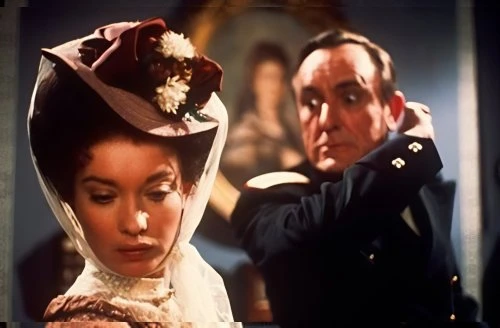
At the centre of the production is Nicola Pagett’s luminous performance as Anna. She reportedly described the role as one of the greatest ever written, even alongside Shakespeare, and her portrayal justifies the claim. Her Anna is sensual yet fragile, kind yet neurotic, maternal yet impulsive. Pagett conveys the character’s shifting emotional states with remarkable subtlety; we see not only the rebellious lover but also the frightened woman trapped by circumstance and temperament. There is a radiance to her early scenes that gradually dims, replaced by haunted eyes and brittle intensity.
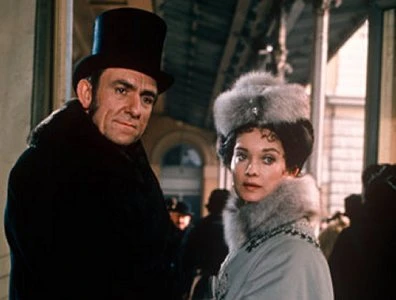
Opposite her, Eric Porter offers a compelling Karenin. He is rigid, humiliated, and emotionally stunted, yet never reduced to caricature. We understand why Anna cannot love him, but we also feel the sting of his public disgrace and private pain. Stuart Wilson’s Vronsky avoids the trap of being merely a romantic stereotype. His performance captures the genuine love he bears Anna alongside his growing bewilderment and shame as her jealousy and despair intensify. The emotional toll on him is palpable.
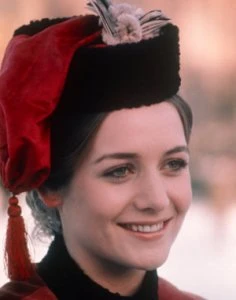
The supporting cast strengthens the whole. Robert Swann’s Konstantin Levin embodies earnest introspection and moral seriousness, while Caroline Langrishe’s Kitty radiates innocence and sincerity. Her purity stands in deliberate contrast to Anna’s darker, more mature sexual magnetism. Together, they illuminate the novel’s dual vision of love—one destructive and obsessive, the other patient and redemptive.
Earlier and later adaptations inevitably invite comparison. The 1935 film starring Greta Garbo and Fredric March, the 1948 version with Vivien Leigh and Kieron Moore, and the 1961 television production featuring Claire Bloom and Sean Connery each brought their own interpretation. Later came the 1997 film with Sophie Marceau and Sean Bean, the 2012 adaptation starring Keira Knightley and Jude Law, and even an ambitious 2013 Philippine television reimagining led by Krystal Reyes and running to an astounding 80 episodes. Yet few match the breadth and psychological tone made possible by this particular BBC version.
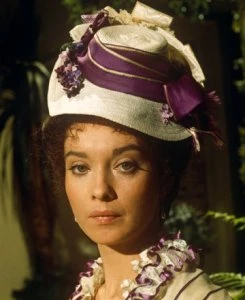
What distinguishes this 1977 production above all is its compassion. We are invited to see every character in full complexity. Anna marries without love and is punished for seeking it elsewhere. Karenin is emotionally barren yet deeply wounded. Vronsky loves sincerely but cannot withstand the relentless pressure of scandal. In contrast to the callous lovers of Emma Bovary, these figures are not cynical but tragically human.
By embracing the novel’s social panorama and moral ambiguity, this adaptation captures Tolstoy’s critique of aristocratic superficiality and the profound inequalities of Russian society. The glittering balls and sweeping estates are revealed as gilded cages. In its measured pacing, rich performances, and emotional intelligence, the 1977 Anna Karenina mini-series achieves what the best literary adaptations strive for: it translates not just plot, but soul.
Verdict ★★★★★
Seen this show? How do you rate it?
Seen this show? How do you rate it?
Share on...
Published on February 22nd, 2026. Written by Laurence Marcus for Television Heaven.