

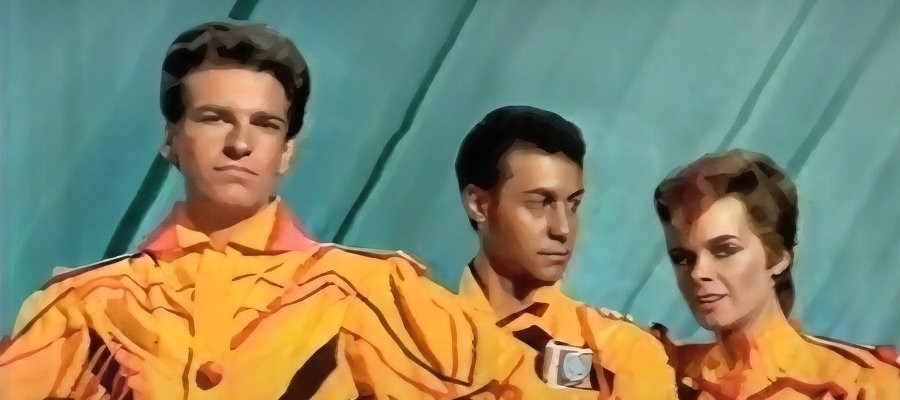
Captain Zep - Space Detective
1983 United KingdomCaptain Zep – Space Detective occupies a curious, quietly cherished corner of British children’s television history: a programme that disguised a logic quiz as a pulp sci-fi serial and, in doing so, felt far more adventurous than its modest reputation might suggest.
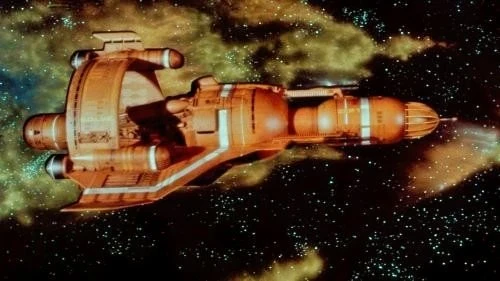
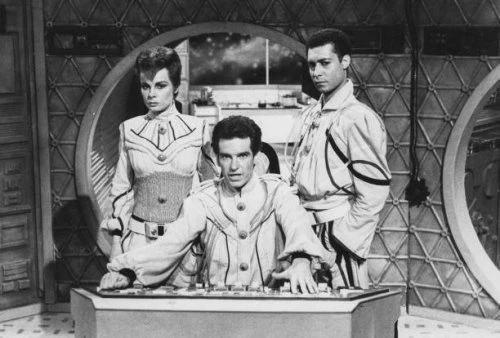
Broadcast on BBC1 in the early 1980s, the series framed itself as a collection of past cases from the logbook of Zep One, a spacecraft operated by the Space Office of Law Verification and Enquiry (SOLVE). Each week, Captain Zep and his crew would recount an interplanetary mystery, pausing along the way to quiz a studio audience of children, who were encouraged to spot inconsistencies, motives and overlooked clues. The format extended beyond the studio too, with viewers at home were challenged with an additional poser about the case and invited to submit their own solutions, lending the show a pleasing sense of participation rather than passive consumption.
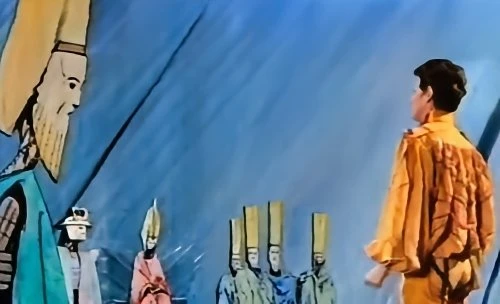
What elevated Captain Zep above a straightforward whodunnit was its visual ambition. Rather than relying solely on studio sets, the series plunged its live-action cast into stylised, hand-drawn alien worlds. Actors were composited into animated environments populated by illustrated creatures and spacecraft, giving the whole enterprise the look of a comic strip in motion. The technique was rough-edged but imaginative, and its very crudeness worked in its favour, reinforcing the show’s roots in British sci-fi comics rather than glossy space opera. For a children’s programme of the period, it felt strikingly bold.
The studio sequences were just as memorable. The youthful audience, outfitted in futuristic jumpsuits with aggressively slicked-back hair, resembled recruits to some neon-lit academy of deduction. Their role was central: armed with bright “magic slates”, they were expected to think along with the narrative rather than simply absorb it. This interactive emphasis gave the show an educational undertone without ever feeling like a lesson.
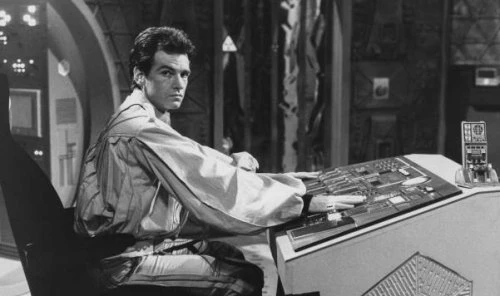
The cast brought an unexpected sharpness to proceedings. The first series featured Paul Greenwood (The Growing Pains of PC Penrose) as Captain Zep, projecting weary authority beneath layers of cumbersome costume, supported by Ben Ellison’s endearingly literal-minded navigator Jason Brown and Harriet Keevil’s (Lytton’s Diary) coolly analytical Professor Spiro. Their exchanges were often tinged with irritation and dry humour, suggesting a working relationship shaped by long exposure to one another rather than bland teamwork. When the second series arrived, Greenwood and Keevil were replaced by Richard Morant (Poldark) and Tracey Childs (Broadchurch) respectively, with the conceit that “Captain Zep” was a rank bestowed on whoever captained Zep 1, rather than being a single individual. While the chemistry inevitably shifted, Ellison’s Jason remained a constant, anchoring the transition.
Behind the scenes, the show’s pedigree was stronger than one might expect for a children’s quiz. The first run was penned by veteran comedy writer Dick Hills, whose background in mainstream British comedy (who with co-writer Sid Green wrote for Morecambe and Wise) lent the scripts a confident sense of timing and character. Even when the writing duties changed hands for the second series, the format retained its distinctive rhythm: part detective story, part brain-teaser, part science-fiction spectacle.
Musically, the programme announced itself with unapologetic swagger. The theme tune, performed by The Spacewalkers, set the tone perfectly: earnest, catchy and just a little ridiculous, like the show itself.
Despite healthy popularity and a loyal following, Captain Zep – Space Detective was ultimately undone by its own ambition. The blend of animation, effects and elaborate design made it expensive, and in an era of tightening budgets it was an obvious target for cancellation. Its disappearance left a gap that rivals struggled to fill, and its absence has only enhanced its cult status.
Today, the lack of an official release feels like an oversight bordering on injustice. Captain Zep – Space Detective was inventive, funny and visually daring, encouraging its audience to think rather than simply watch. In hindsight, it stands as a reminder of a time when children’s television occasionally took genuine creative risks—and trusted its viewers to keep up.
Seen this show? How do you rate it?
Seen this show? How do you rate it?
Share on...
Published on January 2nd, 2026. Written by Laurence Marcus for Television Heaven.