

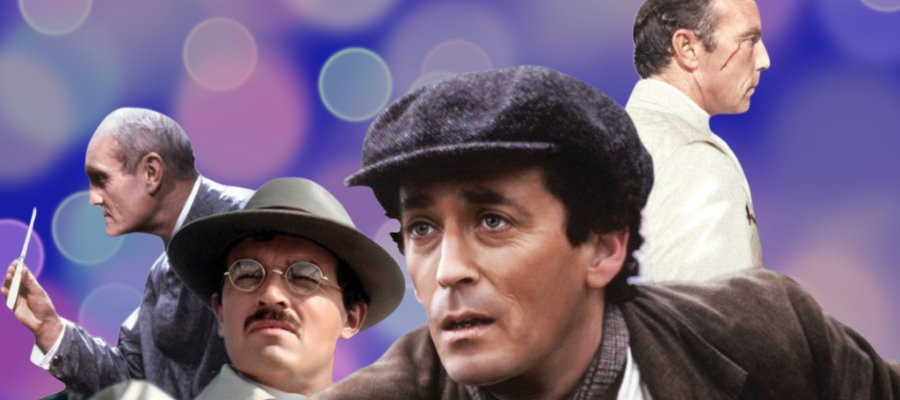
Hannay
1988 United KingdomITV’s Hannay was an unusually thoughtful piece of period adventure, conceived as a prequel to the 1978 film version of The Thirty-Nine Steps. Created for Thames Television by Michael Robson, who also provided most of the scripts, the series reunited Robert Powell with Richard Hannay and set out to broaden the character’s world rather than simply retell John Buchan’s stories. The result is a drama that borrows Buchan’s atmosphere and themes while confidently pursuing its own narrative path.
The central idea is immediately appealing. After years in southern Africa, Hannay returns to Britain wealthy, battle-hardened and eager for a settled, “civilised” existence. His hopes for domestic calm are undercut by the political reality of Edwardian Europe, where espionage and rivalry between the great powers, especially an increasingly assertive Germany, threaten to drag him back into danger. This tension between private aspiration and public duty gives the series much of its dramatic drive, while the lingering presence of his enemy, Count Otto von Schwabing (Gavin Richards), provides an early focal point for conflict.
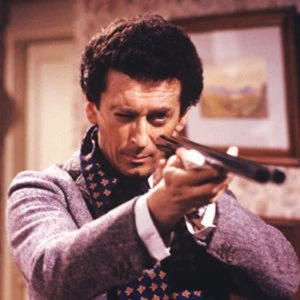
That said, the first season does not entirely escape familiar territory. Initial episodes rely heavily on straightforward plots involving foreign agents and military secrets, and the villainy can feel somewhat bluntly drawn. Over time, however, the tone shifts for the better. Later stories favour intrigue rooted in British society itself, populated by blackmailers, killers and disreputable members of the upper classes. This move away from overt geopolitical threats towards more intimate moral dramas brings the series closer to the spirit of Buchan and significantly improves its storytelling.
Robert Powell’s performance is central to the show’s effectiveness. His restrained, stoical manner suits a Hannay who is emotionally distant and faintly ill at ease in the world he has returned to. Rather than projecting dashing heroics, Powell suggests a man shaped by isolation and experience, which makes Hannay’s gradual re-engagement with British life quietly compelling. Even when individual scripts are uneven, his presence lends continuity and credibility.
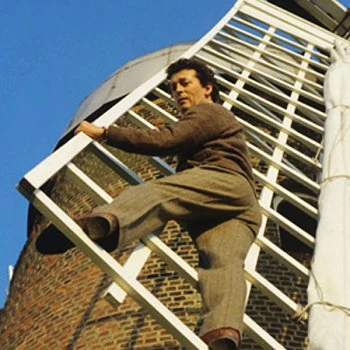
The second series marks a clear step forward. Hannay becomes more peripatetic, the narratives more varied, and the supporting characters are allowed greater colour and complexity. Contributions from writers such as Richard Carpenter, Robin Millar and Paul Wheeler sit comfortably alongside Robson’s work, giving the later episodes a welcome richness and confidence.
From a technical standpoint, the decision to shoot on video has inevitably dated the series, flattening its visuals in comparison to film-shot contemporaries. Nonetheless, the production values were solid for late-1980s television, and the attention to period detail sustains the show’s sense of Edwardian adventure and understated daring. Under producer Richard Bates, and with experienced directors including David Giles, Jeremy Summers and Ken Hannam, the series is handled with consistent professionalism.
Critical response at the time was divided. Some commentators dismissed the programme as stiff or overly solemn, while others appreciated its measured pace and moody atmosphere. Strong promotion from ITV, particularly in TV Times, helped the show achieve respectable, if not spectacular, viewing figures across its two seasons.
The subsequent Region 2 DVD release by Delta Music PLC has allowed Hannay to be reassessed. While picture and sound are generally acceptable, a handful of episodes suffer from awkward audio balance, with effects occasionally drowning out dialogue. These issues are frustrating but do not seriously undermine the series as a whole.
Seen now, Hannay occupies an intriguing niche in ITV’s late-1980s output. It is neither a straightforward adaptation nor a piece of nostalgic pastiche, but a sober, character-driven expansion of Buchan’s fictional universe. Earnest, sometimes awkward, yet consistently engaging.
Seen this show? How do you rate it?
Seen this show? How do you rate it?
Share on...
Published on January 20th, 2026. Written by Malcolm Alexander for Television Heaven.